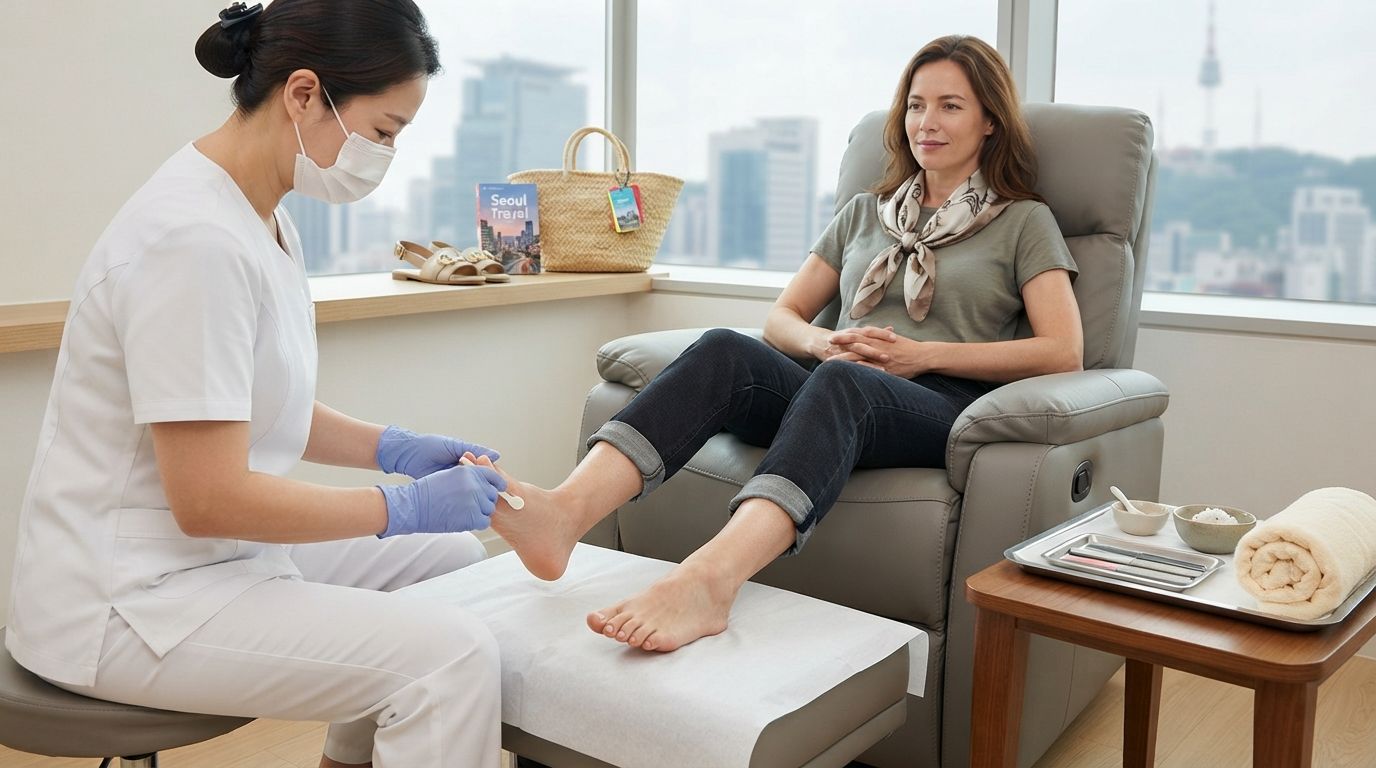
International traveler receiving preventive foot care before hiking in Korea
Preventive Foot Care Before Hiking in Korea for International Travelers
Hiking is a popular way for international visitors to experience Korea’s mountains, forests, and scenic trails. Whether you are planning a short urban hike or a longer mountain route, your feet can face considerably more friction and pressure than during a typical sightseeing day.
Preventive foot care before hiking can help reduce problems such as blisters, hot spots, excessive dryness, cracked heels, and discomfort from poorly fitting footwear. The goal is not to aggressively remove every callus or undergo an intensive treatment immediately before hiking. Instead, preparation should focus on healthy skin, comfortable footwear, moisture control, and early attention to problem areas.
Why Foot Preparation Matters Before Hiking in Korea
A hiking day can involve several hours of walking, elevation changes, uneven terrain, and repeated friction between the feet, socks, and footwear.
For international travelers, the risk can be higher if hiking is not part of their normal routine or if they are using unfamiliar shoes.
Preventive preparation can help you identify problems before they interfere with your itinerary.
Common Foot Problems During Hiking
Some of the most common concerns include:
- Blisters caused by friction
- Hot spots and irritated skin
- Sweaty or damp feet
- Dry or cracked heels
- Pressure-related calluses
- Toenail discomfort
- Minor cuts or abrasions
Blisters are particularly associated with friction and can develop when footwear does not fit properly or when feet become exposed to prolonged rubbing. Dermatologists recommend properly fitting footwear and moisture-wicking socks as part of blister prevention.
Start Your Foot Preparation Before the Hiking Day
Avoid making major changes to your feet immediately before a long hike.
If you have thick calluses, dry heels, or other cosmetic concerns, begin your routine several days or even a couple of weeks in advance.
Check Your Feet
Inspect your feet for:
- Redness
- Blisters
- Cracks
- Peeling skin
- Painful calluses
- Swelling
- Toenail changes
- Cuts or irritated areas
This is also a good opportunity to determine whether a problem is cosmetic or potentially medical.
Persistent itching and peeling between the toes, for example, may be associated with athlete's foot rather than simple dryness.
Avoid Aggressive Callus Removal
Calluses can provide some protection against repeated pressure and friction. Removing too much hardened skin immediately before hiking can leave the underlying skin more vulnerable.
If you have a painful or unusually thick callus, professional assessment may be more appropriate than aggressive filing or cutting at home.
Choose Hiking Footwear Carefully
Footwear is one of the most important parts of preventive foot care.
Your hiking shoes or boots should fit securely without creating excessive pressure. They should also be appropriate for the terrain and weather conditions of the planned trail.
Break In New Shoes Before Your Trip
Avoid taking brand-new hiking shoes directly onto a long Korean mountain trail.
Wear them during shorter walks first. This helps identify areas where the heel, toes, or sides of the foot experience friction.
If you notice a recurring hot spot, address it before your hiking day.
Wear Appropriate Socks
Moisture-wicking or quick-drying socks can help reduce moisture and friction. Some hikers may benefit from using two sock layers if a single pair does not adequately prevent rubbing.
Bring an extra pair in your hiking bag so you can change if your socks become wet or sweaty.
Prepare Dry or Cracked Heels
Dry heels can become uncomfortable when hiking, particularly if cracks are already present.
Regular moisturization can improve dry skin. Dermatologists recommend applying moisturizer shortly after bathing, while the skin is still slightly damp. Products containing ingredients such as urea, alpha hydroxy acid, or salicylic acid may be useful for some people with dry, thickened heel skin.
Do Not Over-Exfoliate Before Hiking
A gentle foot-care routine is preferable to aggressive exfoliation shortly before a hike.
Avoid:
- Excessive scraping
- Cutting calluses with blades
- Strong unfamiliar exfoliating products
- Intensive procedures immediately before a long hike
The objective is healthy, intact skin that can tolerate friction.
Prevent Blisters Before They Start
Blister prevention is especially important for travelers planning long hiking days.
Identify Hot Spots Early
A hot spot may feel like an area of warmth, tenderness, or increasing friction before an actual blister develops.
If you notice one, stop and address it rather than continuing until the skin becomes damaged.
Soft protective bandages or specialized blister protection can be used on areas that repeatedly experience friction. Petroleum jelly may also help reduce friction in appropriate areas.
Do Not Ignore Pain
Continuing to hike after significant discomfort can turn a minor irritation into a painful blister or skin injury.
If your feet begin hurting, take a break, inspect the area, and adjust your footwear or protective covering.
Foot Hygiene During a Korea Hiking Trip
Keeping your feet clean and dry is important when traveling and hiking.
Athlete's foot is a fungal infection that can affect the skin between the toes and on other parts of the foot. Warm, damp environments can encourage fungal growth.
After Hiking
After a hike:
- Wash your feet gently.
- Dry carefully, including between the toes.
- Change out of damp socks.
- Inspect your feet for blisters, redness, or cuts.
- Allow hiking footwear to dry thoroughly.
- Moisturize dry areas while avoiding excessive moisturizer between the toes.
If you use hotel pools, communal showers, or locker rooms during your trip, wearing shower shoes or flip-flops can reduce exposure to fungi that cause athlete's foot.
Can You Get Professional Foot Care Before Hiking?
Yes, but the type and timing of treatment matter.
A professional foot-care appointment may be useful if you have significant dryness, uncomfortable calluses, nail concerns, or recurring friction points.
Cosmetic Foot Care
For otherwise healthy feet, a gentle treatment may include:
- Moisturization
- Gentle exfoliation
- Heel care
- Nail grooming
- Foot massage
These services may help improve comfort and general foot maintenance.
Medical Foot Assessment
A medical consultation is more appropriate when you have:
- Persistent itching or peeling
- Suspected fungal infection
- Painful or abnormal toenails
- Deep heel cracks
- Recurrent painful calluses
- Persistent swelling or redness
- Non-healing cuts or sores
A cosmetic pedicure should not be used as a substitute for diagnosis or treatment of a medical foot condition.
What to Pack for a Hiking Day
International travelers can keep a small foot-care kit in their daypack.
Consider carrying:
- One extra pair of socks
- Blister or soft protective bandages
- Petroleum jelly
- Basic wound-cleaning supplies
- Comfortable hiking footwear
- Shower shoes for accommodation or communal facilities
For longer hikes, having basic supplies available means you can respond to friction before it becomes a bigger problem.
Special Considerations for Travelers With Diabetes
People with diabetes should take additional precautions with their feet. CDC guidance recommends daily inspection for cuts, redness, swelling, sores, blisters, corns, calluses, and other changes.
If you have diabetes or reduced sensation in your feet, discuss hiking plans with your healthcare professional when appropriate rather than relying solely on cosmetic foot care.
Do not attempt aggressive callus removal or ignore a wound simply because it does not hurt.
When to Postpone a Hike
Consider delaying strenuous hiking and seeking professional advice if you have a significant blister, open wound, spreading redness, substantial swelling, infection symptoms, or severe foot pain.
Increasing redness, pus, swelling, or pain around a blister can indicate infection and warrants medical attention.
A Simple Pre-Hike Foot Care Timeline
One to Two Weeks Before
Inspect your feet and begin regular moisturization. Test your hiking shoes and socks during shorter walks.
Several Days Before
Address minor dryness and roughness with gentle care. Avoid aggressive exfoliation.
One Day Before
Keep your routine simple. Trim nails carefully if needed, moisturize dry areas, and prepare spare socks and blister protection.
Hiking Day
Wear comfortable, properly fitting footwear and moisture-wicking socks. Stop when you notice persistent rubbing or pain.
After Hiking
Clean and dry your feet, change damp socks, inspect the skin, and moisturize dry areas.
Final Takeaway
Preventive foot care before hiking in Korea is mainly about preparation rather than intensive treatment.
International travelers should break in hiking footwear, use suitable socks, keep their feet dry, manage dry skin gradually, and address hot spots early. A professional foot-care appointment can be useful for routine maintenance, while persistent skin, nail, or infection-related problems should receive appropriate medical evaluation.
Healthy, comfortable feet can make it much easier to enjoy Korea's hiking trails without allowing a preventable foot problem to disrupt your travel plans.