Injectables · Skin quality
Skin Boosters in Myeongdong & Jongno, Seoul

Injectables · Skin quality

Skin Boosters in Myeongdong & Jongno, Seoul

Skin boosters improve the quality of your skin itself: hydration, smoothness, elasticity and glow. At Obliv Clinic Seoul Origin a doctor chooses between hyaluronic acid, polynucleotide and collagen-stimulating boosters for your skin, rather than selling one product to everyone.

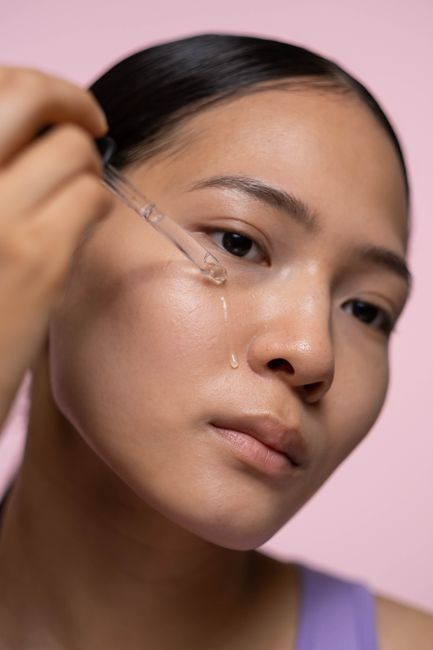
Patient with hydrated, glowing skin after a skin booster at Obliv Clinic near Myeongdong, Seoul

Quick answer

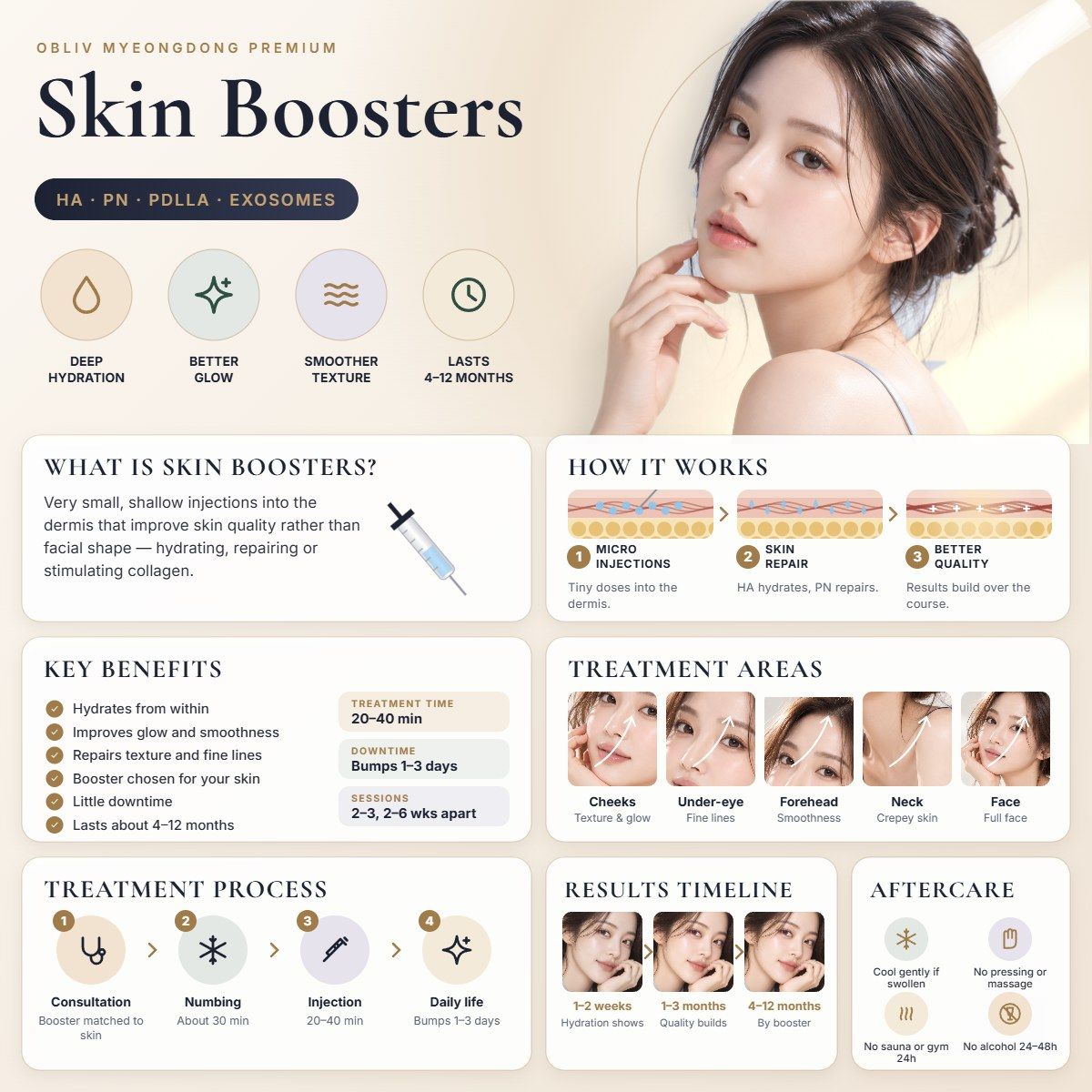
A skin booster is a series of very small, shallow injections into the dermis that improves skin quality rather than changing facial shape. The main families are hyaluronic acid (HA) for hydration and smoothness, polynucleotides (PN/PDRN, e.g. Rejuran) for repair and texture, and collagen stimulators such as PDLLA (Juvelook) for elasticity and pores. Each session takes about 20–40 minutes; most people need 2–3 sessions, with results lasting roughly 4–12 months depending on the booster. At Obliv near Myeongdong and Jongno, Seoul, a doctor matches the booster to your skin layers.

Time20–40 min (+30 min numbing)
DowntimeBumps/marks 1–3 days; bruising possible
SessionsUsually 2–3, 2–6 weeks apart
LastsAbout 4–12 months by type

Key takeaways

  • Skin boosters treat skin quality (dehydration, crepey texture, dullness, fine lines, pores), not volume; lost volume or deep folds need dermal filler or collagen volumisers.
  • Hyaluronic acid works fastest (glow within 1–2 weeks); polynucleotides and PDLLA work more slowly but build tissue quality over 1–3 months.
  • Expect small bumps or injection marks for 1–3 days and possible bruising; schedule boosters early in your Seoul trip, not the night before photos.
  • Most courses are 2–3 sessions. A single visit helps, but travellers get the best value by combining a booster with laser or a home plan.
  • The evidence base varies by product: HA boosters have the most regulatory data, PN and PDLLA have growing clinical studies, and exosomes remain experimental.

What is a skin booster?

"Skin booster" is a practical umbrella term rather than a single product. It describes injectables placed very superficially, in the dermis, to improve how skin looks and behaves: how well it holds water, how smooth it feels, how evenly it reflects light and how well it springs back. Unlike a dermal filler, a booster is spread thinly in many tiny deposits, so it does not add visible volume or change the shape of the cheeks, lips or chin.

In Korea, boosters are often called skin injections or mulgwang (water-glow) treatments, and they are one of the main reasons visitors look for a Korean clinic. The American Society of Plastic Surgeons calls the same group "injectable moisturizers" and notes that products used outside the US, such as Rejuran and Juvelook, are part of this category. A 2024 review in Archives of Plastic Surgery by Korean dermatologists groups boosters by their biological material and mechanism, which is the same way we explain them at consultation.

The honest summary is this: boosters make good skin better and tired skin healthier, but they do not lift a sagging jawline, erase deep folds or replace sun protection. Knowing that from the start is what keeps patients happy with the result.

Skin Booster at a glance Treatment time: 20–40 min (+30 min numbing); Comfort / numbing: Numbing cream; many tiny pricks; Downtime: Bumps/marks 1–3 days; bruising possible; Typical sessions: Usually 2–3, 2–6 weeks apart; Results appear: HA 1–2 weeks; PN/PDLLA 4–12 weeks; Results last: About 4–12 months by type AT A GLANCE · OBLIV MYEONGDONG Skin Booster TREATMENT TIME 20–40 min (+30 min numbing) COMFORT / NUMBING Numbing cream; many tiny pricks DOWNTIME Bumps/marks 1–3 days; bruising possible TYPICAL SESSIONS Usually 2–3, 2–6 weeks apart RESULTS APPEAR HA 1–2 weeks; PN/PDLLA 4–12 weeks RESULTS LAST About 4–12 months by type
Skin Booster at a glance at Obliv Myeongdong. Ranges are typical; your doctor confirms them for your skin.

The four main booster families: HA, PN/PDRN, PDLLA and exosomes

Each family works by a different biological route, so choosing between them is a medical decision about your skin, not a question of which brand is fashionable this season. The comparison table summarises what each one does; the paragraphs below explain when we reach for which.

Hyaluronic acid (HA) boosters draw and hold water in the dermis. Lightly cross-linked micro-droplet products such as Skinvive give the quickest visible glow and smoothness, which makes them popular before weddings and events. Polynucleotides (PN) and PDRN, purified DNA fragments usually from salmon, are used for repair-focused goals: thin skin, fine crepey lines, redness-prone skin and acne scarring. Rejuran is the best-known PN brand; we explain generic PN and PDRN options on our salmon DNA injection page.

PDLLA collagen boosters such as Juvelook contain tiny biodegradable particles that encourage your own collagen over weeks; they suit early laxity, open pores and shallow scars. Exosomes are the newest and least proven option. No exosome product is approved by the US FDA, and in clinics they are mostly applied to the skin after laser or microneedling as supportive care; read our careful overview of exosome skin therapy before choosing it.

Booster type Key ingredient Main benefit Onset Typical duration
HA microdroplet (Skinvive) Lightly cross-linked hyaluronic acid + lidocaine Hydration, smoothness, glow 1–2 weeks About 6 months
Rejuran (PN) Polynucleotide from salmon DNA Repair, texture, fine lines, scars 3–6 weeks About 6–12 months after a course
Salmon DNA (PN/PDRN) Polynucleotide or PDRN fragments Calming, barrier and thin skin 3–6 weeks About 4–9 months
Juvelook (PDLLA) Poly-D,L-lactic acid + HA Collagen, elasticity, pores 6–12 weeks Often 12 months or more
Exosome therapy Cell-derived vesicles (usually topical) Supportive recovery after laser Days–weeks Not well established

How Obliv chooses the right booster for your skin

Obliv's Skin Architecture method reads your concern as layers. Dull skin, for example, may be an epidermal problem (uneven pigment, rough surface), a dermal problem (low water content, thin collagen) or both. A booster only addresses the dermis, so when pigment is the main driver we tell you that a laser such as Pico Fraxel or a pigmentation programme will make more difference.

Your consultation starts with Mark-Vu skin analysis imaging to look at texture, pores, redness and pigment, followed by a hands-on assessment of skin thickness and elasticity. The doctor then proposes one booster, or a deliberate combination, with a reason for each. Typical patterns: HA for dehydration with good elasticity; PN for thin, reactive or post-laser skin; PDLLA for early sagging, pores and texture in skin that tolerates a slower build.

The product, dilution, depth, injection technique and total volume are written into your Skin Library record. That matters for travellers: if you continue treatment at home, your next doctor can see exactly what was used instead of guessing from a translated receipt.

Which skin layer Skin Booster targets epidermis: Not injected here, but surface glow, tone and smoothness improve as the deeper dermis is better hydrated.; dermis: The main target: HA binds water, PN supports repair, PDLLA stimulates collagen within the dermis.; fat: Some collagen boosters are placed at the dermal–subcutaneous junction for pores and laxity, never as bulk volume. SKIN ARCHITECTURE · TARGET LAYER MAP Epidermis 0.05–0.1 mm Not injected here, but surface glow, tone and smoothness improve as the deeper dermis is better hydrated. Dermis (collagen & elastin) 1–3 mm The main target: HA binds water, PN supports repair, PDLLA stimulates collagen within the dermis. Subcutaneous fat 3–4.5 mm+ Some collagen boosters are placed at the dermal–subcutaneous junction for pores and laxity, never as bulk volume. SMAS (fibromuscular layer) ≈ 4.5 mm Muscle deeper Schematic, not to scale. Depths vary by face area, age and skin type; your doctor sets them after examination.
Skin Architecture view: the layers Skin Booster works on.

Ask a doctor about Skin Booster

Send a photo and your travel dates on WhatsApp (+82-10-3086-4084). English replies, a personal plan and a written quote before you fly.

Which concerns respond best to skin boosters

Boosters shine when the problem lives in the dermis. They are rarely the only answer, but they often make lasers, lifting and good skincare work better. These are the concerns international patients most often bring to us:

  • Dehydration and dullness — HA restores water-holding capacity; PN supports a calmer barrier. See dull and dehydrated skin.
  • Large pores and rough texture — PDLLA or PN, often with laser; see large pores.
  • Fine lines and crepey skin on cheeks, under-eyes and neck — PN or soft HA, sometimes with micro skin Botox for oil and fine lines.
  • Shallow acne scars — PN (such as Rejuran S) or PDLLA combined with fractional laser; see acne scar removal.
  • Sensitive, laser-fatigued skin — PN and barrier-focused care such as LDM skin regeneration.
  • Neck, décolletage and hands — areas where thin skin shows age early and filler is not appropriate.

Who is a good candidate for a skin booster?

Most healthy adults with skin-quality concerns are suitable. Boosters are especially useful in your late twenties to forties, when skin starts to lose water and collagen but structure is still good, and for anyone whose skin has become thin or reactive after years of strong actives or repeated laser. Men respond as well as women, though thicker skin may need a slightly different technique.

We may suggest waiting if you have active acne or a cold sore in the area, a recent illness, or an important event within three days. If you have a history of severe allergies, autoimmune disease or keloid scarring, we discuss it in detail before choosing a product, because some boosters are more suitable than others.

Who Skin Booster suits, and who should consider another option Good fit: Dehydrated, dull or 'tired' skin even with a good skincare routine; Fine crepey lines on cheeks, under-eyes or neck; Enlarged pores, rough texture or shallow acne scars; Thin or sensitive skin after years of laser or retinoids; Wanting a natural 'glass skin' glow without changing face shape. Not ideal: Pregnant or breastfeeding; Active acne, cold sores or skin infection in the area; Allergy to fish/salmon DNA (for PN) or to lidocaine; Deep folds or hollowing that need volume (filler or lifting first); Autoimmune flares or keloid tendency without doctor review. ✓ Usually a good fit ✕ Discuss other options first Dehydrated, dull or 'tired' skin even with a good skincare routine Fine crepey lines on cheeks, under-eyes or neck Enlarged pores, rough texture or shallow acne scars Thin or sensitive skin after years of laser or retinoids Wanting a natural 'glass skin' glow without changing face shape Pregnant or breastfeeding Active acne, cold sores or skin infection in the area Allergy to fish/salmon DNA (for PN) or to lidocaine Deep folds or hollowing that need volume (filler or lifting first) Autoimmune flares or keloid tendency without doctor review
Is Skin Booster right for you? A doctor confirms suitability at consultation.

What happens during a skin booster appointment

For combinations, sequence matters. When a laser and a booster are done on the same day, the laser usually comes first and the booster second, so energy does not disperse the product. Botox for frown lines or micro skin Botox is usually injected last; our Rejuran and Botox combination guide explains why.

  1. Before you travel: send clear photos in daylight without make-up and your travel dates on WhatsApp. We reply in English with likely options.
  2. Mark-Vu imaging and consultation: about 20–30 minutes, including a written plan with the product, number of sessions and quote.
  3. Numbing: cream for about 30 minutes, because boosters involve many small injection points.
  4. Injection: 15–30 minutes by needle, cannula or an injector device, depending on product and area.
  5. Soothing and aftercare: a calming mask or LED where suitable, then written instructions to take home.
Your visit to Obliv Myeongdong in five steps: WhatsApp – Send photos, concerns and travel dates in English; Mark-Vu analysis – Imaging of pigment, redness, pores and texture; Doctor consult – Layer-by-layer plan, dose and written quote; Treatment – Private room, numbing and comfort checks; Aftercare – Written care plan and WhatsApp follow-up
How a visit to Obliv Clinic Seoul Origin works, from first WhatsApp message to aftercare.

Results timeline and how many sessions you need

Boosters reward patience. HA products show the earliest change because they hold water straight away, but the 'glow' people describe usually settles in after the small bumps go down, at about one to two weeks. Polynucleotide and PDLLA boosters work on repair and collagen, so the meaningful change appears at four to twelve weeks and keeps improving across a course.

A typical course is two to three sessions spaced two to six weeks apart, depending on the product. If you can only visit Seoul once, we plan a single, well-chosen session and tell you what maintenance makes sense at home. Many repeat visitors book boosters every four to six months for HA and once or twice a year for PN or PDLLA.

Skin Booster recovery and results timeline Day 0: Numbing, then 15–30 minutes of tiny injections. Small raised bumps are normal and expected.; Day 1–3: Bumps flatten; occasional pinpoint bruises can be covered with make-up after 24 hours.; Week 1–2: HA boosters show a hydrated, smoother look. PN and PDLLA changes are still subtle.; Week 2–6: Second session for most courses. Texture and fine lines continue to improve.; Month 2–3: Collagen-stimulating boosters reach a clearer result; pores and elasticity look refined.; Month 4–12: Plan maintenance: HA about every 4–6 months, PN and PDLLA often less frequently. RECOVERY & RESULTS TIMELINE 1 Day 0 Numbing, then 15–30 minutes of tiny injections. Small raised bumps are normal and expected. 2 Day 1–3 Bumps flatten; occasional pinpoint bruises can be covered with make-up after 24 hours. 3 Week 1–2 HA boosters show a hydrated, smoother look. PN and PDLLA changes are still subtle. 4 Week 2–6 Second session for most courses. Texture and fine lines continue to improve. 5 Month 2–3 Collagen-stimulating boosters reach a clearer result; pores and elasticity look refined. 6 Month 4–12 Plan maintenance: HA about every 4–6 months, PN and PDLLA often less frequently.
What to expect after Skin Booster, day by day.

Combining skin boosters with laser, lifting and Botox

Boosters are team players. A laser such as Pico Fraxel refines the surface and stimulates remodelling, and a booster afterwards supports healing and hydration. Lifting treatments like Thermage or Ultherapy tighten deeper layers, while boosters improve the skin surface that people actually see in photos.

The popular 'glass skin' packages in Seoul are mostly a combination of a hydrating booster, gentle laser toning and good aftercare. Our glass skin package guide describes how we build one around a short trip, and Skinvive vs Rejuran helps you choose between the two most-requested boosters.
Doctor's tip: if your skin is dehydrated and thin, starting with a polynucleotide course and adding HA later often gives a smoother, longer-lasting result than HA alone.
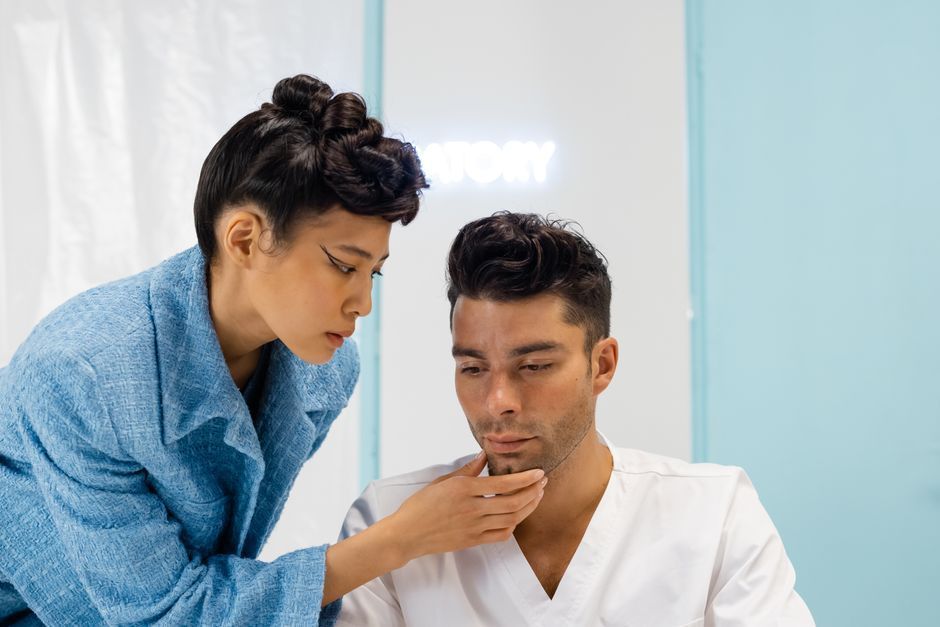
Doctor assessing skin thickness and texture before choosing a skin booster
Your doctor checks hydration, thickness and elasticity before choosing HA, PN or PDLLA.

Skin boosters for travellers: timing your trip

The visible bumps from most boosters flatten within hours to a day, but injection marks and the occasional bruise can last a few days. Book your booster early in your stay, ideally three or more days before photos, a wedding or a business presentation. Flying the next day is generally fine; drink water, use a rich moisturiser on board and avoid pressing a sleep mask firmly into the treated skin.

If you plan two sessions in one trip, a two- to three-week stay allows the second session before you leave. Shorter visits work best with one booster session plus a laser or soothing treatment, then maintenance at home or on your next visit. Our first visit guide explains what to bring.
International visitor in Seoul a few days after a skin booster treatment
Book boosters early in your trip so any marks have settled before photos.

Skin booster cost in Seoul: what affects the price

Booster pricing depends on the product family, the brand, the volume used, the areas treated and whether numbing, soothing care or a laser are included. Comparing 'one syringe' prices between clinics can be misleading, because the same product may be diluted differently or spread across a larger area.

We give a written quote after your consultation, listing the product and volume, and we do not change it on the day without your agreement. For payment methods and how quotes work for international patients, see prices and payment. Korea's cosmetic-procedure VAT refund for foreign visitors ended on 31 December 2025; details are in our tax refund update.

Risks, side effects and safety

Every medical aesthetic treatment carries some risk. These are the effects our doctors explain before you consent:

  • Small raised bumps at injection points, usually flat within hours to 1–2 days (longer with some PN products).
  • Redness, mild swelling and tenderness for 1–3 days.
  • Bruising, especially around the eyes or if you take blood-thinning medicines or supplements.
  • Lumps or nodules if product is placed unevenly; most soften with time, and HA can be dissolved with hyaluronidase.
  • Infection, allergic reaction or delayed inflammatory reaction are uncommon; tell us about allergies, including fish and lidocaine.
  • Rarely with HA products, injection into a blood vessel, which needs urgent treatment; this is why boosters should be given by doctors.
Seek medical help promptly if you notice severe or worsening pain, skin turning white, grey or dusky, blisters, spreading redness, fever, or any change in vision. Message the clinic on WhatsApp, and in an emergency in Korea call 119.

Aftercare checklist

  1. Do not rub, massage or apply pressure to the area on the day unless your doctor instructs a specific massage (some PDLLA protocols).
  2. Avoid make-up for 12–24 hours; use gentle cleanser and a plain moisturiser.
  3. Skip saunas, jjimjilbang, hot yoga, swimming and intense exercise for 24–48 hours.
  4. Pause retinoids, acids and scrubs for about 3 days.
  5. Use broad-spectrum sunscreen daily, especially when sightseeing.
  6. Avoid alcohol on the day of treatment to reduce bruising.
  7. Message us on WhatsApp with a photo if a bump, redness or pain is getting worse rather than better.

Frequently asked questions

What is the difference between a skin booster and a filler?

A filler is placed as larger deposits to add volume or change contour. A skin booster is spread in many tiny deposits in the dermis to improve hydration, texture and elasticity, without changing face shape.

Which skin booster is best?

There is no single best booster. Hyaluronic acid suits dehydration and quick glow, polynucleotides such as Rejuran suit thin, sensitive or scarred skin, and PDLLA such as Juvelook suits pores and early laxity. A doctor chooses after examining your skin.

How long do skin boosters last?

Roughly 4–6 months for HA boosters, about 6–12 months after a polynucleotide course, and often a year or more for PDLLA collagen boosters. Lifestyle, sun exposure and skin type all affect longevity.

How many sessions do I need?

Most courses are 2–3 sessions spaced 2–6 weeks apart. A single session still helps, especially with HA, and we plan around your time in Seoul.

Does a skin booster hurt?

Numbing cream makes it tolerable for most people. You feel many small pricks and some pressure; sensitive areas such as under the eyes are more noticeable.

Will I have bumps after a skin booster?

Yes, small bumps at each injection point are normal. With HA they usually settle within hours to a day; with some polynucleotide products they can last 1–2 days.

Can I get a skin booster and laser on the same day?

Often yes. The laser is usually done first and the booster second. Your doctor decides based on how reactive your skin is.

Are skin boosters safe?

In trained hands, side effects are usually mild and temporary. Evidence quality differs by product: HA boosters have the most regulatory data, polynucleotides and PDLLA have growing clinical studies, and exosomes are still experimental.

Can I fly after a skin booster?

Generally yes, including the next day. Keep skin moisturised on the flight and avoid pressing on treated areas.

Do you offer skin boosters in English near Myeongdong?

Yes. Consultations are available in English, and you can message us on WhatsApp at +82-10-3086-4084 before you travel.

From the Obliv Skin Journal

Ask a doctor about Skin Booster

Send a photo and your travel dates on WhatsApp (+82-10-3086-4084). English replies, a personal plan and a written quote before you fly.

O
Medically reviewed by the Obliv Clinic Seoul Origin medical team
Our five physicians plan every treatment by skin layer using the Obliv Skin Architecture method. Last reviewed 2026-10-27. This page is general information, not a diagnosis; your plan is set after an in-person consultation.

Sources and further reading

  1. Rho NK et al. Injectable "Skin Boosters" in Aging Skin Rejuvenation: A Current Overview. Archives of Plastic Surgery, 2024
  2. American Society of Plastic Surgeons – What are injectable moisturizers, and do you need them?
  3. Lee KWA et al. Polynucleotides in Aesthetic Medicine: A Review of Current Practices and Perceived Effectiveness. Int J Mol Sci, 2024
  4. U.S. FDA – SKINVIVE by JUVÉDERM (P110033/S059) approval summary
  5. U.S. FDA – Dermal Fillers (Soft Tissue Fillers): risks and safety

Explore Botox and fillers by area

Each area has its own anatomy, doses and safety rules. Choose an area for a doctor-reviewed guide with an infographic, typical doses, recovery and FAQs.

Botox by area · overview

Dermal fillers by area · overview

Every plan is made by one of our doctors after an in-person examination.