
Fillers · Static frown lines
Frown Line (Glabella) Filler in Myeongdong, Seoul
When the ‘11 lines’ stay visible even after Botox has relaxed the muscle, a micro-amount of soft filler can lift the remaining crease. It is a delicate area, treated with extra care.
Quick answer
Glabella filler places a micro-volume of very soft hyaluronic acid, often 0.1–0.3 ml, superficially into a deep frown line that remains at rest. It is used after frown line Botox has relaxed the muscle, because Botox treats the cause and filler only the leftover crease. The glabella is one of the higher-risk areas for blocked blood flow, so small amounts and careful technique are essential. Results last about 6–12 months.
Botox or filler for frown lines?
Frown lines that appear only when you frown are dynamic and respond to Botox alone. Lines that stay etched at rest are static; Botox stops them deepening, but the crease can remain. A micro-amount of filler, or a skin booster over time, lifts that leftover groove.
Who is it for?
- Deep ‘11 lines’ that remain at rest after Botox has taken effect.
- Not as a substitute for Botox when the lines are mainly from movement.
- Not with skin infection or recent filler in the same area.
How Obliv plans glabella filler
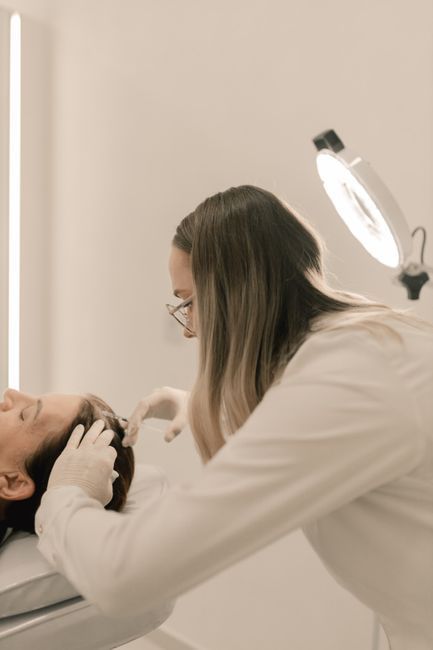
We usually treat with Botox first and review at two weeks. If a crease remains, your doctor uses a very soft filler in micro-amounts, superficially, with slow pressure, while watching the skin colour, and keeps hyaluronidase ready.
| Typical volume | Often 0.1–0.3 ml |
|---|---|
| Technique | Superficial micro-droplets of very soft filler, after Botox |
| Pairs well with | Frown line Botox, skin booster |
Results and recovery
The crease looks softer straight away; mild redness fades within a day.
Risks and side effects
- Redness, swelling and small bruises.
- Small visible lumps if too much is used; dissolvable.
- Rarely, blocked blood flow, which is more likely in this area; seek help at once for pain, white or dusky skin, or vision change.
Aftercare
- Avoid rubbing the area and make-up for a few hours.
- Skip saunas, alcohol and hard exercise for 24 hours.
Dermal fillers by area
Each area has different anatomy, depth and safety rules, so we plan it separately. Choose an area for a doctor-reviewed guide, or read the dermal fillers overview.
Lines caused by movement usually respond better to Botox by area; skin quality to skin boosters. Meet the doctors who plan every injection.
Ask a doctor about fillers
Send front and side photos and your travel dates on WhatsApp (+82-10-3086-4084). English replies, a personal plan and a written quote before you fly.
Frequently asked questions
Should I have Botox or filler for frown lines?
Botox first, because it treats the muscle that causes the line. Filler is for a crease that remains at rest after Botox.
Is glabella filler risky?
It is a higher-risk area for blocked blood flow, so only micro-volumes of soft filler are used by an experienced doctor, with hyaluronidase on hand.
How long does it last?
About 6–12 months.
Related treatments and guides
Last reviewed 2026-10-29. General information, not a diagnosis; your plan is set after an in-person consultation.