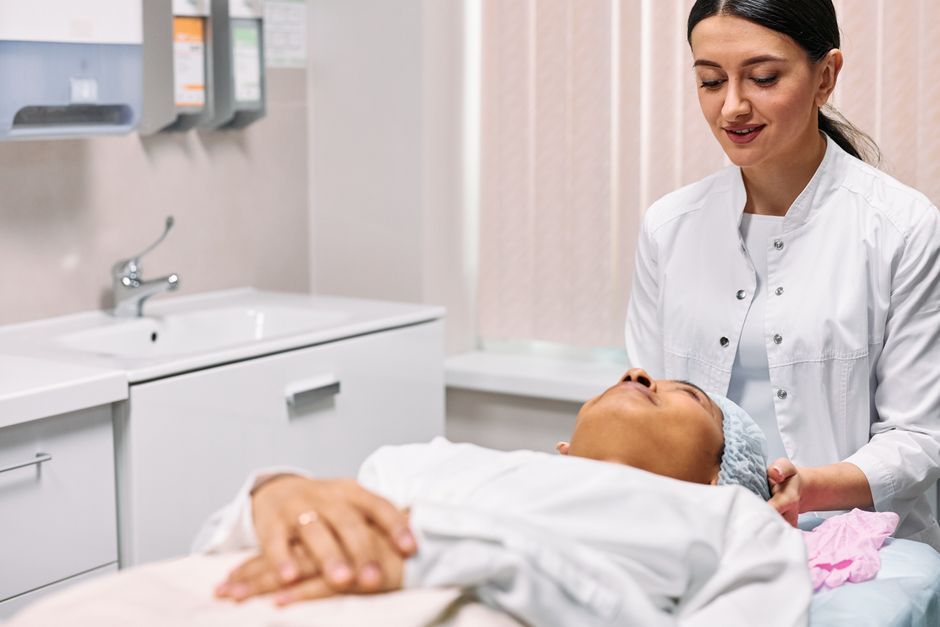

Skin concerns · Redness, flushing & barrier
Redness, Rosacea & Sensitive Skin Care in Myeongdong & Jongno, Seoul
Facial redness can be rosacea, a damaged skin barrier, dermatitis or simply visible blood vessels, and each needs a different plan. At Obliv Clinic Seoul Origin a doctor finds the cause first, then calms, repairs and, where suitable, treats the vessels.
Quick answer
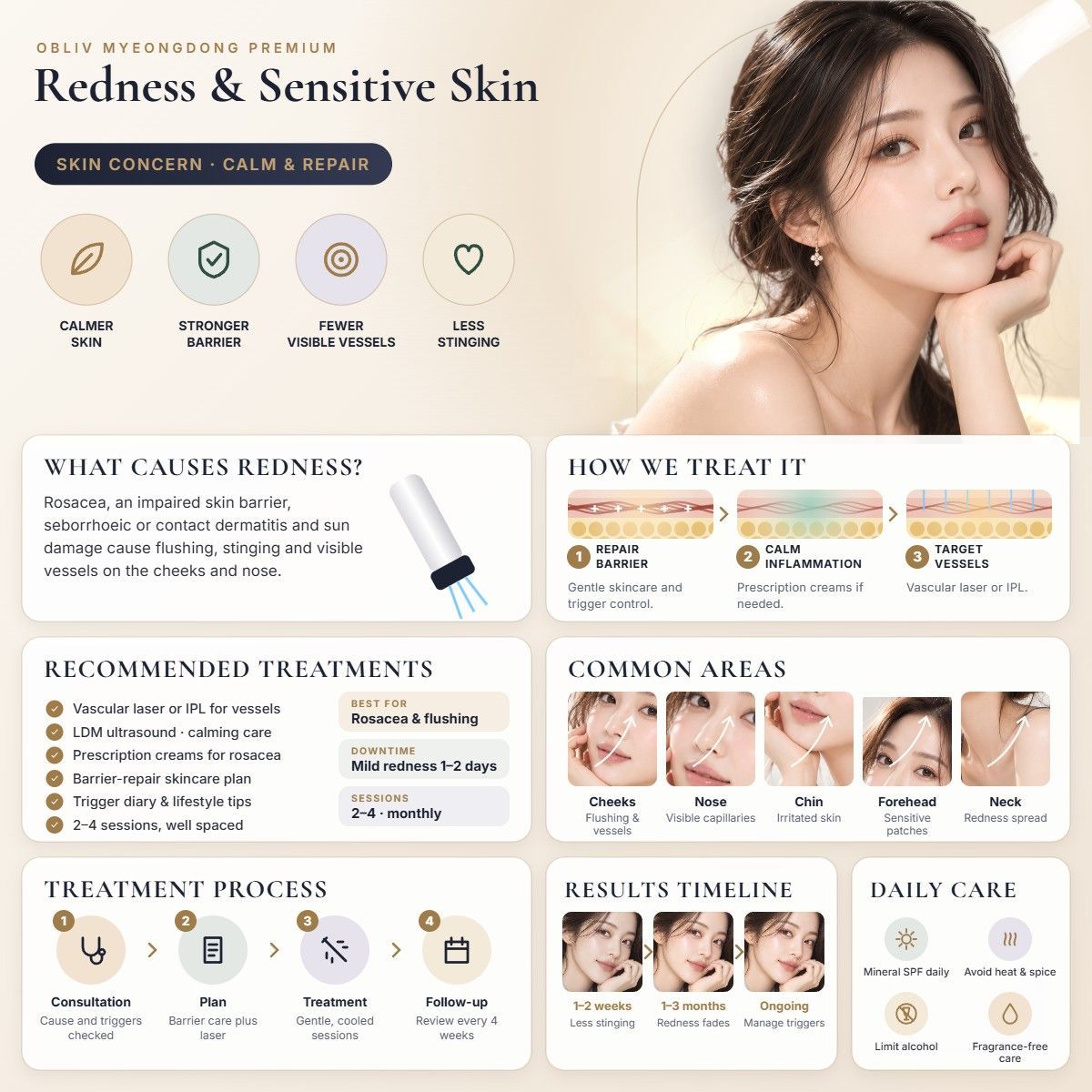
Facial redness and sensitive skin describe persistent or easily triggered pinkness, flushing, stinging or visible vessels on the cheeks, nose, chin or forehead. Common causes are rosacea (affecting roughly 5% of adults worldwide), an impaired skin barrier, seborrhoeic or contact dermatitis and sun damage. Treatment combines barrier repair, trigger control, prescription creams where needed and, for fixed redness or broken capillaries, vascular laser or IPL, usually over 2–4 sessions. At Obliv near Myeongdong and Jongno, Seoul, a doctor diagnoses the type before choosing gentle, non-aggravating care.
Key takeaways
- Redness is a symptom, not a diagnosis: rosacea, barrier damage, dermatitis, acne and, rarely, autoimmune disease can all look similar, so assessment comes first.
- Persistent redness and visible capillaries respond best to vascular laser or IPL, typically 2–4 sessions about a month apart; flushing itself is harder to switch off.
- Sensitive, reactive skin usually needs less, not more: stop scrubs, strong acids and frequent peels, and rebuild the barrier with simple, fragrance-free products.
- Calming treatments such as LDM ultrasound and gentle regenerative boosters support recovery; aggressive resurfacing is postponed until skin is stable.
- Daily sunscreen is the most important long-term step, because UV is the most significant rosacea trigger and also thins the barrier.
What causes facial redness and sensitive skin?
Redness happens when more blood flows through the small vessels of the face, when those vessels stay permanently widened, or when inflammation brings blood to the surface. Sensitivity is the feeling side of the same story: stinging, burning, tightness or itching in response to products, weather or touch that most people tolerate. The two often travel together, which is why international visitors frequently describe their skin as 'red and sensitive' without knowing which came first.
The most common medical cause of persistent central-face redness in adults is rosacea, a chronic inflammatory condition that typically starts between about 30 and 60 and affects roughly one in twenty adults worldwide. Researchers believe it involves overactive blood vessels, an over-responsive immune system and nerve signalling, with Demodex mites and other factors possibly playing a role. It flares and settles over months and years.
Many people with 'sensitive skin' do not have rosacea at all but an impaired skin barrier. The outer epidermis is a wall of cells and lipids; when it is damaged by over-cleansing, frequent exfoliating acids, strong retinoids, harsh weather or dry aircraft and hotel air, water escapes and irritants get in. The result is pinkness, flaking and stinging that improves once the barrier is rebuilt.


How a doctor tells rosacea apart from look-alikes
There is no single blood test for rosacea; diagnosis is clinical, based on the pattern on the skin and your history. A doctor looks at where the redness sits, whether it is fixed or comes in flushes, whether there are bumps and pustules, visible vessels, thickened skin on the nose or eye symptoms. Mark-Vu skin analysis imaging adds a redness map, which helps track change between visits and separates diffuse pinkness from discrete vessels.
Several conditions can mimic rosacea and need different treatment. In people with darker skin tones redness can look violet or brown rather than pink, and rosacea is often under-recognised. The table summarises the main look-alikes our doctors consider.
| Condition | Clues a doctor looks for | What usually helps |
|---|---|---|
| Rosacea | Central-face flushing, fixed redness, visible vessels, bumps without blackheads | Trigger control, prescription creams, vascular laser or IPL |
| Barrier damage / irritant dermatitis | Stinging, flaking and tightness after products or weather | Stop actives, barrier-repair routine, calming care |
| Seborrhoeic dermatitis | Greasy scale beside the nose, brows and hairline | Antifungal or anti-inflammatory creams |
| Acne | Blackheads and whiteheads with inflamed spots | Acne-specific plan; see our acne page |
| Steroid-induced redness | Redness after stopping or using a steroid cream on the face | Medical supervision to taper; avoid lasers until stable |
| Lupus or dermatomyositis (rare) | Rash with joint pain, fatigue, fever or muscle weakness | Urgent referral for blood tests and a specialist |
Which skin layers are involved
Understanding the layers explains why some treatments help and others make things worse. In the epidermis, the stratum corneum and its lipids act like mortar between bricks. When that mortar thins, skin loses water quickly and reacts to almost anything. Repairing this layer is slow and unglamorous, but it is the foundation of every redness plan.
In the dermis, small vessels widen in response to heat, alcohol, spicy food, exercise and emotion. With time some stay dilated, producing fixed redness and the fine lines of telangiectasia. Vascular lasers and intense pulsed light work here by targeting haemoglobin, heating the vessel wall so the body clears it. Nerve-driven flushing, by contrast, comes and goes and is harder to switch off with light alone.
The figure below shows how assessment and treatment usually run for reactive skin. Times and session numbers are typical, not fixed; sensitive skin sets its own pace.
Ask a doctor about Redness & Sensitive Skin
Send a photo and your travel dates on WhatsApp (+82-10-3086-4084). English replies, a personal plan and a written quote before you fly.
Treatment options for redness and sensitive skin compared
Most redness plans combine a calming phase with a targeted phase. Reviews of rosacea treatment consistently place vascular laser and IPL as the main procedural options for persistent redness and visible vessels, while prescription creams and tablets manage bumps, pustules and flushing. Our doctors choose settings conservatively for Asian and reactive skin to reduce the risk of temporary darkening or prolonged irritation.
Supportive treatments sit alongside these. LDM skin regeneration uses low-intensity ultrasound to soothe and hydrate without heat injury, which makes it popular after long flights or laser sessions. Polynucleotide boosters such as Rejuran can support thin, fragile skin once a flare has calmed.
| Option | What it does | Best for | Typical plan | Notes |
|---|---|---|---|---|
| Vascular laser or IPL | Heats haemoglobin to close visible vessels | Persistent redness, broken capillaries | 2–4 sessions, about monthly | Done only when the barrier is calm |
| LDM skin regeneration | Low-intensity dual-frequency ultrasound to soothe | Reactive, post-laser or post-flight skin | Often weekly or with other care | No heat injury; no downtime |
| Rejuran/ PN boosters | Polynucleotides support repair of thin skin | Thin, fragile skin with sensitivity | 2–3 sessions, 2–4 weeks apart | Not during an active flare |
| Micro botulinum toxin | Intradermal tiny doses may reduce flushing | Selected flushing-type redness | Every 3–4 months | Off-label; evidence still limited |
| Prescription creams and tablets | Azelaic acid, ivermectin, brimonidine, doxycycline | Bumps, pustules, flushing | Weeks to months | From your doctor; continue at home |
| Barrier-repair routine | Gentle cleanser, ceramide moisturiser, mineral SPF | Every type of sensitive skin | Daily, long term | The base of every plan |
Is it rosacea, or something to check urgently?
Most facial redness is uncomfortable but not dangerous. A few patterns, however, need medical attention before any cosmetic treatment. A rash across the cheeks and bridge of the nose with joint pain or tiredness can be a sign of lupus. Hot, painful, rapidly spreading redness may be an infection such as cellulitis. More than half of people with rosacea have some eye involvement, and red, gritty or painful eyes with blurred vision should be checked by an eye doctor.
Redness that appeared after using a strong steroid cream on the face is another special case. Stopping suddenly can make it flare, and lasers are not appropriate until the skin is stable under medical supervision. If any of the right-hand signs apply to you, tell us on WhatsApp before booking so we can advise where to go first.
How Obliv calms reactive skin before treating it
Our approach follows a simple rule: calm first, target second. On your first visit the doctor reviews every product you use, including sunscreen and cleanser, and usually cuts the routine back to three or four steps. Strong acids, scrubs, frequent sheet-mask peels and high-strength retinoids are paused. If there are inflamed bumps, a prescription cream may be started.
During this calming phase, many patients receive LDM sessions and hydrating care. Once the barrier is stable, typically after two to four weeks or sooner in mild cases, the doctor tests a low-energy vascular laser or IPL setting and builds up over a series. For thin, fragile skin, a regenerative booster such as salmon DNA (PN) injections or exosome skin therapy may be added later.
We deliberately avoid aggressive treatments during active redness: strong chemical peels, deep fractional resurfacing, dense microneedling and high-heat RF can all trigger flares. Every setting and every reaction is recorded in your Skin Library, so if you continue care at home your doctor there sees exactly what your skin tolerated.
A typical treatment plan and timeline
Redness treatment is a series, not a single appointment. Fixed redness and capillaries usually improve noticeably after the first vascular session and further with each one, while flushing triggers need ongoing management. Rosacea is a chronic condition with no cure, so the goal is long calm periods and fewer flares rather than a permanent switch-off.
If you are visiting Seoul for a short time, the doctor may suggest one calming session and one vascular treatment in the same trip, spaced a few days apart, with a home routine and prescription plan to continue afterwards. Read glass skin treatments safe for sensitive skin for options that suit reactive skin.
Home care for red, sensitive skin
The American Academy of Dermatology's advice for rosacea-prone skin works for most sensitive skin: choose gentle, fragrance-free products, patch-test anything new, cleanse with fingertips and lukewarm water, moisturise afterwards, and protect from the sun every day. Avoid washcloths, scrubbing and astringent toners. A symptom diary helps identify personal triggers such as hot drinks, alcohol, spicy food, saunas or stress.
In Seoul, practical triggers for visitors include dry hotel air, long hot showers, jjimjilbang saunas, intense summer UV and cold winter wind. A simple travel kit makes a big difference.
- Mild, non-soap cleanser once or twice a day; no foaming scrubs or cleansing brushes.
- A ceramide or barrier-repair moisturiser, applied while skin is slightly damp.
- Fragrance-free mineral sunscreen, SPF 30 or higher, every morning.
- Pause exfoliating acids, scrubs and strong retinoids until the doctor says skin is ready.
- Green-tinted primer or concealer can camouflage redness for photos.
- Cool, not hot, water; skip saunas and hot yoga during a flare.
Rosacea and sensitive skin for travellers in Seoul
Korean skin care is famous for many-step routines and active ingredients, and visitors often buy a bag of new products in Myeongdong on day one. If your skin is reactive, introduce new products one at a time after returning home, and patch-test each on the jawline for a few days. Many 'calming' products contain fragrance or essential oils that sensitive skin does not tolerate.
Vascular laser and IPL sessions leave mild pinkness for a few hours to a day, so most people continue sightseeing. Avoid saunas, hot baths, alcohol and strenuous exercise for a day or two afterwards. For timing around flights, see skin treatments before flying home, and for first-time visitors, our English-speaking clinic guide.
When to see a dermatologist or another specialist
Some redness belongs with a specialist rather than an aesthetic plan. Eye symptoms need an ophthalmologist. Thickened skin on the nose (rhinophyma) may need surgical or ablative reshaping. Suspected lupus, dermatomyositis or severe eczema needs blood tests and medical dermatology follow-up. Steroid-related redness needs a supervised taper. We will tell you plainly when that applies and help you find the right next step.
For everyone else, the outlook is good: with a calm barrier, controlled triggers and a short series of vascular treatments, most people see clearly calmer, more even skin. Treatment costs depend on the device, area and number of sessions; see prices and payment.
Frequently asked questions
How do I know if my redness is rosacea?
Rosacea usually shows as flushing and persistent redness on the central face, often with visible vessels or small bumps without blackheads. Only an examination can confirm it, because dermatitis, barrier damage, acne and rarer conditions can look similar.
Can laser or IPL cure rosacea?
No treatment cures rosacea, but vascular laser and IPL can substantially reduce persistent redness and visible vessels, usually over 2–4 sessions. Ongoing sun protection and trigger control help keep results.
Is laser safe for sensitive skin?
It can be, when the barrier is calm first and settings are chosen conservatively. Our doctors test-treat and increase gradually. Laser is postponed during an active flare, infection or after recent steroid use.
What is LDM and does it help redness?
LDM is a low-intensity dual-frequency ultrasound treatment used to soothe and hydrate. It does not close vessels, but many patients find it calming for reactive skin and after laser or long flights.
Which skin care products should I avoid?
Avoid fragrance, alcohol-based toners, menthol, harsh scrubs, cleansing brushes and frequent exfoliating acids while skin is sensitive. Choose simple, fragrance-free cleansers, moisturisers and mineral sunscreen.
Can I get skin boosters if I have rosacea?
Sometimes, once the skin is calm. Polynucleotide boosters such as Rejuran are often used for thin, fragile skin. Injecting during a flare is avoided because it can worsen redness.
Does Botox help facial redness?
Small intradermal doses of botulinum toxin have been studied for flushing and redness in rosacea with some positive results. It is an off-label use and not first-line; your doctor will explain whether it suits you.
How long does redness last after vascular laser?
Usually a few hours to a day. Some patients have mild swelling, and occasionally small bruise-like marks that fade over several days.
Why does my face get red after Korean skin care?
Many new products at once, strong actives, fragrance and over-cleansing can overwhelm the barrier. Introduce one product at a time and patch-test first.
Do you offer English consultations for redness near Myeongdong?
Yes. Send photos in natural light and a list of your products on WhatsApp (+82-10-3086-4084) and we reply in English before you travel.
Related treatments and guides
From the Obliv Skin Journal
- Glass Skin Treatments Safe for Sensitive Skin
- Dry Hotel Air Skin Recovery
- Recover Your Skin After 15-Hour Flights
- Pico Laser vs IPL in Seoul Korea
- Winter Skin Rescue in Myeongdong
Ask a doctor about Redness & Sensitive Skin
Send a photo and your travel dates on WhatsApp (+82-10-3086-4084). English replies, a personal plan and a written quote before you fly.
Our five physicians plan every treatment by skin layer using the Obliv Skin Architecture method. Last reviewed 2026-10-27. This page is general information, not a diagnosis; your plan is set after an in-person consultation.