
Laser · Fractional picosecond resurfacing
Pico Fraxel in Myeongdong & Jongno, Seoul

Laser · Fractional picosecond resurfacing

Pico Fraxel in Myeongdong & Jongno, Seoul

Pico Fraxel uses a fractional picosecond laser to remodel acne scars, enlarged pores and uneven texture with only a day or two of visible redness. At Obliv Clinic Seoul Origin a doctor sets the depth and density for your scars and skin type.

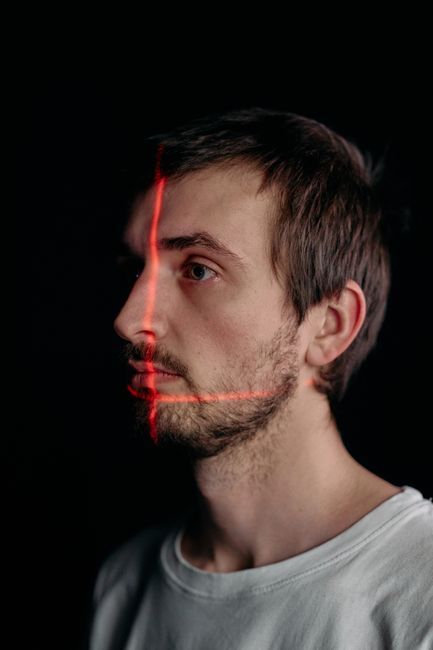
Patient receiving fractional picosecond Pico Fraxel laser at Obliv Clinic near Myeongdong, Seoul

Quick answer

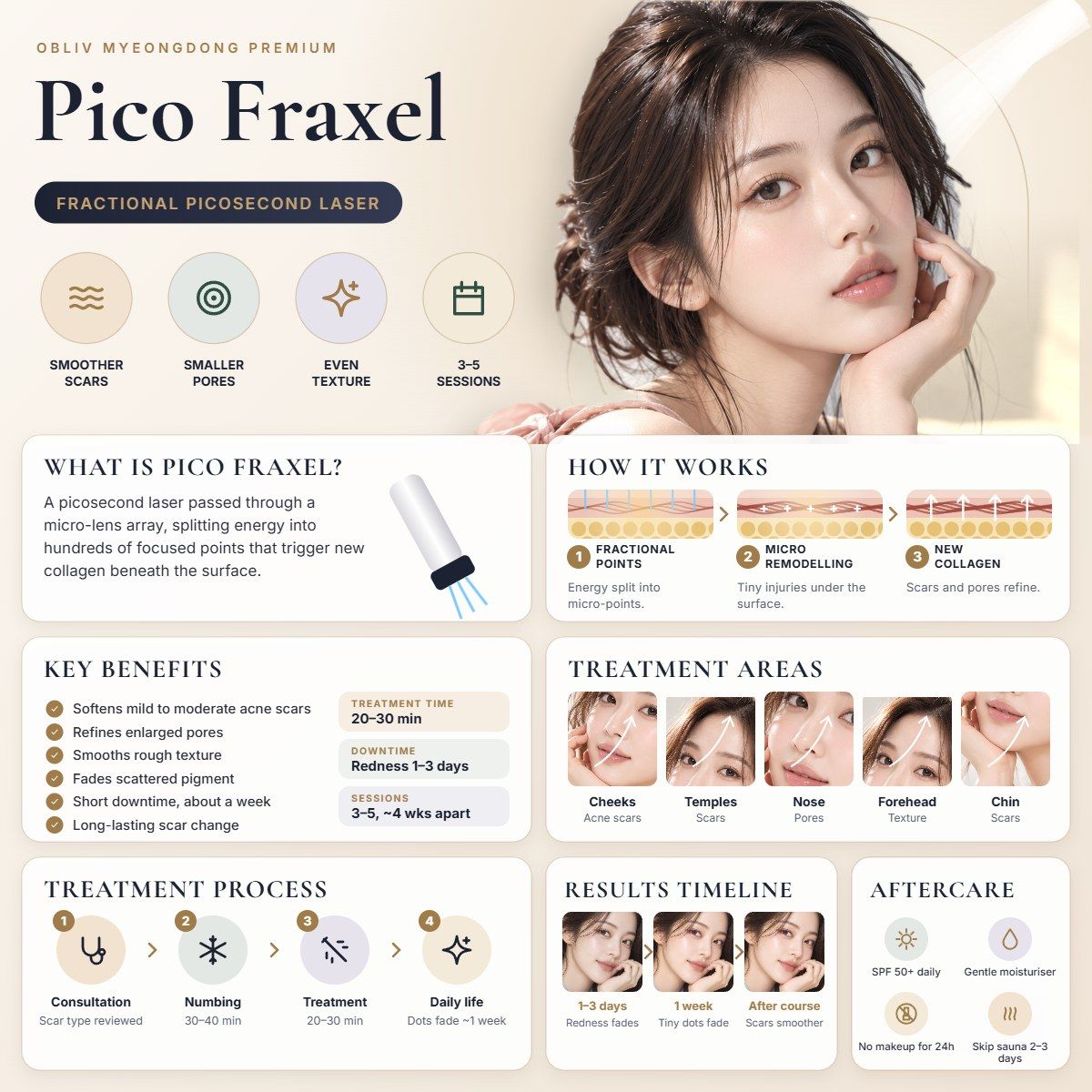
Pico Fraxel is the Korean clinic name for fractional picosecond laser treatment: a picosecond laser (often 1064 nm or 532 nm) passed through a micro-lens or diffractive lens array, so energy is split into hundreds of tiny focused points that create microscopic injuries under the surface and trigger new collagen. It suits mild to moderate acne scars, enlarged pores, rough texture and scattered pigment. At Obliv near Myeongdong and Jongno, Seoul, sessions take about 20–30 minutes plus numbing, redness usually lasts 1–3 days, and most people need 3–5 sessions about 4 weeks apart.

Time20–30 min + 30–40 min numbing
DowntimeRedness 1–3 days; tiny dots ~1 week
Sessions3–5, about 4 weeks apart
LastsScar change long-lasting; upkeep yearly

Key takeaways

  • Fractional picosecond laser makes micro-injuries inside the skin rather than burning off the surface, so downtime is usually 1–3 days of redness rather than a week of crusting.
  • Best for shallow rolling and boxcar acne scars, enlarged pores, texture and freckle-like pigment; deep ice-pick scars usually need other techniques too.
  • Expect 3–5 sessions about 4 weeks apart; collagen keeps remodelling for around 3 months after each one.
  • Lower heat makes it a good option for Asian and darker skin, with a lower rate of rebound pigmentation than strongly ablative lasers in published comparisons.
  • Results are gradual and partial — scars soften by degrees, they are not erased — so we photograph your skin with Mark-Vu to measure change honestly.

What is Pico Fraxel?

In Korean clinics, "Pico Fraxel" (피코프락셀) describes a picosecond laser used with a fractional handpiece. Instead of one even beam, the light passes through a micro-lens array (MLA) or diffractive lens array (DLA) that concentrates it into a grid of tiny high-intensity points. Each point produces a microscopic pocket of injury called laser-induced optical breakdown (LIOB) in the upper dermis, while the surrounding skin and much of the surface stay intact.

Those micro-injuries signal the skin to rebuild collagen and elastin, which gradually lifts shallow scars and tightens the walls of enlarged pores. Because picosecond pulses are measured in trillionths of a second, the effect is driven mainly by pressure rather than heat, which is why recovery is shorter and pigmentation risk lower than with traditional heat-based resurfacing lasers.

"Fraxel" is actually the brand name of a separate non-ablative fractional laser, so you will see the term used loosely in Seoul. At Obliv we tell you exactly which wavelength, handpiece and density are used, and record them in your Skin Library so you can compare honestly with treatment at home.

Pico Fraxel at a glance Treatment time: 20–30 min + 30–40 min numbing; Comfort / numbing: Numbing cream; warm prickling; Downtime: Redness 1–3 days; tiny dots ~1 week; Typical sessions: 3–5, about 4 weeks apart; Results appear: Glow 1–2 weeks; collagen 1–3 months; Results last: Scar change long-lasting; upkeep yearly AT A GLANCE · OBLIV MYEONGDONG Pico Fraxel TREATMENT TIME 20–30 min + 30–40 min numbing COMFORT / NUMBING Numbing cream; warm prickling DOWNTIME Redness 1–3 days; tiny dots ~1 week TYPICAL SESSIONS 3–5, about 4 weeks apart RESULTS APPEAR Glow 1–2 weeks; collagen 1–3 months RESULTS LAST Scar change long-lasting; upkeep yearly
Pico Fraxel at a glance at Obliv Myeongdong. Ranges are typical; your doctor confirms them for your skin.

Which skin layers Pico Fraxel works on

The fractional picosecond beam can be tuned to two jobs. At gentler settings it acts mostly on the epidermis, breaking up scattered pigment and smoothing dull, rough texture. With a focused micro-lens array and higher peak energy, it reaches the upper dermis where acne scars and pore walls are formed, which is where the remodelling effect comes from.

This is the core of Obliv's Skin Architecture approach: name the layer, then choose energy and depth for it. A scar with a flat base and soft edges responds well; a scar tethered by a fibrous band beneath it often needs subcision as well; a narrow, deep ice-pick scar may need focal treatment such as TCA CROSS. Laser alone cannot fill volume loss, which is where boosters or fillers sometimes help.

Which skin layer Pico Fraxel targets epidermis: Lower-energy settings break up scattered surface pigment and refine dull, rough texture.; dermis: Focused micro-spots create tiny vacuoles (LIOB) in the dermis that start collagen and elastin remodelling. SKIN ARCHITECTURE · TARGET LAYER MAP Epidermis 0.05–0.1 mm Lower-energy settings break up scattered surface pigment and refine dull, rough texture. Dermis (collagen & elastin) 1–3 mm Focused micro-spots create tiny vacuoles (LIOB) in the dermis that start collagen and elastin remodelling. Subcutaneous fat 3–4.5 mm+ SMAS (fibromuscular layer) ≈ 4.5 mm Muscle deeper Schematic, not to scale. Depths vary by face area, age and skin type; your doctor sets them after examination.
Skin Architecture view: the layers Pico Fraxel works on.

What Pico Fraxel can treat

We usually recommend Pico Fraxel when someone has more than one textural concern at once, because the same session addresses scars, pores and pigment together. The most common reasons people book near Myeongdong are:

  • Atrophic acne scars — especially shallow rolling and boxcar scars. Full planning is on our acne scar removal page.
  • Enlarged pores on the cheeks and nose, often combined with oil control — see large pores.
  • Uneven texture and fine lines from photoageing, giving smoother make-up application.
  • Scattered pigment such as freckles and mild sun spots, when texture is also a concern; for melasma we use gentler toning instead (see hyperpigmentation treatment).
  • Older, flat post-acne marks that are a mix of pigment and textural change.
  • Selected surgical or injury scars, assessed individually.
Doctor's tip: if you still get new breakouts, treat the acne first. Lasering over active inflammation increases the risk of dark marks and wastes a session; our team can plan acne control and scar work in the right order.
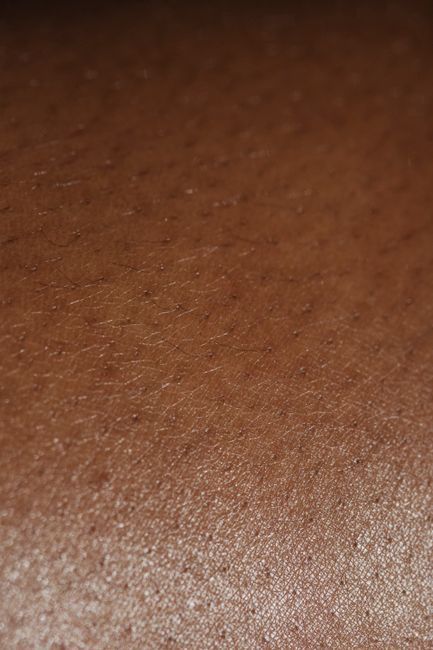
Close-up of smoother skin texture after a course of fractional picosecond laser
Scars, pores and texture are typed before depth and density are chosen.

Ask a doctor about Pico Fraxel

Send a photo and your travel dates on WhatsApp (+82-10-3086-4084). English replies, a personal plan and a written quote before you fly.

Pico Fraxel compared with other scar and texture treatments

There is no single best scar laser. Ablative fractional CO2 and Er:YAG lasers remove micro-columns of skin and can give stronger change per session, but with longer downtime and, in Asian skin, more post-inflammatory hyperpigmentation. A 2023 randomised split-face pilot study in Asian patients found fractional picosecond 1064 nm treatment gave scar improvement that investigators rated similar to ablative fractional Er:YAG over four sessions, with less pain, shorter crusting and far fewer cases of rebound pigmentation, although patients themselves rated the ablative side slightly higher.

In practice we often combine methods: subcision for tethered scars, microneedling RF where pores and laxity coexist, and Pico Fraxel for surface texture and pigment. A skin booster or Rejuran between sessions may support healing and skin quality; see pico laser with Rejuran.

Option How it works Best for Downtime Typical course
Pico Fraxel (fractional picosecond) Micro-lens array focuses ultra-short pulses into dermal micro-spots Shallow scars, pores, texture, pigment 1–3 days redness 3–5 sessions, 4-weekly
Ablative fractional (CO2 / Er:YAG) Vaporises micro-columns of skin Deeper scars, stronger resurfacing 5–10 days crusting 1–3 sessions
Non-ablative fractional (e.g. 1550 nm) Heats micro-columns without opening skin Texture, mild scars 2–4 days redness, swelling 3–6 sessions
Microneedling RF Needles deliver radiofrequency heat into dermis Scars with pores and laxity 2–5 days 3–4 sessions
Subcision Releases fibrous bands under tethered scars Rolling, tethered scars Bruising 5–10 days 1–3 sessions
Laser toning Low-fluence, non-fractional pigment passes Melasma, overall tone None 8–12 sessions

Who is a good candidate?

Pico Fraxel suits healthy adults with mild to moderate textural concerns who prefer short downtime and can return for a series. It is often chosen by people with Fitzpatrick III–V skin, common among Korean and other Asian visitors, because the lower heat load reduces the risk of rebound darkening. We may postpone treatment if you have a fresh tan, active acne, a cold sore, or recent isotretinoin, and we will be honest if your scars are too deep for laser to make a meaningful difference on its own.

Who Pico Fraxel suits, and who should consider another option Good fit: Shallow rolling or boxcar acne scars; Enlarged pores on the cheeks or nose; Rough, uneven texture and dull skin; Scattered freckles or pigment with textural concerns; Asian or darker skin wanting lower-heat resurfacing. Not ideal: Active, inflamed acne (control it first); Isotretinoin within about the last 6 months; Deep ice-pick or tethered scars alone (needs combination care); Active melasma flare, eczema or cold sores; Pregnancy, or a history of keloids. ✓ Usually a good fit ✕ Discuss other options first Shallow rolling or boxcar acne scars Enlarged pores on the cheeks or nose Rough, uneven texture and dull skin Scattered freckles or pigment with textural concerns Asian or darker skin wanting lower-heat resurfacing Active, inflamed acne (control it first) Isotretinoin within about the last 6 months Deep ice-pick or tethered scars alone (needs combination care) Active melasma flare, eczema or cold sores Pregnancy, or a history of keloids
Is Pico Fraxel right for you? A doctor confirms suitability at consultation.

Your Pico Fraxel appointment step by step

Most first visits take about 90 minutes. Because redness typically fades in one to three days, many visitors schedule Pico Fraxel at the start of a trip and save photos and big evenings for the end. If you have only a weekend, read a weekend skin makeover in Seoul for realistic combinations.

  1. Before you fly: send photos of your scars or pores in side lighting on WhatsApp, with your travel dates and any history of cold sores or keloids.
  2. Mark-Vu imaging: standardised photos of pores, texture and pigment for later comparison.
  3. Doctor consultation: scar typing (rolling, boxcar, ice-pick), plan, sessions and written quote.
  4. Numbing and laser: 30–40 minutes of numbing cream, then about 20–30 minutes of laser passes with eye protection.
  5. Calming and aftercare: cooling, soothing care, sunscreen and written instructions; WhatsApp follow-up afterwards.
Your visit to Obliv Myeongdong in five steps: WhatsApp – Send photos, concerns and travel dates in English; Mark-Vu analysis – Imaging of pigment, redness, pores and texture; Doctor consult – Layer-by-layer plan, dose and written quote; Treatment – Private room, numbing and comfort checks; Aftercare – Written care plan and WhatsApp follow-up
How a visit to Obliv Clinic Seoul Origin works, from first WhatsApp message to aftercare.

Recovery and results timeline

Immediately after treatment the skin feels warm and looks flushed. Some people develop pinpoint red dots (petechiae) or a faint grid pattern, which typically disappears within a few days to a week. Skin can feel dry and slightly sandpapery while micro-injuries renew, and a simple routine of gentle cleanser, moisturiser and sunscreen is all it needs.

Visible brightness appears within a week or two, but collagen remodelling is slow: most of the scar and pore change shows one to three months after each session, and the full effect of a course is judged about three months after the last one. Realistic outcomes are measured in percentages of improvement, so we compare Mark-Vu images rather than relying on memory.

Pico Fraxel recovery and results timeline Day 0: Warmth and redness like mild sunburn; some people see pinpoint dots. Gentle moisturiser only.; Day 1–3: Redness fades; skin can feel dry or slightly rough. Make-up is usually fine from day 1–2.; Day 4–7: Fine grid texture or dots settle. Skin often looks brighter and smoother.; Week 4: Next session. Collagen from the first session is still building underneath.; Session 3: Imaging review: pores and shallow scars are compared with baseline photos.; Month 3+: Final remodelling after the course; maintenance sessions every 6–12 months if wanted. RECOVERY & RESULTS TIMELINE 1 Day 0 Warmth and redness like mild sunburn; some people see pinpoint dots. Gentle moisturiser only. 2 Day 1–3 Redness fades; skin can feel dry or slightly rough. Make-up is usually fine from day 1–2. 3 Day 4–7 Fine grid texture or dots settle. Skin often looks brighter and smoother. 4 Week 4 Next session. Collagen from the first session is still building underneath. 5 Session 3 Imaging review: pores and shallow scars are compared with baseline photos. 6 Month 3+ Final remodelling after the course; maintenance sessions every 6–12 months if wanted.
What to expect after Pico Fraxel, day by day.

Pico Fraxel for travellers

Flying after Pico Fraxel is generally fine from the next day. Cabin air is very dry, so carry a bland moisturiser and reapply it during the flight, and avoid sheet masks with strong actives for a few days. Sunscreen is essential in Seoul's bright sun, especially during summer walking in Myeongdong.

A full course needs three to five visits about four weeks apart, which suits people who visit Seoul regularly or who live in Korea. If you only come once, one session still refines texture and pores, and your settings are saved so a doctor at home can continue. For acne scar planning specifically, read acne scar consultation in Myeongdong.
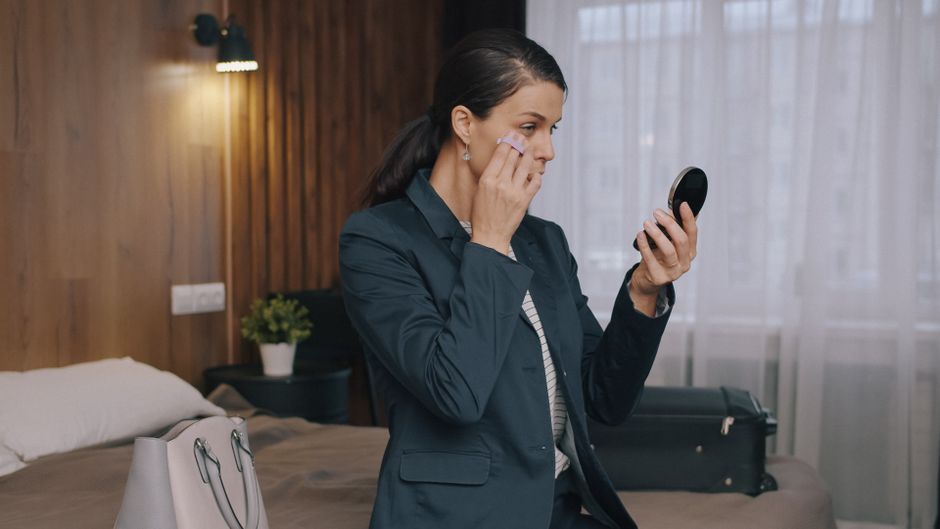
Traveller applying moisturiser in a Seoul hotel after Pico Fraxel
Bland moisturiser and sunscreen are all your skin needs for the first few days.

Pico Fraxel cost in Seoul: what affects the price

The price of Pico Fraxel depends on the area treated (full face, cheeks only, or face and neck), the number of sessions in your plan, and whether it is combined with subcision, boosters or other lasers. Packages advertised online often assume a standard face, so we confirm the plan in writing after your consultation and do not change it on the day without your agreement.

For general information on how pricing and payment work for international patients, see prices and payment. Korea's cosmetic-procedure VAT refund for foreign visitors ended on 31 December 2025, so it no longer applies to new treatments.

Risks, side effects and safety

Every medical aesthetic treatment carries some risk. These are the effects our doctors explain before you consent:

  • Redness, warmth and mild swelling for about 1–3 days.
  • Pinpoint bleeding dots (petechiae) or a grid pattern that usually fades within a week.
  • Dryness, flaking, itching or a sandpaper feel during renewal.
  • Post-inflammatory hyperpigmentation, less common than with ablative lasers but possible, especially after sun exposure.
  • Acne flare or milia in some people during healing.
  • Cold sore reactivation in those prone to it; antiviral cover may be advised.
  • Rarely, blistering, infection or scarring if aftercare is not followed.
Seek medical help promptly if you notice severe or worsening pain, skin turning white, grey or dusky, blisters, spreading redness, fever, or any change in vision. Message the clinic on WhatsApp, and in an emergency in Korea call 119.

Aftercare checklist

  1. Use only gentle cleanser, bland moisturiser and sunscreen for 3–5 days.
  2. Do not scrub, peel or use retinoids and acids for about 5–7 days.
  3. Apply broad-spectrum SPF 30+ daily and reapply outdoors; wear a hat in strong sun.
  4. Skip saunas, jjimjilbang, swimming pools and hard exercise for 48 hours.
  5. Avoid make-up on day 0; light mineral make-up is usually fine from day 1–2.
  6. Message us on WhatsApp if you notice blisters, crusting that spreads or darkening after 2–3 weeks.

Frequently asked questions

What is Pico Fraxel?

It is fractional picosecond laser treatment. A picosecond laser is passed through a micro-lens or diffractive array, creating tiny focused injury points in the skin that stimulate collagen while leaving the surface largely intact. It is used for acne scars, pores, texture and pigment.

Is Pico Fraxel the same as Fraxel?

No. Fraxel is a brand of non-ablative fractional laser that works mainly with heat. Pico Fraxel is a Korean nickname for fractional picosecond laser, which works mainly through very short pressure-based pulses.

How many sessions of Pico Fraxel do I need?

Most people need about 3–5 sessions around 4 weeks apart. Deeper scars may need more sessions or combination treatment such as subcision.

What is the downtime after Pico Fraxel?

Usually 1–3 days of redness and dryness, sometimes with pinpoint dots for up to a week. Most people return to normal activities the next day.

Does Pico Fraxel hurt?

With numbing cream it feels like warm prickling or snapping. Most people find it very tolerable; cooling is used during and after the treatment.

Can Pico Fraxel remove acne scars completely?

No laser removes acne scars completely. Pico Fraxel typically softens shallow rolling and boxcar scars by a meaningful degree over a course. Deep ice-pick and tethered scars usually need additional techniques.

Is it safe for Asian or darker skin?

It is often chosen for these skin types because picosecond pulses produce less heat, and studies in Asian patients report less rebound pigmentation than with ablative lasers. Careful settings and sun protection are still essential.

Does Pico Fraxel shrink pores?

It can make enlarged pores look smaller and smoother by remodelling collagen around them, usually gradually over several sessions. Oil control and skincare help maintain the result.

When can I wear make-up after Pico Fraxel?

Usually from the next day or two, once the skin is no longer raw. Use gentle, non-irritating products and always apply sunscreen first.

Do you offer Pico Fraxel with English consultations near Myeongdong?

Yes. Consultations are available in English, and you can send photos of your skin on WhatsApp at +82-10-3086-4084 before you travel.

From the Obliv Skin Journal

Ask a doctor about Pico Fraxel

Send a photo and your travel dates on WhatsApp (+82-10-3086-4084). English replies, a personal plan and a written quote before you fly.

O
Medically reviewed by the Obliv Clinic Seoul Origin medical team
Our five physicians plan every treatment by skin layer using the Obliv Skin Architecture method. Last reviewed 2026-10-27. This page is general information, not a diagnosis; your plan is set after an in-person consultation.

Sources and further reading

  1. Evolution of the Picosecond Laser: A Review of Literature (Dermatologic Surgery, 2019)
  2. Comparison of 1064-nm picosecond laser with fractional micro-lens array vs. ablative fractional Er:YAG for atrophic acne scars in Asians (Frontiers in Medicine, 2023)
  3. DermNet – Postinflammatory hyperpigmentation
  4. Cleveland Clinic – Hyperpigmentation: What it is, Causes & Treatment

Explore Botox and fillers by area

Each area has its own anatomy, doses and safety rules. Choose an area for a doctor-reviewed guide with an infographic, typical doses, recovery and FAQs.

Botox by area · overview

Dermal fillers by area · overview

Every plan is made by one of our doctors after an in-person examination.