
Botox · Forehead lines
Forehead Botox in Myeongdong, Seoul
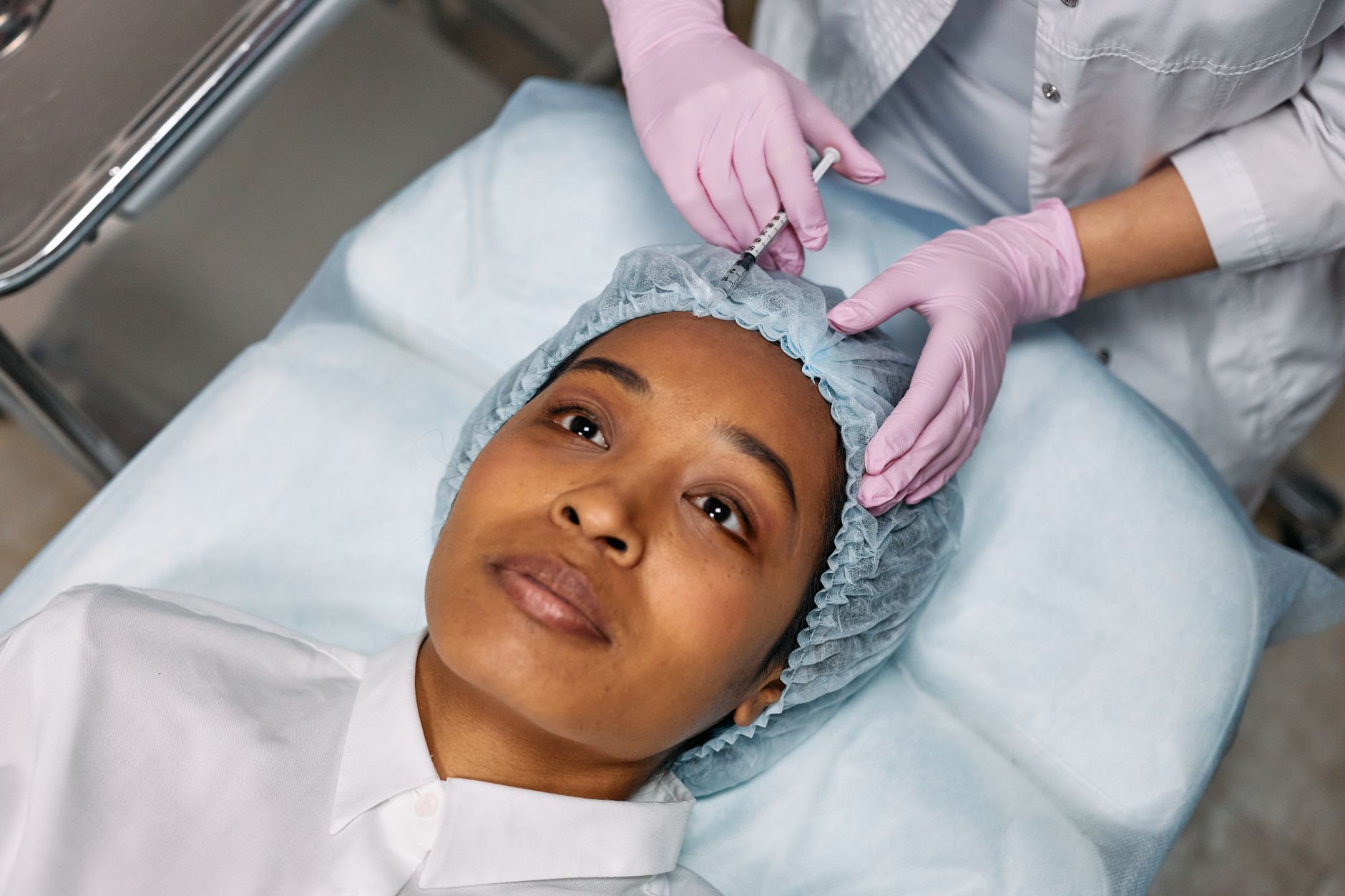
Forehead lines are the easiest to over-treat. Our doctors dose the forehead lightly and in balance with the frown area, so lines soften while your brows stay natural and expressive.
Quick answer
Forehead Botox relaxes the frontalis, the muscle that lifts your brows and creates horizontal forehead lines. Small doses spread across the forehead soften the lines while keeping enough movement for natural expression. Treatment takes about 10 minutes, results start in 3–5 days, peak at about 2 weeks and usually last 3–4 months.
What is forehead Botox?
The frontalis is the only muscle that raises the brows. Every time you lift them, the skin folds into horizontal lines that become etched over time. Botulinum toxin reduces how strongly the muscle pulls, so the folds become shallower.
Because the frontalis also holds the brows up, dosing too much or too low on the forehead can make brows feel heavy. That is why we usually treat the forehead together with the frown lines, which pull the brows down, so the forces stay balanced.
Who is it for?
- Horizontal lines that appear when you raise your brows, or are starting to stay at rest.
- People who want a smoother forehead but still want to look expressive.
- Heavy brows or hooded lids need caution; we may suggest a Botox brow lift or Thermage Eye instead.
- Deep lines at rest may also need a skin booster or forehead filler.
How Obliv plans forehead Botox
Your doctor watches you raise and relax your brows, checks how high the muscle reaches and whether one side lifts more. Points are kept well above the brow to protect lift, and the lateral tail is treated carefully to avoid a sharp, surprised arch.
| Typical dose | Often 6–20 units (onabotulinumtoxinA equivalent), adjusted to muscle strength and brow position |
|---|---|
| Technique | Small, evenly spaced points in the upper forehead |
| Pairs well with | Frown line Botox, crow’s feet Botox |
| Review | At 2 weeks for fine-tuning if needed |
Results and recovery
Small bumps settle within an hour and make-up can go on after a few hours. Lines soften from day 3–5 and the result is fully visible at about two weeks, which is the right time for any touch-up.
Risks and side effects
- Mild headache or a tight feeling in the first days.
- Brow heaviness if the forehead relaxes more than the brow depressors.
- A raised lateral brow (‘Spock brow’), easily corrected at review.
- Rarely, eyelid drooping from product spread; temporary.
Aftercare
- Stay upright for 4 hours and do not rub the forehead.
- Avoid tight hats, headbands and goggles that day.
- Skip saunas and hard exercise for 24 hours.
Botox by area
Every area has its own muscles, doses and risks. Choose an area for a doctor-reviewed guide, or read the Botox overview and our comparison with Xeomin.
Looking for volume rather than relaxation? See dermal fillers by area, or meet the doctors who plan every dose.
Ask a doctor about Botox
Send a photo and your travel dates on WhatsApp (+82-10-3086-4084). English replies, a personal plan and a written quote before you fly.
Frequently asked questions
Will forehead Botox make my brows drop?
It can if the forehead is over-treated. We dose lightly, keep points high and treat the frown area as well, so brows stay in a natural position.
How long does forehead Botox last?
Usually 3–4 months. Movement returns gradually rather than suddenly.
Can Botox remove deep forehead lines?
It softens lines caused by movement. Lines etched at rest improve over repeated sessions, and a skin booster or filler can help the remaining crease.
Can I fly after forehead Botox?
Yes. Keep your head upright and avoid pressing on the forehead, such as with an eye mask, for the first few hours.
Related treatments and guides
Last reviewed 2026-10-29. General information, not a diagnosis; your plan is set after an in-person consultation.