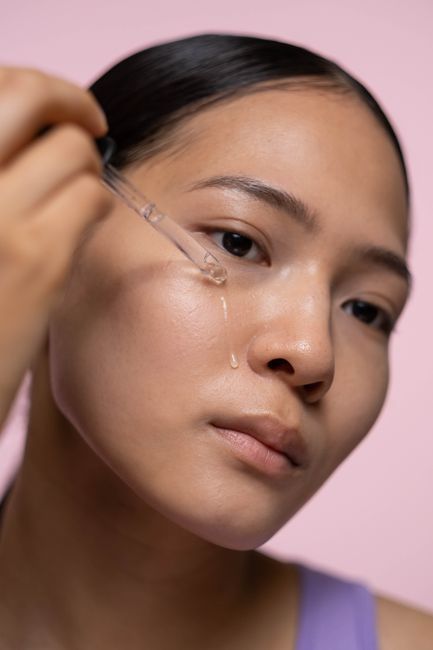
Skin concerns · Hydration & glow
Dull & Dehydrated Skin Treatment in Myeongdong & Jongno, Seoul
Dull, tight or flaky skin usually means the barrier is losing water faster than it can hold it, with uneven tone and rough texture on top. At Obliv Clinic Seoul Origin a doctor separates dehydration from dry skin type, pigment and inflammation, then plans hydration from the surface down.
Quick answer
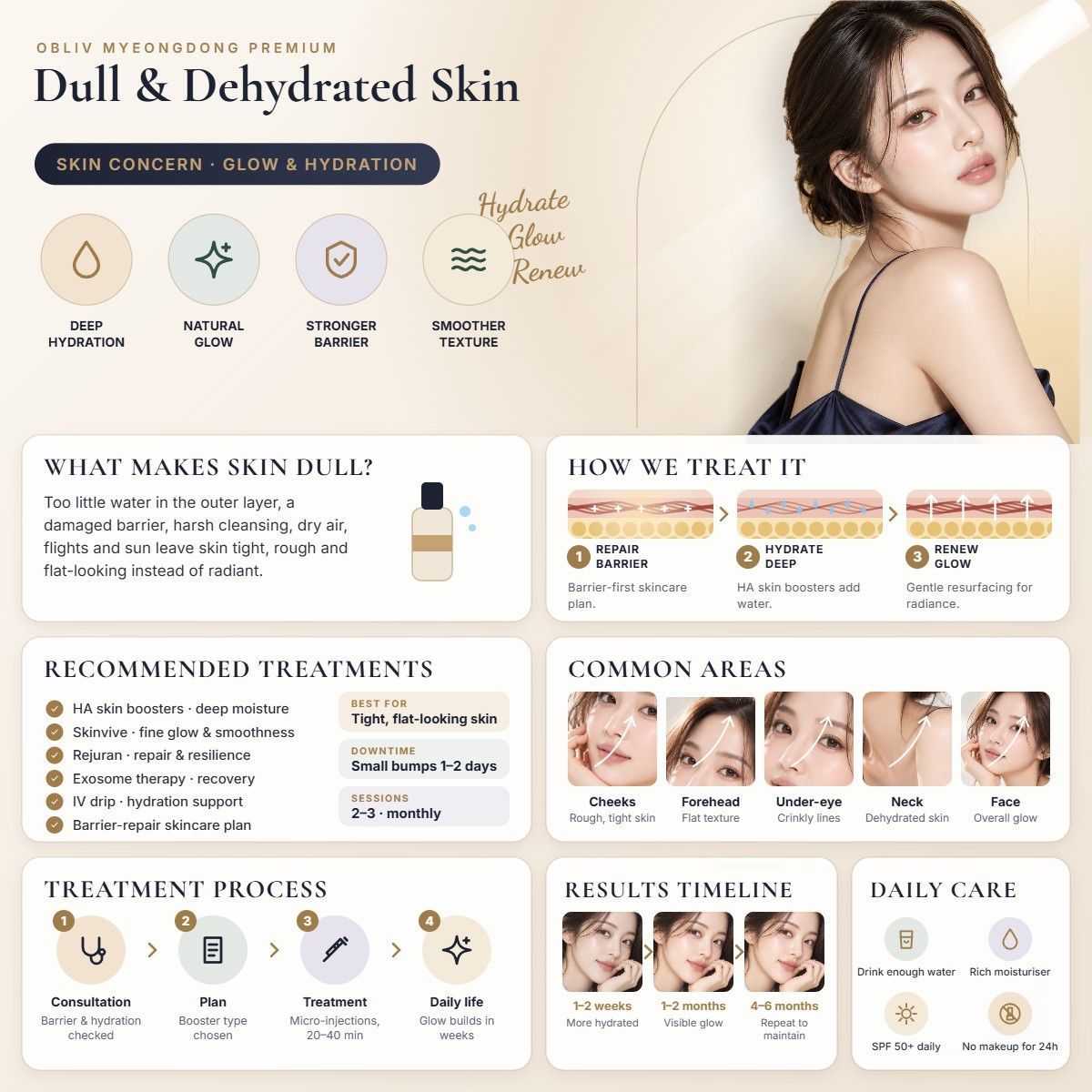
Dull, dehydrated skin is skin that lacks water in its outer layer, so it looks flat, feels tight and shows fine crinkly lines, often with rough texture and uneven tone that scatter light instead of reflecting it. It differs from a dry skin type, which lacks oil, and can affect oily skin too. Common triggers are a damaged barrier, harsh cleansing, low humidity, flights and sun. At Obliv near Myeongdong and Jongno, Seoul, doctors combine barrier care with skin boosters such as HA, Skinvive or Rejuran, with visible glow usually within 1–4 weeks.
Key takeaways
- Dehydrated skin lacks water and can happen to any skin type; dry skin is a type that lacks oil. Oily, acne-prone skin can be dehydrated at the same time.
- Most dullness has three parts: water loss from the barrier, a rough build-up of surface cells, and uneven pigment or redness — each needs its own step.
- Injectable skin boosters hydrate the dermis from within, but they work best once the surface barrier has been repaired.
- Over-exfoliating is one of the most common causes of dull, tight, sensitive skin among skincare enthusiasts.
- Persistent dryness with itch, scaling, rash or whole-body tiredness may be eczema, psoriasis or a thyroid problem — see a doctor.
What makes skin dull and dehydrated?
Healthy skin glows because its surface is smooth, evenly coloured and well hydrated, so light reflects off it cleanly. The outermost layer, the stratum corneum, is often compared to a brick wall: flattened skin cells are the bricks and a mixture of lipids, mainly ceramides, cholesterol and free fatty acids, is the mortar. Inside the cells, natural moisturising factors hold water. When the mortar is depleted or disrupted, water escapes through the skin faster than normal, a process measured as transepidermal water loss (TEWL), and the surface becomes rough, tight and dull.
Triggers are usually everyday ones: hot showers, foaming cleansers and double cleansing that strip lipids; too many exfoliating acids, scrubs or retinoids; low humidity from heating, air conditioning and aircraft cabins; cold wind; and sun exposure. Age reduces oil production and slows barrier repair. Some medicines, including oral isotretinoin and diuretics, and conditions such as an underactive thyroid also dry the skin.
Dullness also has a light-scattering side. A build-up of dead cells, enlarged pores, uneven pigment and low-grade redness all make the complexion look flatter. That is why the most satisfying plans combine barrier repair, deeper hydration and, once the skin is calm, a gentle tone-evening step.
Dehydrated vs dry skin: why the difference matters
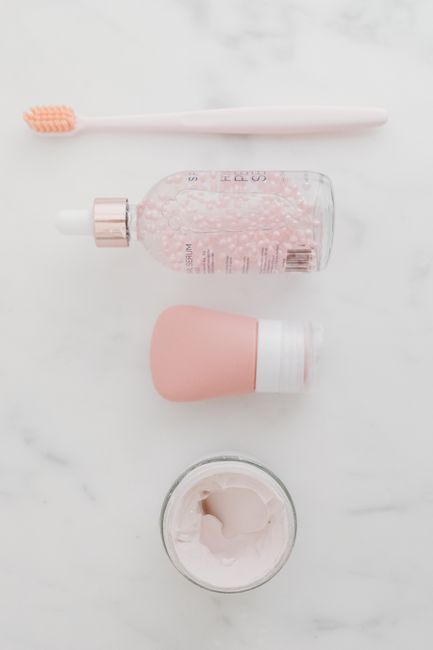
The two terms are often used interchangeably, but they describe different things. Dry skin is a skin type: it produces less oil, feels rough or tight most of the time and often has fine flaking, especially on the cheeks. Dehydrated skin is a condition: the skin lacks water, whatever its oil level. Oily and acne-prone skin can be dehydrated, which shows as an oily T-zone with tight, flaky cheeks or make-up that slides off and cracks at the same time.
The distinction changes what you buy. Dry skin benefits from richer creams with occlusive and lipid ingredients, such as ceramides, squalane and shea. Dehydrated skin needs humectants that draw in water, such as glycerin, hyaluronic acid, panthenol and urea, sealed in with a moisturiser suited to your oil level. Oily, dehydrated skin often does best with a light gel-cream rather than heavy oils, which can block pores and trigger breakouts.
In the Obliv Skin Architecture view, both problems start in the epidermis, where the barrier lives, but chronic dehydration and sun damage also reduce hyaluronic acid and collagen in the dermis. That is why topical care improves the surface quickly, while injectable boosters address the deeper loss of bounce and glow.

How a doctor assesses dull skin
We start by listening to your routine, product by product. A surprising number of dull, tight complexions improve simply by stopping something: an exfoliating toner used twice daily, a retinoid layered with acids, or a cleansing oil followed by a foaming wash. Your doctor also asks about climate, travel, sleep, medicines and any history of eczema, rosacea or acne.
Mark-Vu skin analysis then images texture, pores, pigment, redness and wrinkles, giving an objective baseline. The doctor examines the skin under good light, looks for flaking patterns, fine dehydration lines that soften when moisturised, redness that suggests an irritated barrier, and pigment that may need separate treatment. Results are saved in your Skin Library record.
Several medical conditions can masquerade as simple dryness. Atopic and contact dermatitis cause itchy, red, scaly patches; seborrhoeic dermatitis gives greasy flaking around the nose and brows; psoriasis forms well-defined plaques; rosacea causes flushing and sensitivity. Body-wide dryness with fatigue, weight change or hair loss can point to thyroid disease. These need diagnosis and medical treatment rather than boosters, and the chart shows when we would ask you to see a doctor first.
Ask a doctor about Dull & Dehydrated Skin
Send a photo and your travel dates on WhatsApp (+82-10-3086-4084). English replies, a personal plan and a written quote before you fly.
Treatment options for dull, dehydrated skin compared
Clinic treatments for dull skin work at different depths. Calming and barrier-supporting care helps the surface recover; injectable boosters hydrate the dermis; brightening laser and fractional treatments refine tone and texture. The table compares the options our doctors use most, with links to each treatment's full page.
| Option | What it does | Best for | Typical course | Downtime |
|---|---|---|---|---|
| HA skin booster | Micro-droplets of hyaluronic acid hydrate the dermis | Dehydration, fine lines, flat tone | 2–3 sessions, 2–4 weeks apart | Small bumps 1–2 days |
| Skinvive | Stabilised HA microdroplet for smoothness and glow | Cheek glow and smoothness | Often 1 session | Mild swelling or bruising |
| Rejuran/ salmon DNA (PN/PDRN) | Polynucleotides support repair and resilience | Thin, sensitive, sun-tired skin | 2–3 sessions | Bumps 1–3 days |
| Exosome/ LDM | Calming, barrier-supporting regenerative care | Redness, irritation, after laser | 1–4 sessions | None to minimal |
| Brightening laser toning/ Pico Fraxel | Evens pigment and refines texture | Uneven tone and rough texture | 3–6 toning, or 2–3 Pico Fraxel | None to a few days' redness |
| IV drip | Fluids and vitamins by infusion | Feeling run-down after travel | As needed | None |
Skin boosters: hydration from within
Skin boosters are a cornerstone of Korean aesthetic dermatology and the treatment most visitors associate with the "glass skin" look. Instead of adding volume like a filler, they spread tiny amounts of product evenly through the dermis, either with fine needles, a multi-needle injector or a microneedling device. Hyaluronic acid boosters bind water and improve hydration, smoothness and fine lines; Skinvive is a hyaluronic acid microdroplet product designed for cheek smoothness and glow.
For skin that is thin, sensitive or sun-tired, polynucleotide (PN) and PDRN boosters such as Rejuran or salmon DNA injections are often preferred because they support repair as well as hydration. A typical course is two or three sessions two to four weeks apart, with a visible change in glow within one to four weeks and improvement that continues for a few months.
Expect small bumps that flatten within a day or two, occasional pinpoint bruising and mild tenderness. Most people return to sightseeing the same day, though we suggest avoiding make-up for several hours and saunas for a day or two. If you are deciding between products, our article on Skinvive vs Rejuran explains how they differ.
Calming, barrier repair and regenerative care
When the barrier is irritated, the first goal is to bring inflammation down so the skin can rebuild its lipid layer. In clinic, low-intensity options include LDM ultrasound, which is used in Korea for calming and hydration, and topical exosome or stem-cell-derived products applied after gentle treatment. These are comfortable and need no downtime. The evidence base for exosome products is still growing, so we describe them as supportive care rather than a cure.
At home, the plan is usually short: a gentle low-foam cleanser once or twice a day, a humectant serum, a ceramide moisturiser and daily sunscreen, with exfoliants and strong actives paused for two to four weeks. Once the skin stops stinging and flaking, actives are reintroduced one at a time. People with sensitivity or flushing should also read our page on redness and sensitive skin.
Restoring tone, texture and glow
Once the skin is hydrated and calm, any remaining dullness is usually down to uneven pigment, rough texture or enlarged pores. Low-energy brightening laser toning evens out a blotchy tone over a series of sessions with little or no downtime; for scattered spots, our hyperpigmentation treatment page explains the options. Pico Fraxel refines texture and pores with a few days of redness.
Many visitors combine a booster with a toning laser on the same visit for an even, luminous finish before an event. Order and spacing matter, and your doctor will adjust them to your skin and itinerary. For pigment-specific concerns, including melasma, see melasma and dark spots; for enlarged pores, see large pores.

Travel, flights and Seoul's seasons
Aircraft cabins typically have very low humidity, and long-haul flights combined with time-zone changes, salty food and little sleep leave many visitors with tight, dull skin for the first day or two in Seoul. Drinking water helps you feel better, but it does not rehydrate the skin surface by itself; a humectant serum, a sealing moisturiser and avoiding hot showers on arrival make more difference. We cover this in skin hydration after long flights.
Seoul's climate adds its own challenges. Winters are cold and very dry, with strong indoor heating; summers are humid and hot, with high UV and air conditioning. Spring can bring fine dust ("misemeonji") that irritates sensitive skin. Your doctor may adjust boosters and home care by season, for example a richer moisturiser and an extra booster before winter, or a lighter gel and stricter sunscreen in summer. See our winter skin rescue guide.
A typical plan for dull, dehydrated skin
Most patients follow a simple sequence: calm and simplify, hydrate deeply with a booster series, then refine tone. Short-stay visitors often have one booster plus a calming treatment in their first days in Seoul and a second session on a later trip, or continue maintenance at home using the products and settings recorded in their Skin Library.
Progress is reviewed against the first Mark-Vu images. Hydration improvements are often visible within a week or two, while texture and tone take longer. Maintenance every three to six months, adjusted for season, keeps the result.
Home care that keeps skin hydrated
Daily habits make the biggest long-term difference to dull skin, and they protect any clinic result. Dermatology guidance on dry skin is consistent and simple:
- Keep showers short and warm, not hot, and pat the face dry.
- Cleanse gently. One mild cleanser is usually enough; avoid repeated double cleansing on days without heavy make-up or sunscreen.
- Moisturise on damp skin within a few minutes of washing, choosing a cream over a lotion if you are dry.
- Choose fragrance-free rather than "unscented" products, and add only one new product at a time.
- Limit exfoliation to once or twice a week, and pause it completely if skin stings.
- Wear sunscreen daily — UV damages both the barrier and the dermis.
- Use a humidifier in heated or air-conditioned rooms, including hotel rooms.
Red flags, and how to book
Dull skin is usually cosmetic, but dryness can be a sign of a skin disease or a general health issue. If you have any of the signs in the warning box, please see a dermatologist or your own doctor for diagnosis before cosmetic treatment.
To plan treatment, send us a few make-up-free photos in daylight and a list of the products you use on WhatsApp, with your travel dates. Our English-speaking team replies with a suggested plan. The clinic is between Myeongdong and Jongno, about six minutes' walk from Jongno 3-ga and Euljiro 3-ga stations; see our English-speaking clinic guide for what to expect.
Frequently asked questions
What is the difference between dry and dehydrated skin?
Dry skin is a skin type that produces less oil. Dehydrated skin is a temporary condition where skin lacks water, which can happen to any skin type, including oily skin. They need different products: lipids for dryness, humectants for dehydration.
What is the best treatment for dull skin?
For most people, a combination of barrier repair at home and a series of injectable skin boosters, followed by gentle brightening laser if tone is uneven. The best mix depends on whether dullness is caused by dehydration, texture, pigment or redness.
How quickly do skin boosters work?
Many people notice better hydration and glow within 1–4 weeks of the first session. A series of 2–3 sessions gives a fuller, longer-lasting result, typically maintained every 3–6 months.
Is there downtime after a skin booster?
Usually little. Small bumps at injection points flatten in 1–2 days, and pinpoint bruising is possible. Most visitors go back to sightseeing the same day.
Can oily skin be dehydrated?
Yes. Oily skin can lack water, especially after harsh cleansing or acne treatments. It often feels tight yet looks shiny. Light humectant products and gentle cleansing usually help.
Does drinking water fix dehydrated skin?
Staying hydrated is good for general health, but extra water alone rarely fixes dehydrated facial skin. Repairing the barrier and reducing water loss from the surface matters more.
Can I get a skin booster right after a long flight?
Yes, in most cases, and many visitors do. If your skin is very irritated or you are unwell after travel, your doctor may suggest a calming treatment first and the booster a day or two later.
Why does my skin look dull even though I use lots of products?
Using many active products, especially exfoliating acids and retinoids together, can damage the barrier and make skin dull, tight and sensitive. Simplifying the routine is often the first step.
Do you offer English consultations for dull skin?
Yes. Consultations are available in English, and Chinese or Japanese support can be requested. Message +82-10-3086-4084 on WhatsApp before your visit.
Related treatments and guides
From the Obliv Skin Journal
- Best Treatment Combination for Dull Skin
- Skin Hydration Treatments After Long Flights to Korea
- Dry Hotel Air Skin Recovery
- Glass Skin Package + Skin Booster
- Winter Skin Rescue in Myeongdong
- Skinvive vs Rejuran Korea
Ask a doctor about Dull & Dehydrated Skin
Send a photo and your travel dates on WhatsApp (+82-10-3086-4084). English replies, a personal plan and a written quote before you fly.
Our five physicians plan every treatment by skin layer using the Obliv Skin Architecture method. Last reviewed 2026-10-27. This page is general information, not a diagnosis; your plan is set after an in-person consultation.
Sources and further reading
- DermNet – Dry skin (xeroderma): causes, treatments and more
- American Academy of Dermatology – Dermatologists' top tips for relieving dry skin
- Cleveland Clinic – Dry Skin (Xeroderma): Symptoms, Causes, Treatment & Prevention
- American Academy of Dermatology – Wrinkle remedies (moisturising and sun protection)