
Skin concerns · Anti-ageing

Wrinkles & Fine Lines Treatment in Myeongdong & Jongno, Seoul

Every wrinkle has a cause you can name: a muscle that folds the skin, a dermis that has thinned, lost volume underneath or skin that has loosened. At Obliv Clinic Seoul Origin a doctor reads which layer is behind each line before choosing Botox, boosters, laser or lifting.

Woman with natural expression lines considering wrinkle treatment near Myeongdong, Seoul

Quick answer

Wrinkles are creases in the skin caused by repeated muscle movement (dynamic lines), by loss of collagen, elastin and hydration in the dermis (static lines and fine lines), and by volume loss or sagging beneath. Sun exposure (photoaging) and smoking speed all of these. At Obliv near Myeongdong and Jongno, Seoul, a doctor matches each line to its layer: Botox for movement, skin boosters and laser for texture, filler for folds and RF or ultrasound lifting for laxity, with results typically building over 2 weeks to 6 months.

Key takeaways

  • Dynamic lines appear only when you move and respond best to Botox; static lines are still there at rest and need dermal repair as well.
  • Fine, crepey lines are mostly a dermis and hydration problem — skin boosters, Rejuran and fractional laser usually beat extra toxin.
  • Deep folds such as nasolabial lines are often caused by volume loss and sagging above them, so treating the cheek or lifting can work better than filling the fold itself.
  • Daily broad-spectrum sunscreen and a retinoid are the best-evidenced home steps; most creams need 6–12 weeks to show change.
  • A new, non-healing patch or spot among lines is not a wrinkle — have any changing lesion checked by a doctor.

Why wrinkles and fine lines form

Skin is held smooth by a scaffold in the dermis: collagen gives strength, elastin lets it spring back, and water-binding molecules such as hyaluronic acid keep it plump. From our mid-twenties that scaffold is renewed more slowly. Fat pads beneath the skin shrink and shift, the bone of the eye socket and jaw gradually remodels, and the tissue that once filled out the face starts to drape rather than support. Lines form where skin folds most and where support is weakest.

Ultraviolet light is the biggest accelerator. UV exposure breaks down collagen and causes abnormal, clumped elastin, a process called photoaging, which is why the backs of the hands and the face often look older than the inner arm. Smoking reduces new collagen production and adds lines around the lips; air pollution, poor sleep and repeated dehydration add to the picture. Genetics decide how quickly all of this happens and where your lines show first.

Movement is the final ingredient. Each frown or squint folds the skin along the same path. In young, elastic skin the fold disappears as soon as the muscle relaxes. After years of repetition, and as the dermis thins, the crease starts to stay. Understanding which of these forces drives each of your lines is the key to treating them without over-treating.
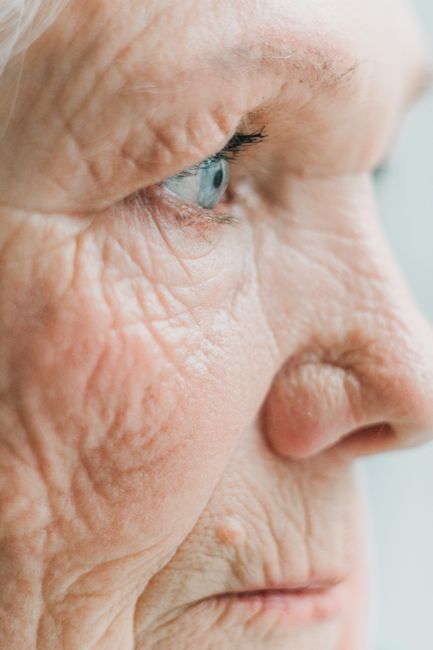
Close-up of fine lines and skin texture caused by collagen loss and sun exposure
Fine lines form where skin folds most and where dermal support has thinned.

Dynamic vs static lines: the difference that changes treatment

The single most useful question at consultation is whether a line is dynamic or static. Your doctor asks you to relax your face completely, then frown, raise your brows, squint and smile. A dynamic line appears only with movement; a static line is still visible at rest, though it often deepens with expression too.

Dynamic lines live mainly in the muscle layer. Relaxing the muscle with botulinum toxin stops the fold, so the line softens within days. Static lines mean the dermis itself has creased. Relaxing the muscle still helps, because it stops the line being re-folded, but the crease needs repair: boosters, polynucleotides, fractional laser or radiofrequency that rebuild collagen and hydration over weeks. Deep folds and lines caused by drooping tissue involve the fat and SMAS layers, which is where volume replacement or lifting comes in.

This is the core of the Obliv Skin Architecture method: read the line as layers, then choose energy, depth and dose for each. It explains why one person's forehead lines vanish with a small dose of toxin while another's need toxin plus a booster series, and why adding more units rarely fixes a line that is really a dermal problem.


Which skin layer Wrinkles & Fine Lines targets epidermis: Roughness and fine crinkling from dryness and sun; helped by retinoids and peels.; dermis: Static and fine lines: collagen and elastin loss. Boosters, PN, fractional laser and RF rebuild support.; muscle: Dynamic lines from frowning, raising brows and squinting. Botulinum toxin relaxes the muscle that folds skin. SKIN ARCHITECTURE · TARGET LAYER MAP Epidermis 0.05–0.1 mm Roughness and fine crinkling from dryness and sun; helped by retinoids and peels. Dermis (collagen & elastin) 1–3 mm Static and fine lines: collagen and elastin loss. Boosters, PN, fractional laser and RF rebuild support. Subcutaneous fat 3–4.5 mm+ SMAS (fibromuscular layer) ≈ 4.5 mm Muscle deeper Dynamic lines from frowning, raising brows and squinting. Botulinum toxin relaxes the muscle that folds skin. Schematic, not to scale. Depths vary by face area, age and skin type; your doctor sets them after examination.
Skin Architecture view: the layers Wrinkles & Fine Lines works on.

Common lines, by face area

Different areas tend to be driven by different layers. The list below is a general guide; your own face may differ, and many areas involve more than one cause.

  • Frown lines (the "11s") and forehead lines — mostly dynamic in younger patients; static elements appear from the late thirties. Toxin is first-line, with boosters for etched creases.
  • Crow's feet — dynamic from the smile, plus crepey fine lines from thin skin. A small toxin dose combined with an eye-area booster or Thermage Eye often works best; see also dark circles and under-eye.
  • Under-eye crinkling — almost always a dermal and hydration issue rather than muscle; toxin is used very sparingly here.
  • Nasolabial folds and marionette lines — usually a sign of mid-face volume loss and descent rather than a 'wrinkle'. Supporting the cheek or lifting the lower face is often more natural than filling the fold.
  • Upper-lip (smoker's or 'barcode') lines — a mix of muscle pursing and thin skin. Tiny toxin doses, soft filler and fractional laser are combined cautiously.
  • Neck lines and bands — horizontal 'necklace' lines respond to boosters and soft filler; vertical bands to toxin; crepey neck skin to RF or ultrasound lifting.
  • Cheek crepiness — fine criss-cross lines when smiling, typical of sun-damaged, dehydrated skin; boosters and laser are the mainstay.

Ask a doctor about Wrinkles & Fine Lines

Send a photo and your travel dates on WhatsApp (+82-10-3086-4084). English replies, a personal plan and a written quote before you fly.

How a doctor assesses your lines

Your visit starts with photographs at rest and in motion and Mark-Vu skin analysis, which maps texture, wrinkles, pores and pigment so that improvement can be measured over time. The doctor then examines skin thickness by gentle pinching, checks how quickly the skin recoils, looks at fat pad position and asks about sun habits, smoking, skincare, previous injectables and medical history.

Some things that look like wrinkles are not. Sleep lines run vertically on one side of the face from sleeping on a pillow and need a change of sleeping position as much as treatment. Dehydration lines can appear within days after a long flight or in dry winter air and disappear once the barrier recovers, which is why our dull and dehydrated skin page is often the right place to start. Very thin, shiny skin with visible vessels can be a sign of long-term steroid cream use.

Most importantly, a spot that is rough, scaly, bleeds or will not heal is not a wrinkle and must be examined. Sun-damaged skin is also the setting for actinic keratoses and skin cancers, which should never be lasered or injected over before diagnosis. The chart shows the signs we expect for cosmetic lines, and the signs that mean a doctor should see you first.

Signs of treatable lines vs See a doctor first if: Wrinkles & Fine Lines Good fit: Lines that appear when you frown, raise brows or smile; Lines visible at rest that deepen after years of expression; Crepey, crinkly texture on cheeks, under eyes or neck; Folds from nose to mouth that deepen as cheeks soften; Etched lines on the upper lip from pursing or smoking. Not ideal: A sore, scaly or shiny spot among lines that does not heal; Sudden one-sided facial droop or weakness (call 119); Rapid thinning of skin after steroid creams; Pregnant or breastfeeding (toxin and most injectables delayed); Active cold sores, infection or eczema in the area. ✓ Signs of treatable lines ✕ See a doctor first if Lines that appear when you frown, raise brows or smile Lines visible at rest that deepen after years of expression Crepey, crinkly texture on cheeks, under eyes or neck Folds from nose to mouth that deepen as cheeks soften Etched lines on the upper lip from pursing or smoking A sore, scaly or shiny spot among lines that does not heal Sudden one-sided facial droop or weakness (call 119) Rapid thinning of skin after steroid creams Pregnant or breastfeeding (toxin and most injectables delayed) Active cold sores, infection or eczema in the area
Wrinkles & Fine Lines: typical signs versus reasons to see a doctor promptly. Only an examination confirms the diagnosis.

Wrinkle treatment options compared

Most people get the best result from two or three complementary treatments rather than a large amount of one. The table compares the options our doctors use most often by the layer they treat, how quickly they work and how long results usually last. Linked pages explain each one in depth, including risks, aftercare and who should avoid them.

Doctor's tip: combine treatments in the right order. On a same-day visit we generally perform laser or energy treatments first, then boosters, and inject toxin last so heat or massage does not move it. Read Botox and lifting laser on the same day for more on timing.
Option Best for Layer Results start Typical duration
Botox/ Xeomin Frown, forehead, crow's feet (dynamic) Muscle 3–5 days; peak ~2 weeks 3–4 months
Skin booster/ Rejuran/ Skinvive Fine lines, crepey texture, dehydration Dermis 2–4 weeks About 4–6 months; longer with a series
Pico Fraxel/ LDM Static lines, texture, pores Epidermis + dermis 4–12 weeks Builds with 2–4 sessions
HA filler/ Juvelook Deep folds, volume loss, etched lip lines Dermis + fat Immediate (Juvelook gradual) 6–18 months
Thermage/ Onda Laxity, crepiness, early sagging Dermis + fat Some at once; peak 2–6 months About 12 months+
Ultherapy/ HIFU Brow, jawline and neck laxity SMAS + dermis Gradual; peak 2–3 months About 12 months+

Botox and other toxins for expression lines

Botulinum toxin type A, known by brand names such as Botox and Xeomin, temporarily reduces the nerve signal to a targeted muscle. For frown lines, forehead lines and crow's feet it remains the most effective single treatment, starting to work in 3–5 days with a peak at about two weeks and lasting roughly three to four months. Used early, it can also slow the deepening of lines that are only just starting to stay at rest.

Natural results depend on dose and placement. Our doctors map your muscles while you move and start conservatively, especially for the forehead, where too much toxin can make brows feel heavy. Very fine diluted doses placed in the dermis, often called skin or micro Botox, can refine fine texture and oiliness rather than movement; our article on skin Botox vs regular Botox explains when each is used.

Boosters, laser and collagen-building for static and fine lines

Lines that remain at rest need the dermis rebuilt. Korean clinics have developed a wide range of injectable skin boosters for this: hyaluronic acid micro-droplet treatments for hydration, Skinvive for smoothness and glow, and polynucleotide (PN) and PDRN products such as Rejuran or salmon DNA injections that support repair. A series of two or three sessions a few weeks apart is typical, with visible change after two to four weeks and continued improvement over months.

Collagen stimulators such as Juvelook(a PDLLA-based product) work more slowly but build support in thin, crepey areas. Energy treatments add another route: Pico Fraxel creates microscopic zones of renewal that refine texture and shallow lines, and LDM ultrasound calms and hydrates. Exosome therapy and stem-cell-derived skin therapy are sometimes used after laser to support recovery; the evidence for these is still developing, and we explain what is and is not proven.

These treatments suit people who want better skin quality rather than a changed face. They are also the most travel-friendly: downtime is usually limited to small bumps or mild redness for a day or two.

Folds, volume loss and laxity: filler and lifting

As the face ages, deep folds are often a symptom of what has changed above them. When cheek fat descends, the nasolabial fold deepens; when the jawline softens, marionette lines appear. Filling every fold can make a face look heavy. A doctor looks first at whether restoring support in the cheek or temple with hyaluronic acid dermal filler, or volumising with Juvelook Volume, gives a more natural result with less product.

Where the issue is loosening skin and support rather than lost volume, energy-based lifting is the better tool. Monopolar radiofrequency such as Thermage heats the dermis to tighten collagen, microwave-based Onda lifting targets the fat layer, and micro-focused ultrasound (MFU-V) such as Ultherapy or HIFU reaches the SMAS layer that surgeons tighten in a facelift. Our non-surgical facelift page explains how these are combined.

Non-surgical lifting gives a gradual, modest firming, typically peaking two to six months after treatment and lasting around a year. Significant excess skin, heavy jowls or a loose neck may be better served by surgery, and our doctors will say so.

Doctor discussing lifting and volume options for deep folds with a patient in Seoul
Deep folds often reflect changes above them, so support and lifting are assessed before filling.

A typical wrinkle treatment plan

A realistic first-year plan for someone in their late thirties to fifties with mixed dynamic and static lines often looks like the timeline below: toxin for movement, a booster series for skin quality and, where needed, a once-yearly lifting treatment. Younger patients may need only toxin and sunscreen; older patients may put lifting first.

International visitors can start a plan on one trip and continue at home. Your Skin Library record lists every product, unit, setting and photograph, so another doctor can follow the same plan safely. Seasonal visitors often time lasers for autumn and winter, when UV is lower; see autumn skin repair in Seoul.

Wrinkles & Fine Lines: typical treatment plan Visit 1: Doctor assessment at rest and in motion, Mark-Vu imaging, then Botox and/or a first booster session.; Week 2: Botox at peak effect; review and fine-tune. Booster bumps long gone, skin looks more hydrated.; Week 4–6: Second booster or fractional laser for static lines; filler or lifting added only if still needed.; Month 3: Collagen effects from boosters, laser and RF become visible; Botox may be due for renewal.; Month 6: Lifting treatments such as Thermage or Ultherapy reach their typical peak; photos compared in Skin Library.; Yearly: Maintenance plan: toxin every 3–6 months, boosters or lifting once or twice a year, daily sunscreen. TYPICAL TREATMENT PLAN 1 Visit 1 Doctor assessment at rest and in motion, Mark-Vu imaging, then Botox and/or a first booster session. 2 Week 2 Botox at peak effect; review and fine-tune. Booster bumps long gone, skin looks more hydrated. 3 Week 4–6 Second booster or fractional laser for static lines; filler or lifting added only if still needed. 4 Month 3 Collagen effects from boosters, laser and RF become visible; Botox may be due for renewal. 5 Month 6 Lifting treatments such as Thermage or Ultherapy reach their typical peak; photos compared in Skin Library. 6 Yearly Maintenance plan: toxin every 3–6 months, boosters or lifting once or twice a year, daily sunscreen.
Wrinkles & Fine Lines: a typical treatment plan over time. Your doctor adjusts it to your skin.

Home care and prevention that work

Good daily habits protect clinic results and slow new lines. The evidence is strongest for sun protection and retinoids; the rest supports skin health more generally.

  • Broad-spectrum SPF 30+ every day, reapplied outdoors, plus hats and sunglasses. This is the most effective anti-wrinkle step there is.
  • A retinoid at night (retinol or prescription tretinoin), introduced slowly to avoid irritation; avoid during pregnancy.
  • A simple routine. Layering many active products irritates skin, and irritated skin shows lines more. Patch-test new products.
  • Moisturise, especially in dry winter air and after flights; hydrated skin makes fine lines less visible.
  • Don't smoke, and limit alcohol, which dehydrates skin.
  • Be patient. Most skincare takes about six weeks, sometimes up to three months, to show a difference.

Red flags and booking your assessment

Lines and wrinkles are a normal part of ageing and never need treatment for health reasons. A few changes in ageing skin do need medical attention, though, and we will always examine those before any cosmetic work. If anything in the warning box applies, please see a doctor first.

To start, send us relaxed and expression photos (frowning, raising brows, smiling) in daylight on WhatsApp, together with your travel dates. Our English-speaking team replies with a likely plan and how it fits your stay. The clinic sits between Myeongdong and Jongno, about six minutes on foot from Jongno 3-ga and Euljiro 3-ga stations; prices and payment are explained in our prices and payment guide.

See a doctor promptly if: a spot among your lines is growing, bleeding, scaly or not healing; you develop sudden facial weakness or droop (this can be a stroke — call 119 in Korea); or the skin becomes very thin, bruised or shiny after steroid cream.
Your visit to Obliv Myeongdong in five steps: WhatsApp – Send photos, concerns and travel dates in English; Mark-Vu analysis – Imaging of pigment, redness, pores and texture; Doctor consult – Layer-by-layer plan, dose and written quote; Treatment – Private room, numbing and comfort checks; Aftercare – Written care plan and WhatsApp follow-up
How a visit to Obliv Clinic Seoul Origin works, from first WhatsApp message to aftercare.

Frequently asked questions

What is the most effective treatment for wrinkles?

It depends on the type. For lines caused by movement, botulinum toxin such as Botox is the most effective single treatment. For fine and static lines, skin boosters, polynucleotides and fractional laser work better. Deep folds and sagging respond to filler or RF and ultrasound lifting. Most people benefit from a combination.

What is the difference between dynamic and static wrinkles?

Dynamic wrinkles appear only when you move your face, such as frowning or smiling, and are caused by muscle activity. Static wrinkles are visible at rest because the dermis itself has creased after collagen loss and years of folding.

At what age should I start wrinkle treatment?

There is no set age. Sunscreen and a retinoid help from your twenties. Many people begin low-dose toxin or boosters in their late twenties or thirties when lines start to remain at rest. A doctor can advise if treatment is actually needed.

Can fine lines be reversed?

Fine lines can be visibly improved, often substantially, with hydration, boosters, retinoids and laser that rebuild the dermis. Results are maintained rather than permanent, because ageing continues.

Is Botox or filler better for wrinkles?

They treat different things. Botox relaxes muscles behind expression lines; filler adds volume to folds and hollows. Using filler for a movement line, or toxin for a volume problem, gives poor results.

How long do wrinkle treatments last?

Typically 3–4 months for toxin, about 4–6 months for boosters after a series, 6–18 months for HA filler and around 12 months for RF or ultrasound lifting. Times vary between people.

Is there downtime?

Usually very little. Toxin and boosters may cause small bumps or bruising for a day or a few days; fractional laser can cause redness for a few days. Lifting treatments typically have no downtime or mild swelling.

Can I combine wrinkle treatments in one visit to Seoul?

Often yes, if planned in the right order and spacing. Your doctor decides what can safely be done the same day and what should wait, based on your skin and travel dates.

Do men need different wrinkle treatment?

Men often have stronger muscles and thicker skin, so they may need higher toxin doses and different energy settings. The same layer-based approach applies. See our guide to men's Botox near Jongno.

Do you offer English-speaking wrinkle consultations?

Yes. Consultations are in English, and Chinese or Japanese support can be requested. Message +82-10-3086-4084 on WhatsApp with your photos and dates.

From the Obliv Skin Journal

Ask a doctor about Wrinkles & Fine Lines

Send a photo and your travel dates on WhatsApp (+82-10-3086-4084). English replies, a personal plan and a written quote before you fly.

O
Medically reviewed by the Obliv Clinic Seoul Origin medical team
Our five physicians plan every treatment by skin layer using the Obliv Skin Architecture method. Last reviewed 2026-10-27. This page is general information, not a diagnosis; your plan is set after an in-person consultation.

Sources and further reading

  1. Mayo Clinic – Wrinkles: Symptoms and causes
  2. Mayo Clinic – Wrinkles: Diagnosis and treatment
  3. Cleveland Clinic – Wrinkles & Fine Lines: Types, Causes & Prevention
  4. American Academy of Dermatology – Wrinkle remedies