Skin Botox vs Regular Botox in Seoul
Skin Botox vs Regular Botox in Seoul: What Is the Difference?
Skin Botox and regular Botox use the same general class of injectable treatment—botulinum toxin—but they are typically used with different injection techniques, depths, and treatment goals. In Seoul, Skin Botox, also called Micro Botox, Meso Botox, or Dermatoxin, is commonly discussed as a skin-quality treatment, while conventional Botox is generally used to reduce movement-related wrinkles by targeting specific muscles.
The most important difference is where the product is injected and what the treatment is intended to address. Regular Botox primarily targets muscle activity, whereas Skin Botox uses small, superficial injections to target concerns such as pores, oiliness, texture, and very fine lines.
Skin Botox vs Regular Botox at a Glance
FeatureSkin BotoxRegular BotoxMain targetSuperficial skin layersSpecific facial musclesCommon goalsPores, oiliness, texture, micro-linesDynamic wrinkles and muscle-related concernsInjection patternMany small superficial injectionsFewer targeted injectionsFacial movementGenerally intended to preserve expressionTemporarily reduces targeted muscle movementCommon areasFace, cheeks, forehead, around poresForehead, frown lines, crow's feet, masseter and other selected areasMain conceptSkin-quality refinementMuscle relaxationDowntimeUsually limited, but pinpoint marks or bumps may occurUsually limited, with possible redness, swelling, or bruising
The exact technique and treatment plan can vary between clinics and patients.
What Is Skin Botox in Seoul?
Skin Botox is a technique in which diluted botulinum toxin is injected superficially into the skin rather than primarily into a deeper facial muscle. Korean clinics may use terms such as Dermatoxin, Micro Botox, or Meso Botox for similar approaches.
The goal is not to strongly immobilize the facial muscles. Instead, the technique is generally used to improve the appearance of the skin surface and very fine lines while maintaining facial movement. Seoul clinics commonly describe Skin Botox as an option for concerns such as enlarged-looking pores, excess oil, uneven texture, and fine superficial lines.
What Skin Botox May Help Address
Depending on the technique and individual assessment, Skin Botox may be considered for:
- Enlarged-looking pores
- Excess facial oil
- Uneven skin texture
- Very fine lines
- Mild superficial creasing
- A smoother-looking skin surface
- A more refined appearance around the cheeks or forehead
It should not be considered a replacement for every type of wrinkle treatment or skin-resurfacing procedure.
How Skin Botox Is Performed
Skin Botox generally involves multiple small injections distributed across a treatment area. Because the injections are superficial and numerous, the technique requires careful control of injection depth and product placement.
Treatment plans can vary according to skin condition, facial anatomy, treatment area, and the clinician's technique.
What Is Regular Botox?
Regular Botox generally refers to botulinum toxin injected into selected muscles to temporarily reduce their activity.
When used for facial lines, the goal is to relax muscles responsible for repetitive expressions. This can soften dynamic wrinkles, such as frown lines and crow's feet. The American Academy of Dermatology notes that botulinum toxin treatment can produce visible improvement within approximately 3–7 days, with effects commonly lasting around 3–4 months, although duration varies.
Common Uses of Regular Botox
Depending on the product, clinician, and indication, conventional Botox treatment may be used for:
- Forehead lines
- Frown lines between the eyebrows
- Crow's feet
- Selected lower-face muscles
- Masseter muscle reduction for facial contouring
- Certain neck muscle concerns
- Excessive sweating in appropriate areas
The specific indications and injection techniques depend on the product and medical assessment.
Skin Botox vs Regular Botox: The Main Difference
1. Injection Depth
The biggest distinction is depth.
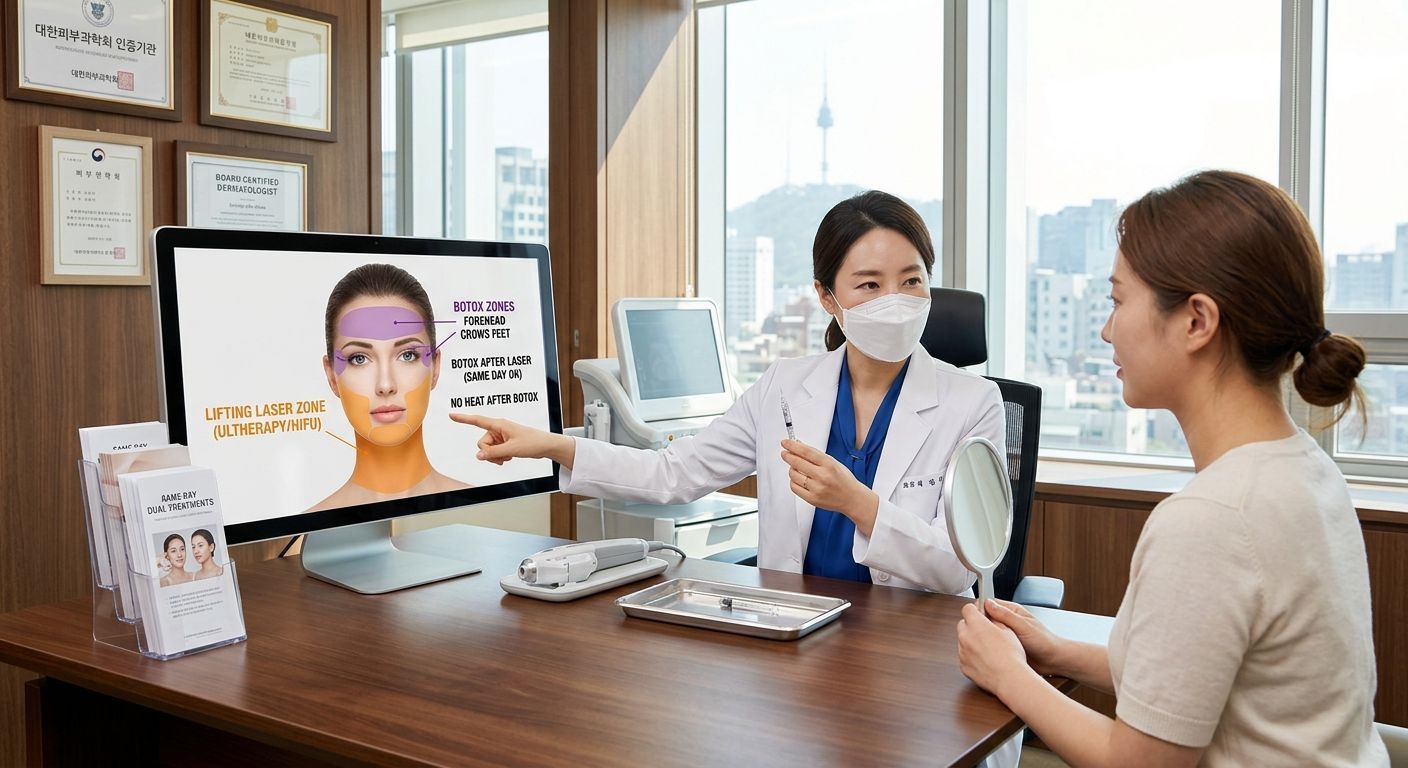
Regular Botox for facial wrinkles is generally placed into targeted muscles. This reduces muscle activity and therefore reduces the repeated movement that contributes to dynamic wrinkles.
Skin Botox is generally delivered more superficially, using multiple small injections within or near the skin. Seoul clinics commonly use this technique for skin-quality concerns rather than strong muscle relaxation.
2. Treatment Goals
Regular Botox is mainly about muscle movement.
Skin Botox is more focused on skin appearance.
For example, someone primarily concerned about a strong frown caused by repeated muscle contraction may discuss conventional Botox. Someone whose main concern is visible pores, facial oiliness, and fine surface lines may instead ask about Skin Botox.
3. Facial Expression
Regular Botox intentionally reduces movement in the muscles being treated. When appropriately dosed and placed, the goal can still be a natural appearance.
The AAD notes that dermatologists aim to relax targeted muscles without unnecessarily affecting other muscles, allowing patients to maintain natural facial expressions.
Skin Botox is generally designed to have less effect on overall facial movement because the treatment is more superficial. However, "no freezing" should not be interpreted as zero risk of muscle effects. Injection depth, dilution, anatomy, and technique all matter.
4. Pores and Oiliness
This is one of the reasons Skin Botox has become popular in Korean aesthetic clinics.
Superficial botulinum toxin techniques are used by some clinicians to address the appearance of pores, skin oiliness, and texture. However, results vary, and Skin Botox should not be presented as a permanent pore-reduction treatment.
Regular Botox is not primarily a pore or oil-control treatment.
Which Areas Can Be Treated?
Skin Botox Areas
Skin Botox may be used on areas such as:
- Cheeks
- Forehead
- Nose or nearby areas
- Lower face
- Areas with visible pores or fine texture concerns
The exact treatment map depends on the patient's skin and facial anatomy.
Regular Botox Areas
Conventional Botox can be used in selected areas including:
- Forehead
- Glabella or frown lines
- Crow's feet
- Masseter muscles
- Selected lower-face muscles
- Neck muscles
Not every area is appropriate for every patient, and injection technique is particularly important around structures that affect facial movement.
Results and Timeline
Regular Botox often begins showing effects within several days, with results becoming more apparent over the following days. The AAD reports that most people see results within approximately 3–7 days, and effects commonly last around 3–4 months.
Skin Botox can have a different visual timeline because the intended effects involve skin quality rather than simply reducing muscle movement. Seoul clinics may describe gradual improvements in texture and pore appearance over the following weeks. Individual results vary, and published clinic timelines should not be interpreted as guarantees.
Neither treatment permanently changes the skin or facial muscles.
Downtime and Recovery in Seoul
Both procedures are generally considered relatively short treatments, but the injection pattern is different.
With regular Botox, patients may experience temporary redness, swelling, soreness, or bruising at injection sites. Most people can return to everyday activities immediately.
Skin Botox involves many superficial injection points, so temporary small bumps, redness, pinpoint marks, or bruising may be more noticeable immediately afterward.
If you are visiting Seoul as a tourist, consider treatment timing carefully if you have:
- A professional meeting
- A photo session
- A wedding or special event
- A flight shortly after treatment
- Other aesthetic procedures scheduled during the same trip
Your clinician can provide procedure-specific aftercare instructions.
Is Skin Botox Better for Foreign Patients?
There is no universal answer.
A foreign patient's nationality should not determine whether Skin Botox or regular Botox is appropriate. The decision should be based on the treatment goal, facial anatomy, skin condition, previous treatments, medical history, and the clinician's assessment.
For example:
- Dynamic forehead or frown lines: regular Botox may be discussed.
- Pores and oily skin: Skin Botox may be considered.
- Fine lines plus muscle-related wrinkles: a clinician may discuss different or combined approaches.
- Facial contouring: conventional muscle-targeted Botox may be more relevant.
- Major skin laxity: neither treatment should automatically be considered a substitute for a lifting or tightening procedure.
The AAD recommends discussing expected results, risks, medical history, medications, previous cosmetic treatments, and provider experience before treatment.
Choosing Skin Botox or Regular Botox in Seoul
Start With the Problem, Not the Product
Instead of asking only for "Botox," explain what you want to improve.
For example:
"I want to reduce my forehead movement."
or:
"My main concerns are enlarged pores, oily skin, and fine texture."
This helps the clinician determine whether the treatment should target muscle activity, superficial skin concerns, or another issue entirely.
Ask About the Injection Technique
Before treatment, ask:
- Is this Skin Botox or conventional Botox?
- Where will the injections be placed?
- What is the primary treatment goal?
- Which botulinum toxin product will be used?
- Who will perform the injections?
- What side effects should I expect?
- How long should I expect the effects to last?
- Will the treatment affect facial movement?
These questions are particularly useful for international patients who may be unfamiliar with Korean terminology.
Safety Considerations
Botulinum toxin is a medical treatment, even when performed for cosmetic purposes. The AAD advises having injections performed in an appropriate medical setting by qualified clinicians rather than at salons, parties, homes, or other non-medical environments.
Possible temporary effects include redness, swelling, soreness, and bruising. Rare complications can include unwanted weakness of nearby muscles, such as temporary eyelid or brow drooping. Very rare but serious symptoms involving swallowing, speaking, or breathing require urgent medical attention.
Product selection also matters. Different botulinum toxin products are not necessarily interchangeable on a unit-for-unit basis, so patients should not assume that a quoted number of "units" means the same thing across every brand.
Cost Factors for Skin Botox vs Regular Botox in Seoul
There is no single standard Seoul price for either treatment.
Cost can vary according to:
- Botulinum toxin brand
- Amount of product used
- Number of treatment areas
- Injection technique
- Number of injection points
- Clinician experience
- Clinic location
- Whether consultation or additional procedures are included
- Whether the treatment is part of a combination plan
For Skin Botox, pricing may also be based on the treatment area or overall facial treatment rather than simply a conventional Botox unit count.
International patients should confirm exactly what is included in the quoted price before treatment.
Can You Combine Skin Botox and Regular Botox?
In some cases, clinicians may use different botulinum toxin techniques during the same treatment plan. For example, a patient may have a muscle-related wrinkle treated with conventional Botox while superficial areas are treated with a Skin Botox technique.
However, combining procedures is not automatically better.
The appropriate approach depends on the patient's concerns, anatomy, previous treatments, and the clinician's assessment. The AAD also notes that dermatologists may recommend more than one treatment when clinically appropriate.
Final Takeaway
The difference between Skin Botox and regular Botox in Seoul is primarily the injection depth, treatment target, and intended result.
Skin Botox is generally used as a superficial, micro-injection approach aimed at concerns such as pores, oiliness, texture, and very fine lines while attempting to preserve facial movement. Regular Botox is generally directed into selected muscles to reduce muscle activity and soften dynamic wrinkles or address specific muscle-related concerns.
If you are visiting Seoul, the most useful starting point is not choosing a product by name but explaining your specific concern and asking a qualified medical provider which technique is appropriate for your anatomy and goals.