Best Foot Clinic for Tourists in Seoul
Best Foot Clinic for Tourists in Seoul: How to Choose the Right Foot Care
Finding the best foot clinic for tourists in Seoul depends on the type of foot problem, the location of your hotel, the language support available, and whether you need medical treatment or routine foot care.
International visitors may seek help for problems that develop during a trip, including painful calluses, cracked heels, ingrown toenails, thick or discolored toenails, fungal infections, plantar warts, blisters, and walking-related discomfort. A suitable clinic should be able to identify the problem, explain the available treatment, and provide aftercare instructions that work with a travel schedule.
There is no single clinic that is universally best for every traveler. The appropriate choice depends on the condition being treated and the type of care required.
What Should Tourists Look for in a Seoul Foot Clinic?
Choosing a foot clinic while traveling is different from choosing routine wellness services.
H3: Experience With International Patients
Language and communication can be important when discussing pain, previous treatment, medications, allergies, or medical history.
Travelers should check whether the clinic offers English or other language support and whether international patients can communicate comfortably with the medical team.
H3: Appropriate Medical Services
A foot massage or cosmetic pedicure is not equivalent to medical treatment.
If you have an ingrown toenail, suspected fungal infection, plantar wart, persistent pain, or another medical condition, look for a provider that can assess and treat medical foot problems rather than choosing a service based only on relaxation or cosmetic care.
H3: Convenient Location
Location matters when your feet already hurt.
A clinic close to your hotel, subway station, or sightseeing area can make it easier to attend an appointment without adding another long walking journey.
Myeongdong is particularly convenient for many international visitors because it combines hotels, shopping, restaurants, and public transportation in a central Seoul location.
Common Foot Problems Tourists Treat in Seoul
Long flights, extensive sightseeing, unfamiliar shoes, hiking, and increased walking can expose foot problems that were previously manageable.
H3: Ingrown Toenails
An ingrown toenail can cause tenderness, redness, swelling, or pain around the edge of the nail.
If the area is inflamed or infected, professional assessment is preferable to attempting to cut deeply into the nail yourself.
H3: Thick or Discolored Toenails
A thick or yellow toenail may be caused by fungal infection, repeated trauma, pressure, or another nail disorder.
Because different conditions can look similar, suspected toenail fungus may require examination and sometimes laboratory testing before treatment. (aad.org)
H3: Calluses and Rough Skin
Long walking days can increase pressure and friction on areas such as the heel and ball of the foot.
Conservative professional foot care may help when thickened skin becomes uncomfortable. Aggressive cutting or scraping should be avoided.
H3: Cracked Heels
Dry, cracked heels can become increasingly uncomfortable during a walking-heavy Seoul itinerary.
Regular moisturization can help maintain the skin barrier. Dermatologists commonly recommend moisturizing shortly after bathing and using appropriate products for significantly dry or thickened skin. (aad.org)
H3: Plantar Warts
A plantar wart can become painful because of pressure from walking.
Treatment options depend on the wart and may include clinician-directed therapies rather than simple cosmetic foot care.
A Current Tourist-Focused Foot Care Option in Seoul
One currently advertised option is OBLIV Clinic Myeongdong Seoul.
Its official tourist-focused information describes services for international visitors including fungal nail treatment, ingrown toenail care, thick and discolored toenail care, plantar wart treatment, callus removal, cracked heel treatment, and specialized foot care. It also advertises foreigner-friendly consultation support and aftercare guidance for travelers.
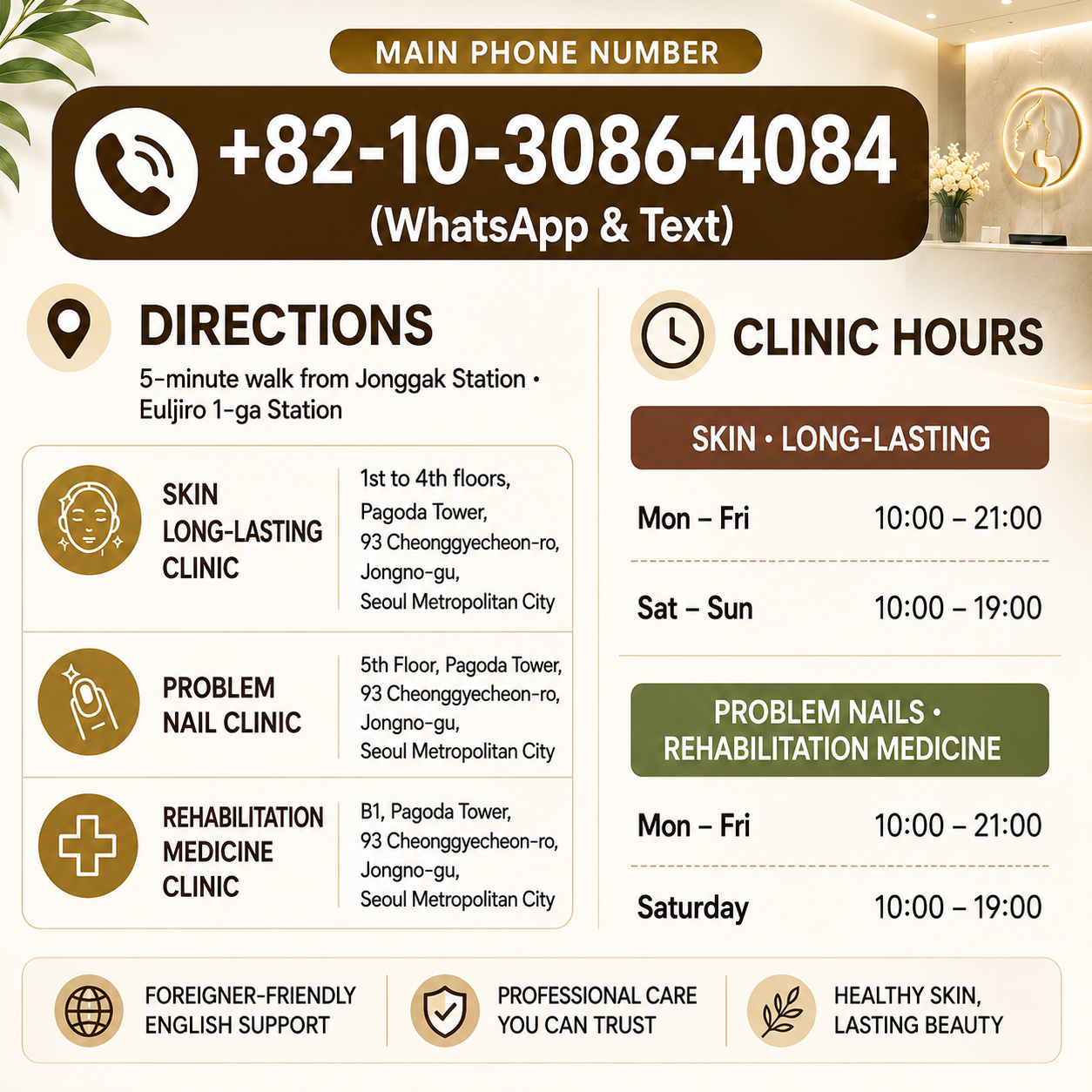
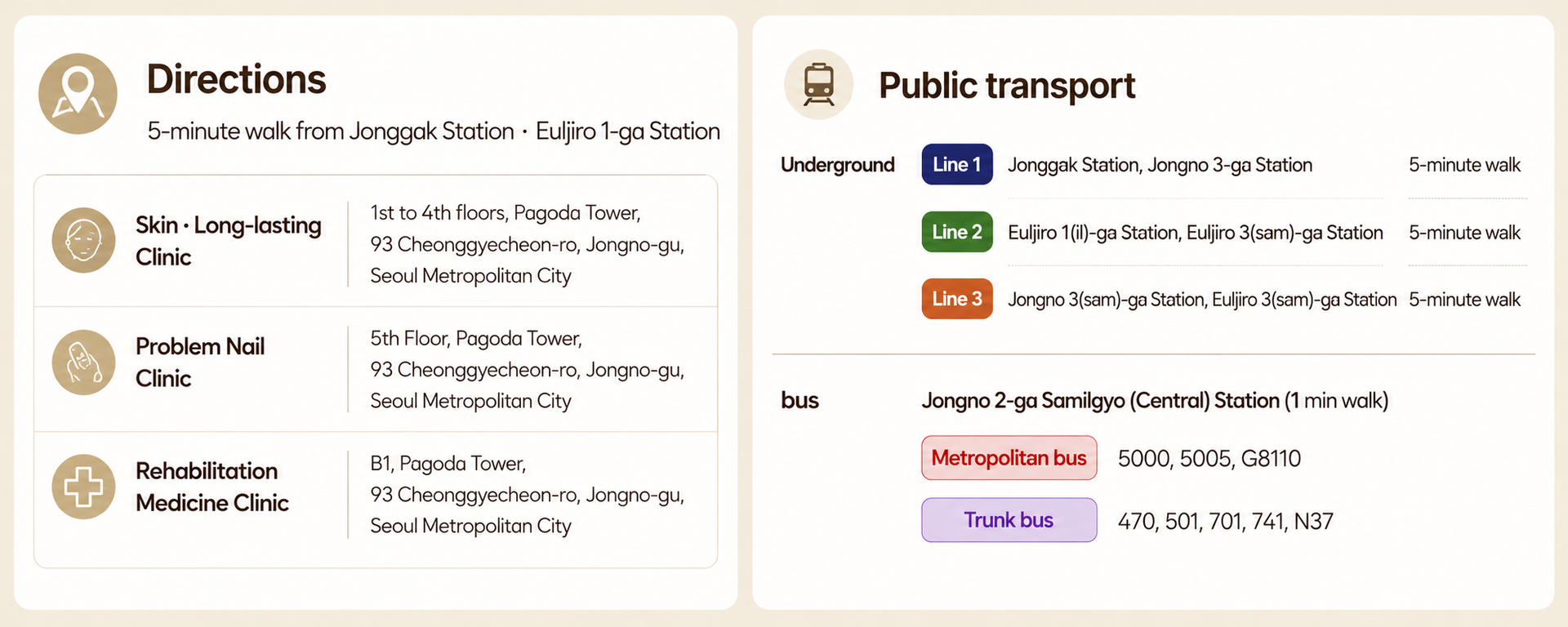
The clinic lists its location as Pagoda Tower, 93 Cheonggyecheon-ro, Jongno-gu, Seoul, and currently advertises hours of 10:00–21:00 Monday through Friday and 10:00–19:00 Saturday and Sunday. Travelers should confirm current hours and treatment availability before visiting.
This does not establish that it is universally the “best” clinic; rather, its current published services make it an option specifically oriented toward tourists seeking foot and toenail care.
Medical Foot Care vs Foot Massage
One of the most important distinctions for travelers is understanding what type of service they actually need.
H3: Foot Massage
A foot massage is primarily intended for relaxation and temporary muscle comfort.
It should not be considered a substitute for diagnosis of fungal infections, infected ingrown toenails, plantar warts, wounds, or persistent foot pain.
H3: Cosmetic Foot Care
Cosmetic services may focus on nail appearance, skin softness, or general grooming.
These services can be useful for routine maintenance but may not be appropriate for a medical condition.
H3: Medical Foot Care
Medical foot care is intended to evaluate and manage specific foot or nail conditions.
For symptoms such as persistent pain, inflammation, suspected infection, abnormal nails, or recurrent skin problems, medical assessment is generally more appropriate.
How to Choose a Foot Clinic Based on Your Problem
Different symptoms call for different types of providers.
Your concernWhat to look forCracked heelsProfessional foot care or dermatologyPainful callusesMedical foot care or appropriate podiatric/dermatologic assessmentIngrown toenailMedical foot/nail treatmentSuspected toenail fungusDermatology or medical nail assessmentPlantar wartMedical wart treatmentSimple foot fatigueRecovery, massage, or wellness servicePersistent foot painSports medicine, orthopedics, or appropriate medical assessmentWound or infectionMedical evaluation
The terminology used by clinics can vary, so ask exactly who performs the treatment and whether the service is medical or cosmetic.
What Should Tourists Bring to Their Appointment?
Before your appointment, prepare basic information about your condition.
Tell the provider:
- When the problem started
- Whether it is painful or itchy
- Whether it is getting worse
- Previous treatments you have tried
- Current medications
- Known allergies
- Relevant medical conditions
- How long you will remain in Korea
- Whether you have upcoming hiking, walking, or travel plans
If you have already used an antifungal medication or other treatment, bring the product information if possible.
Can Tourists Get Foot Treatment During a Short Seoul Trip?
Many foot-care problems can be assessed during a short visit, but not every condition can be completely resolved in one appointment.
For example, fungal toenail treatment may require weeks or months because the damaged toenail must gradually grow out. Dermatology guidance emphasizes that nail fungus treatment can take considerable time even after the infection is controlled. (aad.org)
Before booking, ask whether:
- Diagnosis can be completed during the visit.
- Testing is available if needed.
- Treatment can begin on the same day.
- Follow-up is necessary.
- Aftercare can be continued after returning home.
Foot Care for Travelers Staying Near Myeongdong
Myeongdong is a practical base for visitors who want to combine medical appointments with sightseeing.
However, if your feet are already painful, avoid planning several hours of walking immediately before or after treatment.
After certain procedures, your provider may recommend keeping the area clean, avoiding friction, or limiting particular activities temporarily.
A good travel itinerary should therefore leave enough recovery time rather than scheduling treatment between two long walking excursions.
When Should You Seek Medical Care Quickly?
Do not delay medical assessment if you develop:
- Rapidly increasing swelling
- Significant redness
- Pus or drainage
- Severe or worsening pain
- A spreading skin infection
- A deep wound
- Difficulty walking
- Fever associated with a foot problem
People with diabetes, reduced sensation, or circulation problems should be especially cautious about foot injuries and infections and should seek appropriate medical guidance.
Questions to Ask Before Booking
Before choosing a foot clinic in Seoul, ask:
- Do you treat international patients?
- Is English consultation available?
- Can you diagnose my specific foot problem?
- Is the treatment medical or cosmetic?
- Is testing available if fungal infection is suspected?
- Can treatment be started during one visit?
- Will I need follow-up appointments?
- What should I avoid after treatment?
- Can I walk normally after the procedure?
- What happens if I return home before treatment is complete?
These questions are particularly useful for travelers with limited time in Korea.
Final Takeaway
The best foot clinic for tourists in Seoul depends on the condition being treated rather than a universal ranking. Travelers should prioritize appropriate medical capability, international-patient communication, convenient location, transparent treatment information, and practical aftercare.
For visitors staying in or around Myeongdong, a currently advertised tourist-focused option is OBLIV Clinic Myeongdong Seoul, which lists several medical and specialized foot-care services for international visitors.
For simple fatigue, a wellness or massage service may be sufficient. For fungal nails, ingrown toenails, warts, persistent pain, inflammation, or other medical problems, choose a provider capable of evaluating the underlying condition rather than selecting a clinic based only on convenience or cosmetic services.