Sandal-Ready Feet Before Summer Vacation
Sandal-Ready Feet Before Summer Vacation: Complete Foot Care Guide
Summer vacations often mean sandals, beach days, pool visits, sightseeing, and more time with your feet exposed. If your heels are dry, your skin feels rough, or your toenails need attention, a little preparation before the trip can make your feet look and feel more comfortable.
The key is to start early rather than trying to remove thick calluses or repair cracked heels the night before departure. A simple routine of gentle exfoliation, hydration, nail grooming, and friction prevention can help prepare your feet for summer footwear.
Why Prepare Your Feet Before a Summer Vacation?
Open footwear exposes areas that may normally stay covered by socks and shoes. Dry heels, rough soles, peeling skin, overgrown toenails, and visible calluses can therefore become more noticeable.
Summer travel can also increase sweating, walking, swimming, and exposure to shared wet areas. These conditions may contribute to blisters, irritation, or fungal infections if foot hygiene is neglected.
Preparing your feet before vacation is therefore about more than appearance. It can also help reduce discomfort during long days of walking.
Common Foot Concerns Before Summer Travel
Dry or Cracked Heels
Dry heels are one of the most common reasons people seek pre-vacation foot care. When the skin becomes thick and dry, cracks can develop around the heel.
A daily moisturizing routine can gradually improve the texture. Dermatologists recommend applying moisturizer shortly after bathing, with ingredients such as urea, alpha hydroxy acids, or salicylic acid sometimes used for dry, thickened heel skin.
Rough Skin and Calluses
Calluses develop in areas exposed to repeated pressure and friction. Some hardened skin is protective, so the goal is not necessarily to remove every bit of it.
Gentle exfoliation and regular moisturization can soften rough areas. If using a pumice stone, avoid aggressive filing or removing too much skin because this can cause bleeding and increase the risk of infection.
Toenail Appearance
Before a vacation, many people want their toenails trimmed, shaped, and neat enough for sandals.
Toenails should generally be trimmed carefully rather than cut extremely short. If a nail is unusually thick, discolored, crumbly, painful, or separating from the nail bed, cosmetic trimming may not address the underlying problem.
Foot Odor and Sweating
Hot weather and increased activity can make feet sweat more. Moisture trapped inside footwear can contribute to odor and may create an environment favorable to fungal infections.
Keeping feet clean and dry, changing damp socks, and allowing shoes to dry between uses can help.
A Simple 7-Day Sandal-Ready Foot Routine
Day 7: Assess Your Feet
Start by checking your heels, soles, toes, and toenails.
Look for:
- Dry or peeling skin
- Cracks around the heels
- Thick calluses
- Blisters or pressure spots
- Redness or swelling
- Changes in toenail color or thickness
- Itching or scaling between the toes
If you notice persistent itching, significant cracking, pain, swelling, or suspicious nail changes, consider a professional assessment rather than treating the issue purely as a cosmetic concern.
Days 6–4: Start Gentle Exfoliation
A warm foot soak can soften hardened skin before gentle exfoliation. Avoid aggressive scraping, blades, or excessive filing.
For thickened heels, a moisturizer containing an appropriate keratolytic ingredient such as urea can gradually soften rough skin.
The aim is smoother, healthier skin—not completely removing the protective outer layer.
Days 5–3: Focus on Hydration
Apply a rich foot cream regularly, especially after bathing.
For very dry heels, applying petroleum jelly at night can help seal in moisture. Wearing comfortable socks overnight can also help keep the moisturizer in contact with the skin.
Dermatologists recommend moisturizing within several minutes after bathing while the skin is still slightly damp.
Days 3–2: Groom the Toenails
Trim and clean your toenails carefully before your trip.
Avoid making major changes to an abnormal or painful nail immediately before traveling. If you suspect fungal infection or another nail condition, professional evaluation is more appropriate than trying to disguise the problem with cosmetic products.
Day 1: Keep It Gentle
The day before departure is not the time for aggressive exfoliation, a deep callus removal session, or an unfamiliar product.
Use a gentle moisturizer and make sure your feet are comfortable. If you plan to wear new sandals, test them before the trip to identify areas that cause rubbing.
Should You Get a Professional Foot Treatment Before Vacation?
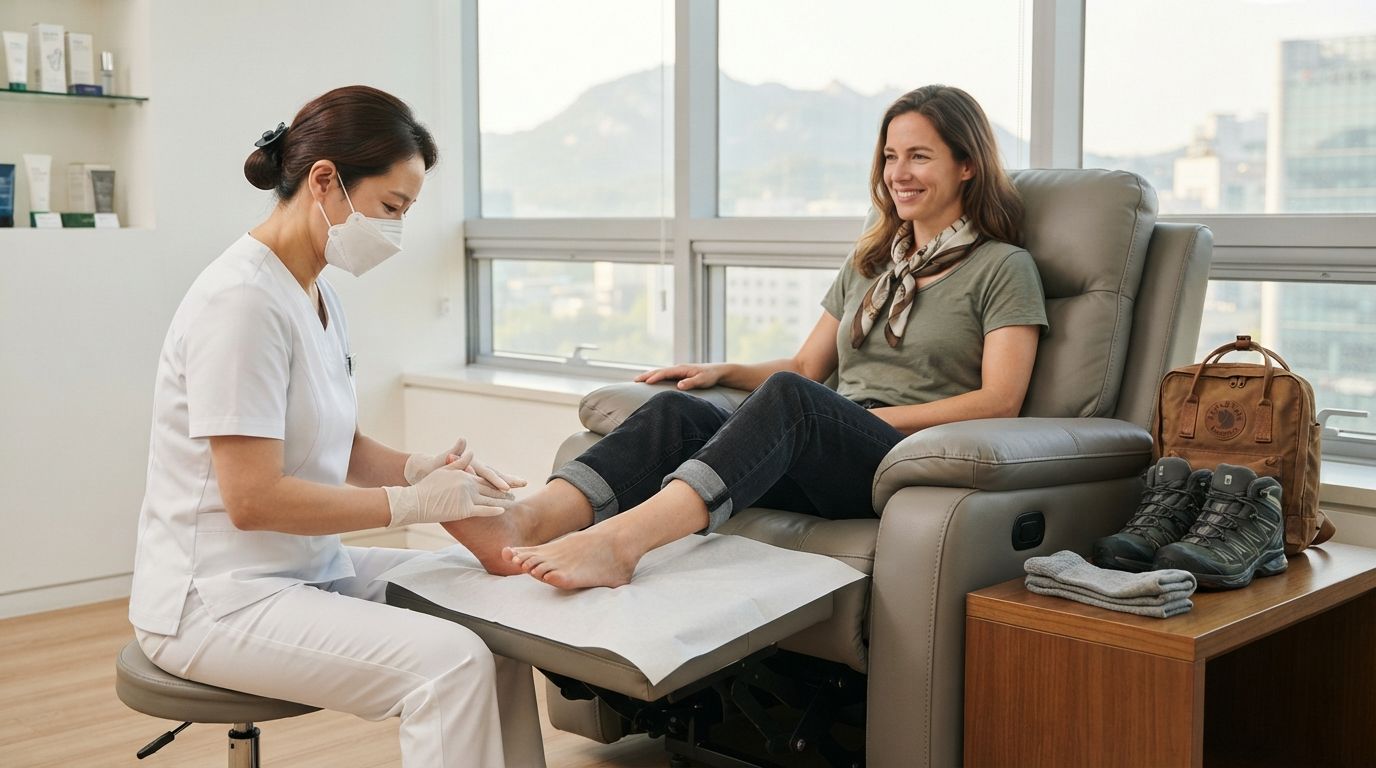
A professional foot-care or beauty treatment may be useful when your main concerns are cosmetic, such as dry heels, rough skin, or general grooming.
Depending on the provider, services may include:
Heel Exfoliation
Designed to reduce superficial roughness and improve the feel of thickened heel skin.
Foot Scrub and Moisturizing
A gentle exfoliation followed by hydration can make dry skin feel smoother.
Pedicure and Nail Grooming
Useful for routine nail shaping and cosmetic preparation before wearing sandals.
Foot Massage or Soak
These services can be included as part of a wellness-focused foot treatment, particularly after extensive walking.
However, a beauty treatment should not replace medical evaluation when there are signs of infection, significant inflammation, persistent pain, or an abnormal toenail.
How to Prevent Blisters During Vacation
Long sightseeing days can create friction, particularly when wearing unfamiliar sandals or shoes.
Choose footwear that fits properly and avoid wearing brand-new shoes for an entire day of walking. Moisture-wicking socks can help when socks are appropriate, while protective bandages can be useful on known friction points.
If you feel a painful hot spot developing, address it early rather than continuing to walk until a blister forms.
If a blister develops, avoid unnecessarily popping it. Keep it clean and covered, and watch for increasing redness, swelling, pus, or pain.
Summer Foot Hygiene at the Pool and Beach
Shared wet environments can expose bare feet to fungi that cause athlete's foot.
Wear shower sandals or flip-flops around communal showers, pools, locker rooms, and similar wet areas. After swimming or showering, dry your feet thoroughly, especially between the toes.
Change wet socks promptly and allow shoes to dry fully between uses.
When Foot Beauty Care Is Not Enough
Some foot problems should be evaluated medically rather than treated as a cosmetic issue.
Consider professional assessment if you have:
- Persistent itching and peeling between the toes
- Deep or painful heel cracks
- A thick, yellow, brown, or crumbly toenail
- Persistent redness or swelling
- Painful corns or calluses
- Recurrent blisters
- A wound that is not healing
- Signs of infection such as pus, increasing redness, warmth, or swelling
People with diabetes should take foot problems particularly seriously because cracks, sores, and calluses can lead to complications and may require medical management.
How Far in Advance Should You Prepare?
For mild dryness and roughness, starting one to two weeks before vacation gives your skin time to respond to consistent moisturization.
If you need professional treatment for significant calluses, cracked heels, nail changes, or another foot condition, allow additional time for assessment and recovery.
Avoid scheduling an aggressive treatment immediately before a long flight, beach holiday, hiking trip, or walking-intensive itinerary.
Questions to Ask Before Booking a Foot Treatment
Before making an appointment, ask:
- Is this treatment cosmetic or medical?
- Who performs the treatment?
- Can the provider assess abnormal skin or nails?
- Is the equipment properly cleaned and disinfected?
- How much exfoliation or callus removal is planned?
- Should I avoid the treatment before swimming or extensive walking?
- Do I need additional medical evaluation for my symptoms?
These questions are particularly useful for international travelers who may not be familiar with local terminology such as “medical pedicure” or “foot care.”
Final Takeaway
Sandal-ready feet do not require aggressive treatment. Start early with gentle cleansing, regular hydration, controlled exfoliation, careful nail grooming, and footwear that does not create excessive friction.
If your feet have persistent peeling, painful cracks, abnormal nails, swelling, or other symptoms, address the medical issue first. A professional assessment can help determine whether you need cosmetic foot care, medical treatment, or both.
For travelers preparing for a summer vacation, the best approach is simple: prepare gradually, moisturize consistently, avoid aggressive last-minute treatments, and address suspicious foot problems before you travel.