Foot Odor Medical Treatments in Korea
Foot Odor Medical Treatments in Korea
Foot odor can often be treated medically when basic hygiene is not enough. Persistent odor may be related to excessive sweating, athlete's foot, bacterial overgrowth, or a combination of moisture and skin problems. In Korea, dermatology and specialized foot-care services can evaluate the underlying cause and recommend treatment rather than simply masking the smell.
Foot odor is sometimes called bromodosis. The odor itself is not necessarily a disease, so the most useful treatment depends on what is causing it.
What Causes Foot Odor?
Sweat itself is generally not strongly odorous. Odor can develop when moisture, skin debris, and microorganisms interact.
Common contributing factors include:
- Excessive sweating of the feet
- Wearing closed shoes for long periods
- Damp socks
- Poor ventilation
- Athlete's foot
- Bacterial overgrowth
- Thickened or damaged skin
- Repeated use of shoes that remain damp
The Korea Disease Control and Prevention Agency notes that athlete's foot can cause unpleasant foot odor, particularly when there is moisture and infection between the toes.
Is Foot Odor a Sign of Athlete's Foot?
It can be, but not always.
Athlete's foot, or tinea pedis, may cause itching, peeling, cracking, scaling, and unpleasant odor. However, someone can have sweaty feet and noticeable odor without having a fungal infection.
If you also have:
- Itching between the toes
- Peeling or whitening skin
- Cracks
- Burning or irritation
- Recurrent scaling
- Thickened or discolored toenails
a medical assessment may be appropriate.
Seoul Asan Medical Center notes that athlete's foot can resemble eczema and recommends professional assessment and, when necessary, fungal testing to establish the diagnosis.
Medical Treatment for Foot Odor in Korea
Treatment should target the underlying cause rather than simply covering the smell with fragrance.
Treatment for Excessive Foot Sweating
If excessive sweating is the main problem, a clinician may diagnose plantar hyperhidrosis.
Korean medical guidance lists several non-surgical options for localized hyperhidrosis, including topical aluminum chloride preparations and iontophoresis. Botulinum toxin injections may also be used in selected cases.
Reducing excessive sweating can help reduce the moisture that contributes to odor.
Topical Antiperspirants
Medical-strength topical antiperspirants containing aluminum chloride can reduce sweating by temporarily blocking sweat ducts.
Korean health guidance identifies aluminum chloride as a commonly used first-line topical treatment for localized hyperhidrosis, including sweating of the hands and feet.
A healthcare professional can advise whether this is appropriate, particularly if your skin is irritated or sensitive.
Iontophoresis
Iontophoresis is a non-surgical treatment used particularly for excessive sweating of the hands and feet.
During treatment, the feet are placed in water while a mild electrical current is delivered through the water. Repeated sessions may be required.
The Korea Disease Control and Prevention Agency lists iontophoresis among treatment options for localized hyperhidrosis.
Botulinum Toxin for Excessive Sweating
Botulinum toxin injections can reduce sweat production in treated areas by interfering with nerve signaling to sweat glands.
Seoul Asan Medical Center lists botulinum toxin among treatment options for localized hyperhidrosis.
For foot sweating, treatment suitability depends on the individual patient, and the procedure can be uncomfortable because the soles are sensitive.
Antifungal Treatment
If foot odor is associated with athlete's foot, treating the fungal infection is more important than simply controlling the smell.
Depending on the diagnosis, treatment may include a topical antifungal medication. More extensive or persistent infections may require prescription treatment.
Mayo Clinic notes that athlete's foot can generally be treated with topical antifungal products, while more serious infections may require prescription oral antifungal medication.
Treatment of Bacterial Skin Problems
Excess moisture can sometimes contribute to bacterial overgrowth and significant odor.
If there are signs of infection, inflammation, or unusual skin changes, a clinician may determine whether bacterial treatment is necessary. Antibiotics should not be used simply because feet smell.
Medical Foot Care and Odor Management
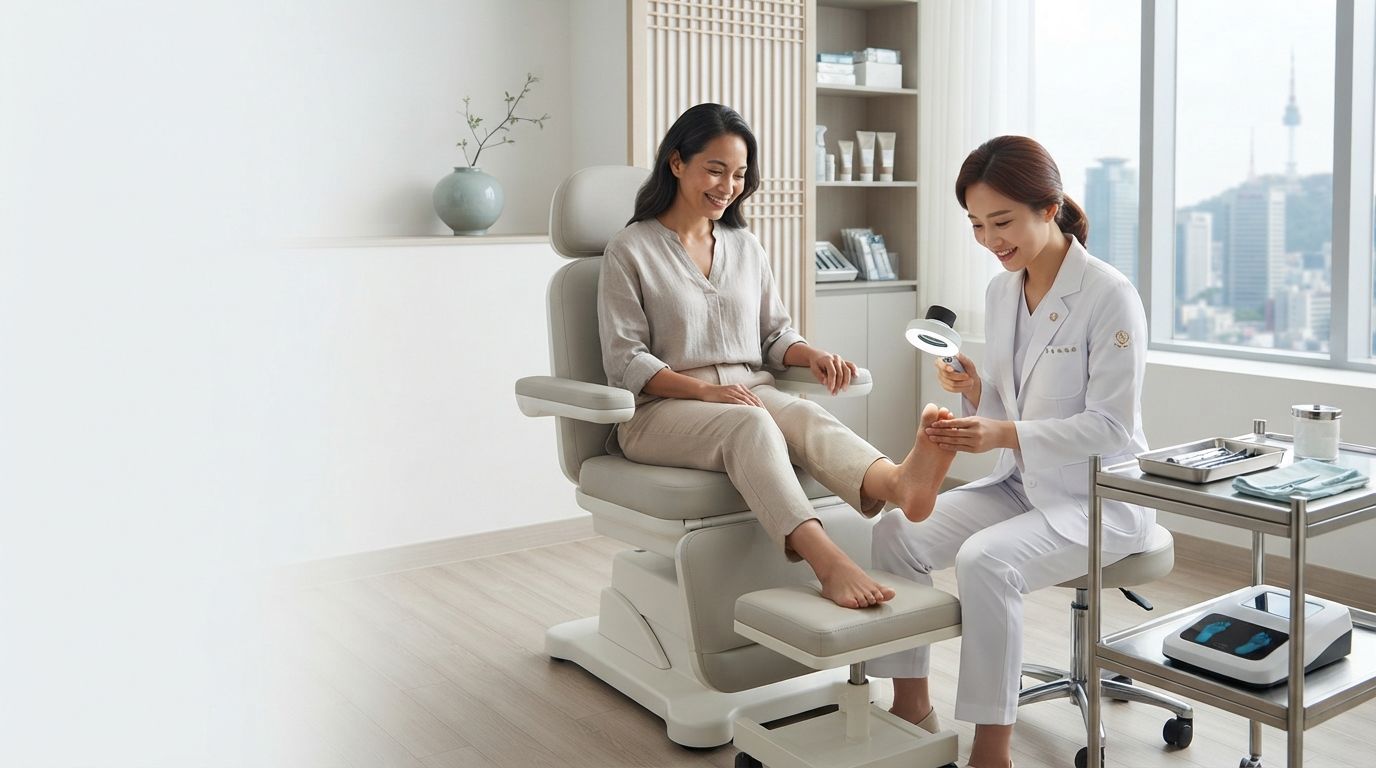
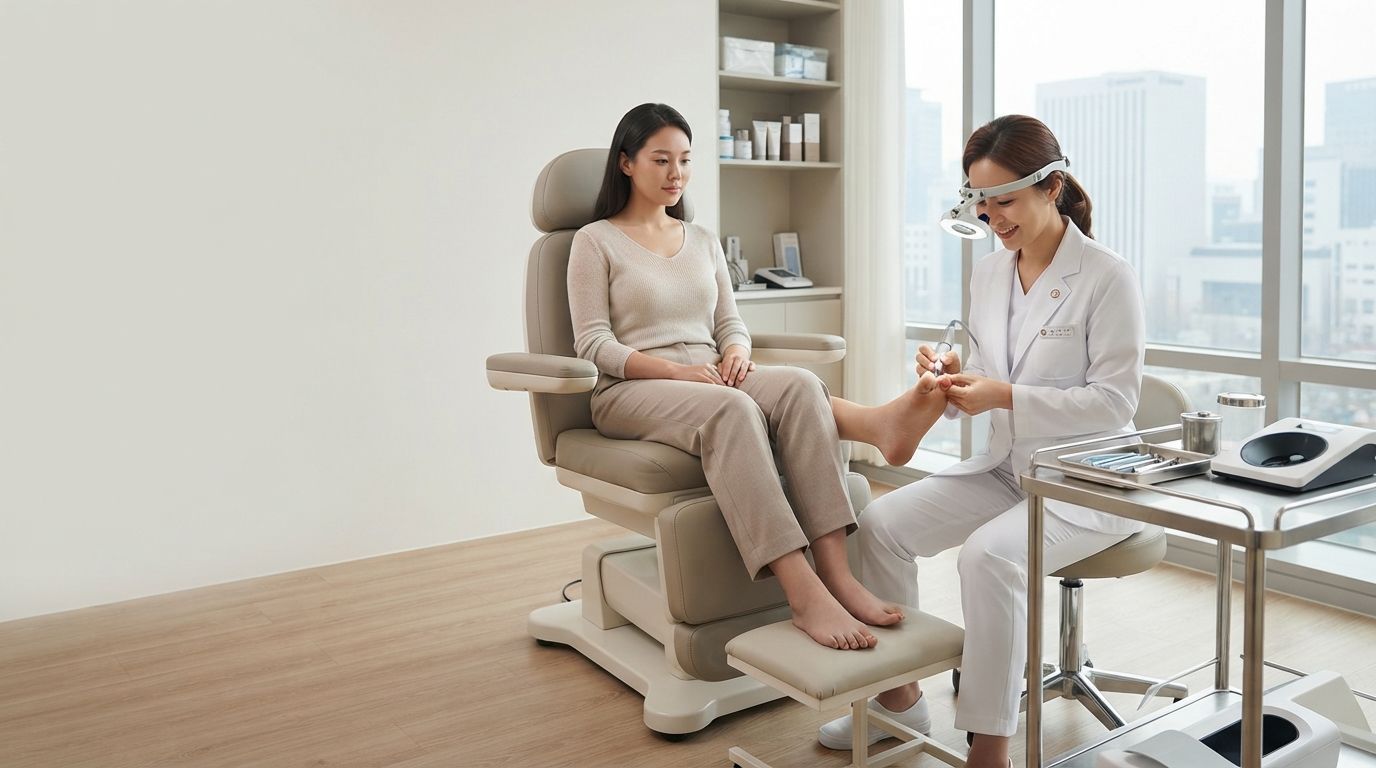
Some specialized foot-care services in Korea combine medical assessment with practical foot hygiene.
Depending on the provider, services may include:
- Professional nail trimming
- Removal of excessive thickened skin
- Callus management
- Cleaning of difficult-to-reach areas
- Assessment of athlete's foot
- Advice on keeping feet dry
- Guidance for footwear and socks
However, a foot-care center is not automatically a medical clinic. International patients should check whether the provider can diagnose skin infections or hyperhidrosis if those conditions are suspected.
Can Foot Odor Be Treated Without Injections?
Yes.
Not every patient with foot odor needs an injection-based treatment. If the primary problem is moisture, fungal infection, or footwear, simpler measures may be sufficient.
A treatment plan may start with:
- Identifying the cause.
- Treating any fungal infection.
- Managing excessive sweating if present.
- Keeping the feet dry.
- Changing socks regularly.
- Improving footwear ventilation.
- Cleaning and drying shoes properly.
Mayo Clinic recommends keeping feet clean and dry, changing socks regularly, and choosing breathable footwear as part of athlete's-foot prevention and management.
Foot Odor Treatment for International Visitors in Korea
For travelers, foot odor can become more noticeable because of long walking days, closed shoes, warm weather, and repeated use of the same footwear.
If you are visiting Korea for medical or beauty treatments, consider scheduling a foot assessment if odor is persistent or accompanied by other symptoms.
Bring Information About Previous Treatments
If you have already used antifungal creams, antiperspirants, powders, or other products, tell the clinician what you used and how long you used it.
Mention Excessive Sweating
If your socks become soaked or your feet sweat even when you are not physically active, tell the provider. The underlying issue may be plantar hyperhidrosis rather than a simple hygiene problem.
Consider Your Walking Schedule
If you are planning extensive sightseeing after treatment, ask about expected recovery, activity restrictions, and footwear recommendations.
When Should You See a Doctor?
Consider medical evaluation if foot odor is:
- Persistent despite regular washing and drying
- Accompanied by itching or peeling
- Associated with excessive sweating
- Accompanied by painful cracks
- Associated with redness or swelling
- Accompanied by drainage
- Associated with thick or discolored toenails
- Interfering with daily activities or social situations
If you have diabetes or another condition that increases the risk of foot complications, seek professional advice rather than relying solely on cosmetic foot-care products.
What Can You Do at Home?
Medical treatment is not always necessary. Helpful daily habits include:
- Wash your feet regularly.
- Dry carefully between the toes.
- Change socks at least daily, or more often if they become sweaty.
- Rotate shoes so they can dry completely.
- Choose breathable footwear.
- Avoid sharing socks, towels, or shoes.
- Keep toenails appropriately trimmed.
- Treat suspected athlete's foot rather than only masking the odor.
Avoid applying strong chemicals or antibiotics to the feet without a clear indication.
How Much Does Foot Odor Treatment Cost in Korea?
There is no single price because treatment depends on the cause.
Potential cost factors include:
- Dermatology consultation
- Fungal testing
- Prescription medication
- Hyperhidrosis assessment
- Iontophoresis sessions
- Botulinum toxin treatment
- Professional foot care
- Treatment of associated nail or skin conditions
International patients should confirm the current consultation and treatment fees directly with the clinic because prices and treatment packages can vary.
Final Takeaway
Foot odor medical treatments in Korea depend on the underlying cause. Excessive sweating may be managed with topical antiperspirants, iontophoresis, or selected medical treatments, while athlete's foot requires appropriate antifungal management.
If odor is persistent, especially when accompanied by itching, peeling, excessive sweating, nail changes, or skin inflammation, consider a medical assessment rather than relying only on deodorizing sprays or foot powders.
The goal is not simply to make the odor disappear temporarily. It is to identify and treat the condition that is causing the odor in the first place.