Running Foot Recovery Treatments in Seoul
Running Foot Recovery Treatments in Seoul: Guide for Runners
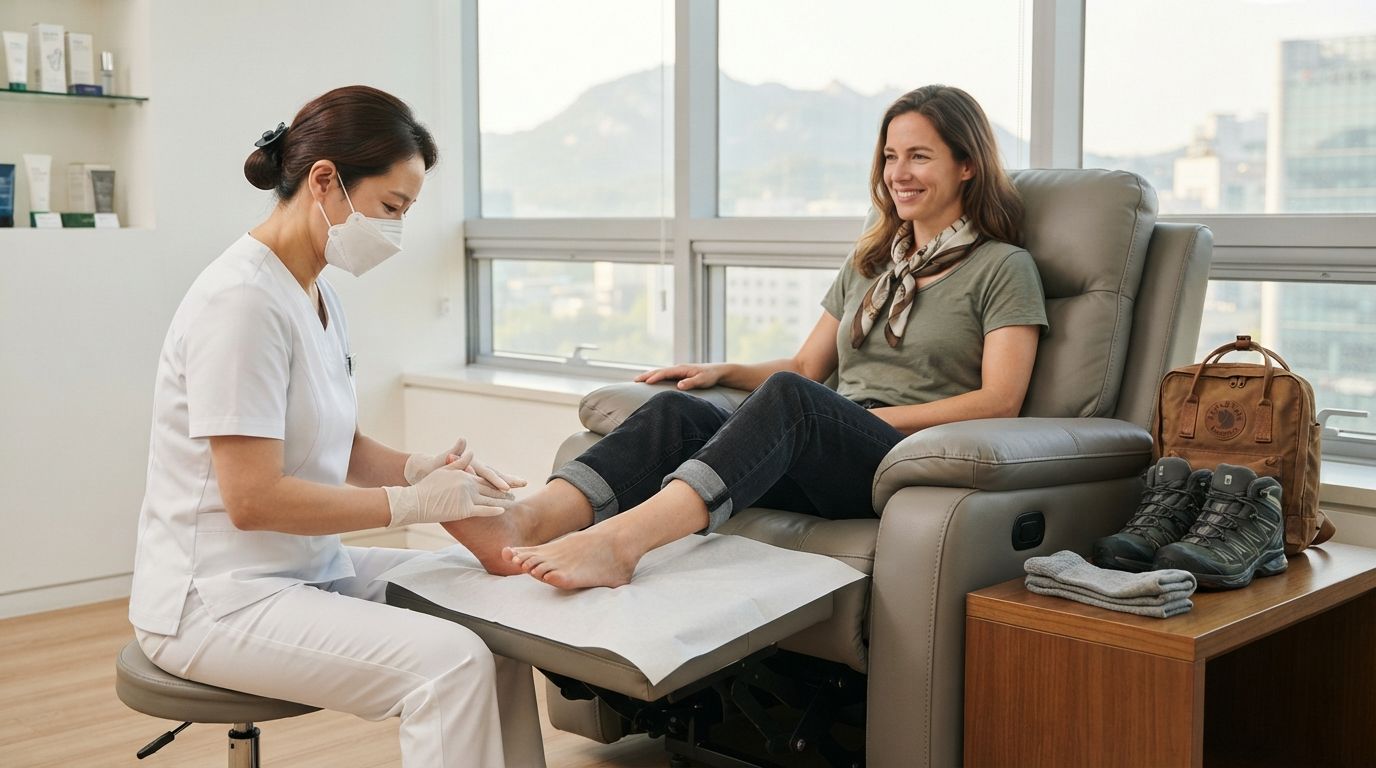
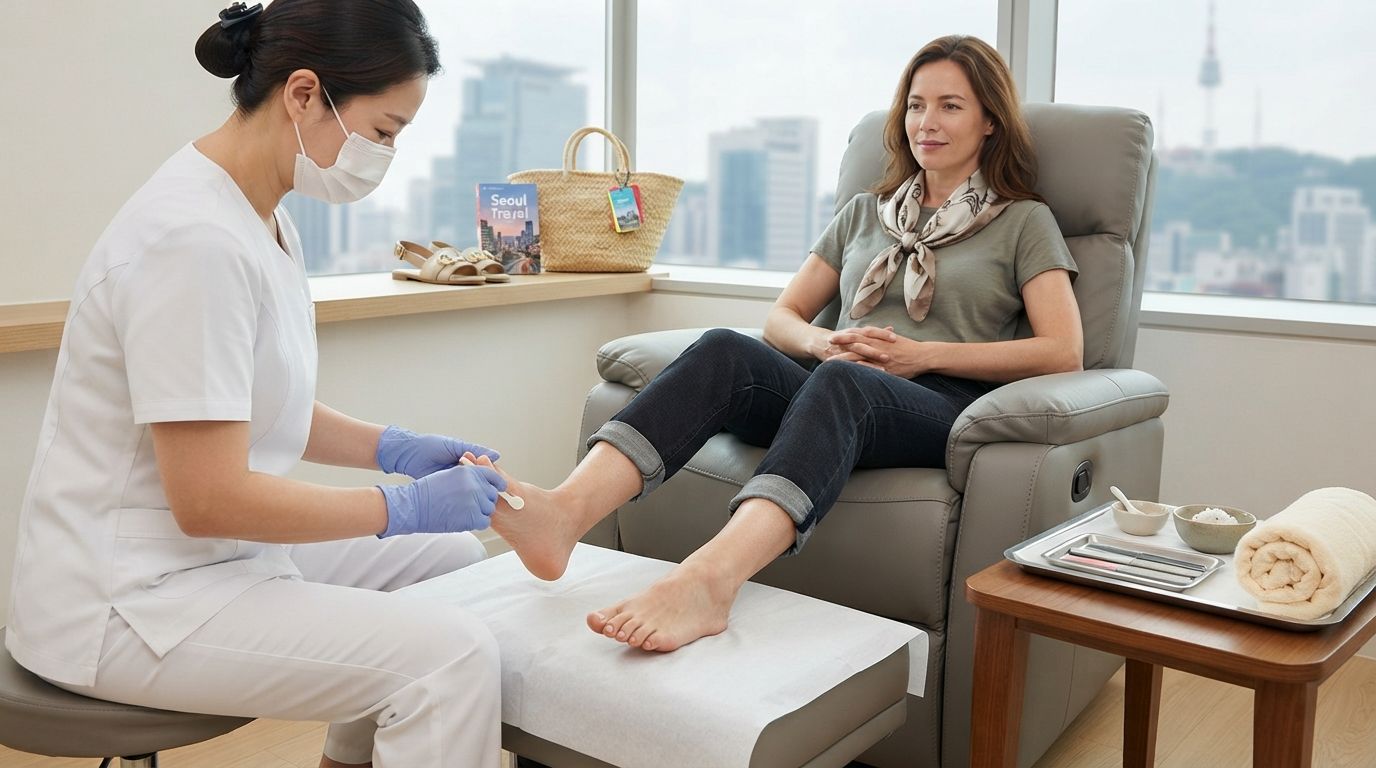
Running in Seoul can be a great way to stay active while traveling, but long distances, hills, unfamiliar surfaces, increased training volume, and extended walking can place extra stress on the feet and ankles. Running foot recovery treatments in Seoul can range from basic recovery care to professional rehabilitation for persistent pain or running-related injuries.
The right treatment depends on whether your feet simply feel tired after a run or whether you have symptoms suggesting an injury. Sports-medicine services in Seoul may assess runners in the context of their training load, symptoms, movement patterns, and return-to-running goals.
What Are Running Foot Recovery Treatments?
Running foot recovery treatments are services intended to help the feet and lower limbs recover after running or to address problems caused by repetitive loading.
Depending on the situation, recovery may include:
- Rest and activity modification
- Gentle mobility exercises
- Stretching and strengthening
- Physical therapy
- Manual therapy
- Sports-medicine assessment
- Rehabilitation exercises
- Gait or movement assessment
- Treatment for specific foot or ankle injuries
A recovery session is not necessarily the same as medical treatment. A relaxation-focused foot service may help with temporary fatigue, while persistent pain may require assessment by a physician or physical therapist.
Why Do Runners Experience Foot Fatigue?
Running repeatedly loads the feet, ankles, calves, and lower legs. A sudden increase in mileage, changes in training intensity, inadequate recovery, unsuitable footwear, or biomechanical factors can contribute to running-related symptoms.
H3: Long-Distance Running
After a long run, runners may notice temporary soreness, muscle fatigue, stiffness, or a feeling of heaviness in the feet and calves.
H3: Increased Training Volume
Adding distance or speed too quickly can increase the overall load on the lower limbs.
H3: Hills and Uneven Surfaces
Seoul offers many routes with slopes and varied surfaces. Changing your usual running environment can place different demands on muscles and joints.
H3: Footwear Changes
Travelers sometimes run in unfamiliar shoes or use a pair that is not appropriate for their current mileage. Footwear is only one factor, but it can contribute to discomfort when combined with increased training load.
Common Running-Related Foot Problems
Not every post-run symptom requires treatment, but persistent or worsening symptoms should not simply be ignored.
H3: Plantar Foot and Heel Pain
Pain underneath the heel or along the bottom of the foot can occur with conditions such as plantar fasciitis. Runners and other active individuals can develop plantar foot pain from repetitive loading.
H3: Achilles Tendon Symptoms
Pain or stiffness around the Achilles tendon can develop with repetitive running activity and may require activity modification and rehabilitation.
H3: Ankle Pain or Sprains
An ankle sprain can occur from an awkward landing, uneven surface, or sudden change in direction. More significant injuries should be professionally assessed.
H3: Forefoot Pain
Repeated impact and pressure around the ball of the foot can cause discomfort, particularly after longer runs or changes in footwear.
Types of Running Foot Recovery in Seoul
The appropriate option depends on the severity and cause of your symptoms.
H3: Basic Post-Run Recovery
For uncomplicated fatigue, recovery may include:
- Rest
- Gentle walking
- Light mobility exercises
- Calf and foot stretching
- Adequate hydration
- Comfortable footwear
- Gradual return to running
If symptoms are simply related to temporary fatigue, aggressive treatment may not be necessary.
H3: Physical Therapy and Rehabilitation
Physical therapy may be appropriate when symptoms persist or when a runner needs help restoring strength, flexibility, balance, or movement control.
Running-focused rehabilitation programs in Seoul may incorporate assessment of posture, foot pressure, joint mobility, muscle strength, balance, running mechanics, and functional movement.
H3: Sports Medicine Assessment
Sports medicine is particularly relevant when pain repeatedly returns, affects running performance, or does not improve with ordinary recovery.
A sports-medicine assessment can help identify the injured structure, determine contributing factors, and establish a rehabilitation or return-to-running plan.
H3: Orthopedic Evaluation
An orthopedic evaluation may be appropriate for significant pain, suspected tendon or ligament injury, persistent heel pain, recurrent ankle problems, or symptoms that interfere with normal walking.
Seoul has specialized orthopedic and sports-medicine services for foot and ankle conditions as well as athlete rehabilitation.
What Happens During a Running Foot Assessment?
A professional assessment may begin with questions about your running routine and symptoms.
The provider may ask about:
- Recent running distance
- Changes in training volume
- Running surfaces
- Footwear
- Location of pain
- When the pain started
- Whether symptoms occur during or after running
- Previous injuries
- Recovery between training sessions
Depending on the problem, the assessment may also include examination of joint mobility, muscle strength, balance, foot pressure, posture, or running mechanics. Some Seoul running-injury programs specifically use movement and foot-pressure analysis as part of evaluation.
Recovery Treatments for Travelers
International runners may want to combine treatment with a Seoul itinerary. Timing is important.
If you have a major race or long walking day planned, avoid scheduling an unfamiliar intensive treatment immediately before the activity. Ask the provider what level of activity is appropriate afterward.
For a short Seoul trip, consider arranging medical assessment early if you have persistent pain rather than waiting until the end of your stay.
H3: After a Long Run
A recovery-focused session may be reasonable for temporary fatigue, while persistent focal pain deserves more careful evaluation.
H3: Before Another Running Session
Do not use treatment simply to mask pain so that you can continue increasing your mileage. Pain that repeatedly returns may indicate that training load or another contributing factor needs to be addressed.
H3: During a Running Holiday
Build rest days into your itinerary and avoid combining a sudden increase in running with several consecutive days of intensive sightseeing.
When Should a Runner Seek Medical Care?
Professional assessment is more appropriate when you experience:
- Persistent or worsening foot pain
- Pain that changes your running gait
- Difficulty walking normally
- Significant swelling
- Recurrent ankle instability
- Achilles tendon pain
- Persistent heel pain
- Numbness or unusual weakness
- Pain that repeatedly returns when you resume running
- Symptoms following a significant injury
A sports-medicine or orthopedic evaluation can help determine whether you need rehabilitation, diagnostic imaging, activity modification, or another treatment approach.
How Much Do Running Foot Recovery Treatments Cost in Seoul?
There is no single standard price for running foot recovery because services vary considerably.
Cost can depend on:
- Whether you receive a consultation
- Physician or physical-therapy involvement
- Diagnostic testing
- Rehabilitation sessions
- Manual therapy
- Exercise therapy
- Specialized movement or pressure analysis
- The complexity of the injury
- Number of follow-up sessions
Some sports-medicine centers operate as medical facilities, while other recovery services are wellness or fitness-oriented. Confirm what is included before booking.
How to Choose a Running Recovery Clinic in Seoul
Before making an appointment, ask:
- Is the service medical rehabilitation or wellness-focused recovery?
- Can the provider assess running-related injuries?
- Is a physician or physical therapist involved?
- Can they evaluate foot and ankle pain?
- Is gait or movement assessment available?
- Can they provide a return-to-running plan?
- What should I avoid after treatment?
- Can international patients receive care in English?
For uncomplicated muscle fatigue, a recovery-focused service may be sufficient. For persistent pain or suspected injury, look for a sports-medicine, rehabilitation, orthopedic, or foot-and-ankle service rather than relying only on a spa-style recovery treatment.
Final Takeaway
Running foot recovery treatments in Seoul can range from simple post-run recovery to structured sports rehabilitation. The appropriate option depends on whether you are experiencing ordinary fatigue or symptoms of an underlying injury.
For runners visiting Seoul, the most useful approach is to match the treatment to the problem: rest and basic recovery for temporary fatigue, rehabilitation for persistent functional problems, and medical assessment for significant or recurring pain. Seoul has dedicated sports-medicine and rehabilitation services that can evaluate running-related foot, ankle, and lower-limb problems and help guide a safe return to activity.