Foot Care Before Hiking in Korea
Foot Care Before Hiking in Korea: Essential Guide for Travelers
Hiking in Korea can be one of the best ways to experience the country's mountains, forests, and scenic trails. But even a relatively short hike can place considerable stress on the feet, particularly if you are not accustomed to steep terrain or long periods of walking.
Foot care before hiking in Korea should focus on preventing blisters, friction, excessive moisture, cracked skin, and irritation before they become problems on the trail. Proper footwear, moisture-wicking socks, heel care, and early attention to hot spots can make a significant difference.
For travelers, preparation is especially important because hiking may be combined with several days of sightseeing and walking around Seoul.
Why Foot Preparation Matters Before a Korean Hike
Hiking creates repeated friction and pressure between the feet, socks, and shoes. Sweat and moisture can further increase friction and contribute to skin problems.
The American Academy of Dermatology recommends properly fitting footwear and moisture-wicking socks to reduce the risk of blisters during activities involving extensive walking or exercise.
Korean hiking routes can also include:
- Steep uphill sections
- Long downhill sections
- Uneven rocks and roots
- Stairs
- Wet or muddy surfaces
- Extended walking distances
These conditions can expose existing foot problems that might not be noticeable during normal city walking.
Check Your Feet Before Hiking
A quick foot inspection before a hike can help identify problems early.
Look for:
H3: Blisters or Hot Spots
A hot spot is an area that feels unusually warm, tender, or irritated before a full blister develops.
If you already have a blister, protecting it before hiking is preferable to repeatedly rubbing the area.
H3: Cracked Heels
Dry, cracked heels can become painful when exposed to prolonged friction and pressure. The American Academy of Dermatology recommends regular moisturization and appropriate footwear for dry, cracked heels.
H3: Thick Calluses
Calluses can protect the skin from friction, but excessively thick or painful areas may affect comfort during long hikes.
Avoid aggressively cutting or scraping calluses immediately before hiking.
H3: Fungal Infection
Peeling, itching, cracking, or scaling—particularly between the toes—can be associated with athlete's foot. Keeping the feet clean and dry and changing damp socks can help reduce fungal risk.
If you already have a suspected fungal infection, consider treating the condition before undertaking a long hike.
Choose Hiking Shoes Carefully
Your hiking shoes should fit securely without compressing the toes.
Shoes that are too loose can allow excessive foot movement and friction. Shoes that are too tight can create pressure points, particularly during downhill sections.
Before hiking in Korea:
- Wear shoes that you have already tested
- Avoid brand-new hiking shoes on a long trail
- Make sure your toes have adequate room
- Check that your heel does not repeatedly slip
- Ensure the sole provides appropriate traction
- Consider the weather and trail conditions
If you are planning a mountain hike, hiking-specific footwear may provide more protection and stability than ordinary casual sneakers.
Wear the Right Socks
Socks are an important part of blister prevention.
Moisture-wicking or quick-drying socks can help keep the feet drier during prolonged activity. The AAD recommends nylon or moisture-wicking socks and notes that some people may benefit from wearing two pairs when one layer does not adequately prevent friction.
Bring an extra pair of socks on longer hikes so you can change if your current pair becomes wet from sweat or rain.
Avoid continuing for hours in damp socks when you have the opportunity to change them.
Protect Common Friction Areas
Before starting your hike, identify areas that usually develop friction.
These may include:
- Heels
- Back of the ankle
- Little toes
- Ball of the foot
- Areas around existing calluses
For known problem areas, protective padding or a suitable soft bandage can reduce friction. Petroleum jelly may also help reduce rubbing in appropriate areas.
Do not wait until a painful blister has fully developed before addressing a hot spot.
Moisturize Dry Feet—but Not Between the Toes
If your heels are dry, moisturize them regularly in the days before your hike rather than applying a heavy layer immediately before putting on socks.
For dry, cracked heels, dermatologists recommend applying moisturizer shortly after bathing. Products containing ingredients such as 10–25% urea, alpha hydroxy acids, or salicylic acid may be useful for appropriate cases.
If you have dry skin, petroleum jelly at night can also help reduce moisture loss.
However, avoid leaving excess moisturizer between the toes because excessive moisture in this area can contribute to fungal problems.
Don't Get a Strong Foot Treatment Immediately Before Hiking
A common mistake is scheduling aggressive foot exfoliation or intensive callus removal immediately before a hiking day.
Removing too much protective surface skin can leave the feet more sensitive to friction.
If you want professional foot care before a hiking trip, schedule it early enough to allow your skin to settle before the hike.
For simple dryness, conservative hydration and moisturizing are generally more appropriate than aggressive skin removal.
What to Pack for Your Feet
A small foot-care kit can be useful during a Korean hiking trip.
Consider bringing:
- An extra pair of moisture-wicking socks
- Blister bandages
- Protective padding
- Petroleum jelly or an appropriate anti-chafing product
- Basic foot moisturizer
- Clean tissues or a small towel
- Comfortable footwear for after the hike
For longer routes, keeping spare socks in a waterproof bag can be particularly useful if rain or sweat makes your original pair damp.
What to Do If a Hot Spot Appears During the Hike
Don't ignore increasing friction.
If an area starts burning, stinging, or becoming unusually tender, stop when practical and inspect the skin.
The AAD recommends stopping the activity when pain or discomfort develops because continuing can lead to a blister. Soft protective bandages can be used on vulnerable areas.
Changing socks or adjusting footwear may also reduce continued friction.
Foot Care After Hiking
Post-hike care is just as important as preparation.
After your hike:
H3: Clean and Dry Your Feet
Wash your feet and dry them thoroughly, especially between the toes. Keeping feet clean and dry helps reduce the risk of fungal infections.
H3: Check for Damage
Look for:
- Blisters
- Redness
- Swelling
- Scrapes
- Cracked skin
- Bruising
- Nail problems
Small problems are easier to manage before your next hiking or sightseeing day.
H3: Rehydrate Dry Skin
Apply moisturizer to dry areas, particularly the heels.
If you develop a blister, protect it rather than repeatedly rubbing or peeling the skin. Most uncomplicated blisters heal on their own, but increasing redness, swelling, pus, or pain can indicate infection and warrants medical attention.
When Should You Get Professional Foot Care?
Consider professional assessment before hiking if you have:
- Deep or painful heel cracks
- A persistent fungal infection
- Recurrent blisters
- Painful calluses
- Persistent foot pain
- Significant nail problems
- Swelling or inflammation
- A wound that has not healed
- A suspected infection
A dermatology, podiatry, orthopedic, sports-medicine, or appropriate foot-care service may be more suitable depending on the problem.
People with diabetes should take particular care with their feet. The CDC recommends daily inspection for cuts, redness, swelling, sores, blisters, and other changes, along with well-fitting protective footwear.
Foot Care for International Hikers Visiting Korea
If you are traveling to Korea specifically for hiking, plan your foot care around your entire itinerary.
A hiking day may be followed by several hours of walking through Seoul, shopping, sightseeing, or using public transportation. That can turn a minor hot spot into a much more uncomfortable problem.
Consider:
- Scheduling demanding hikes after adequate rest
- Carrying spare socks
- Wearing tested footwear
- Building recovery time into your itinerary
- Avoiding aggressive foot treatments immediately before hiking
- Checking your feet every evening
- Treating persistent problems before your next major walking day
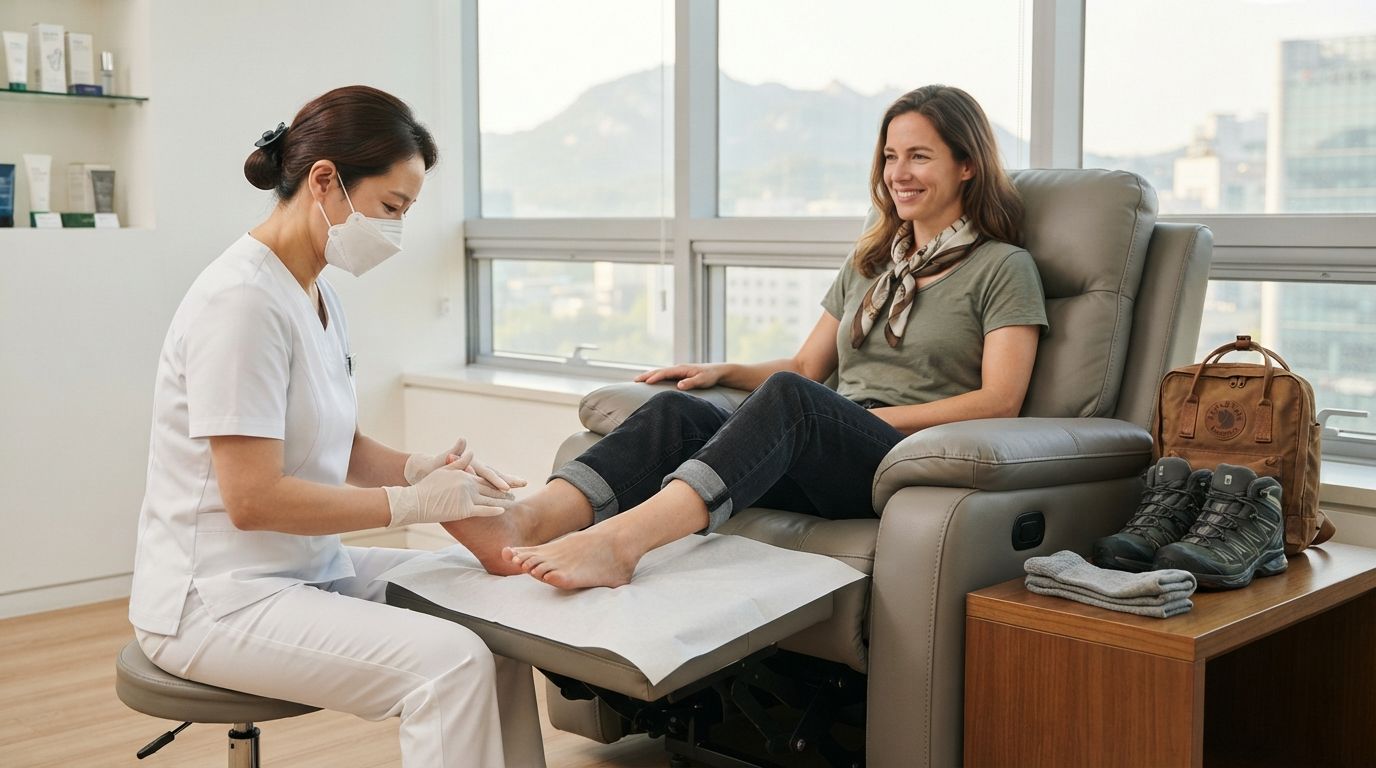
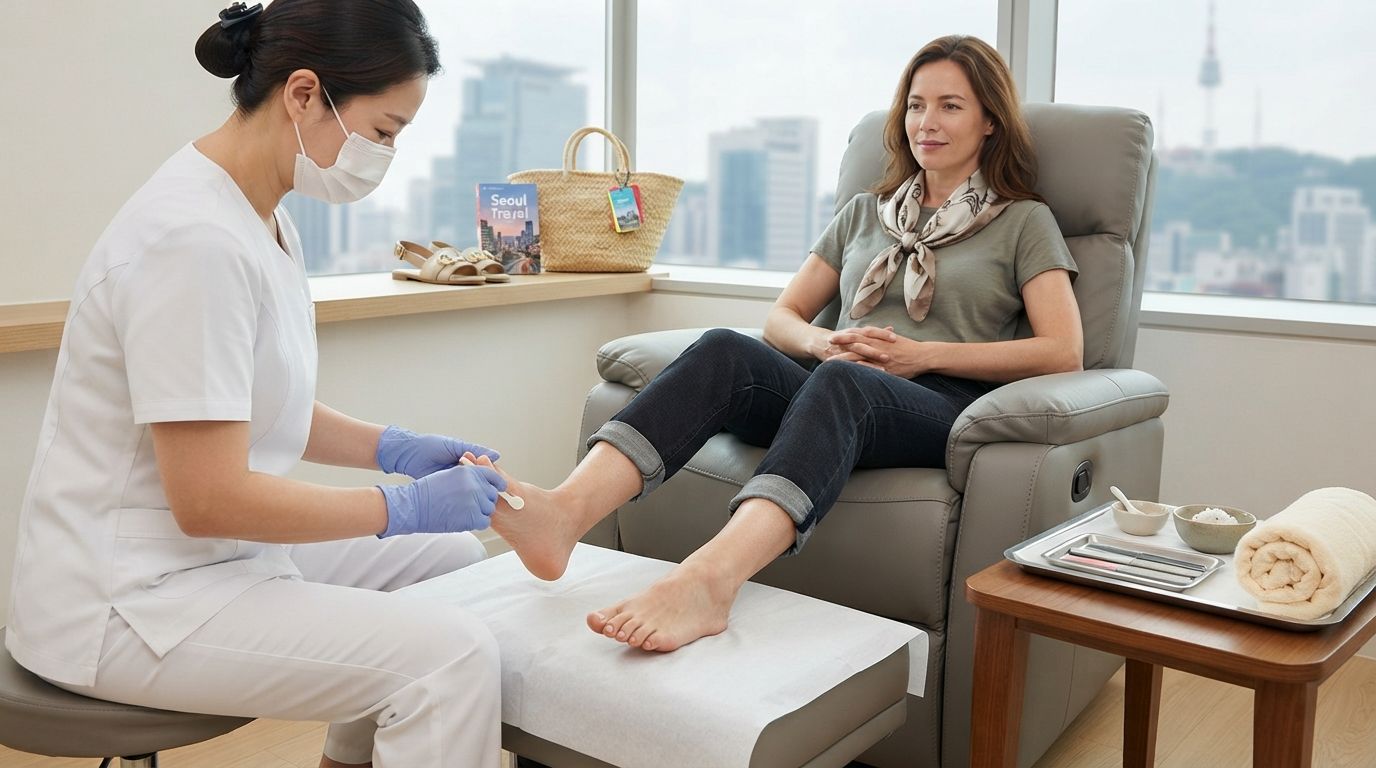
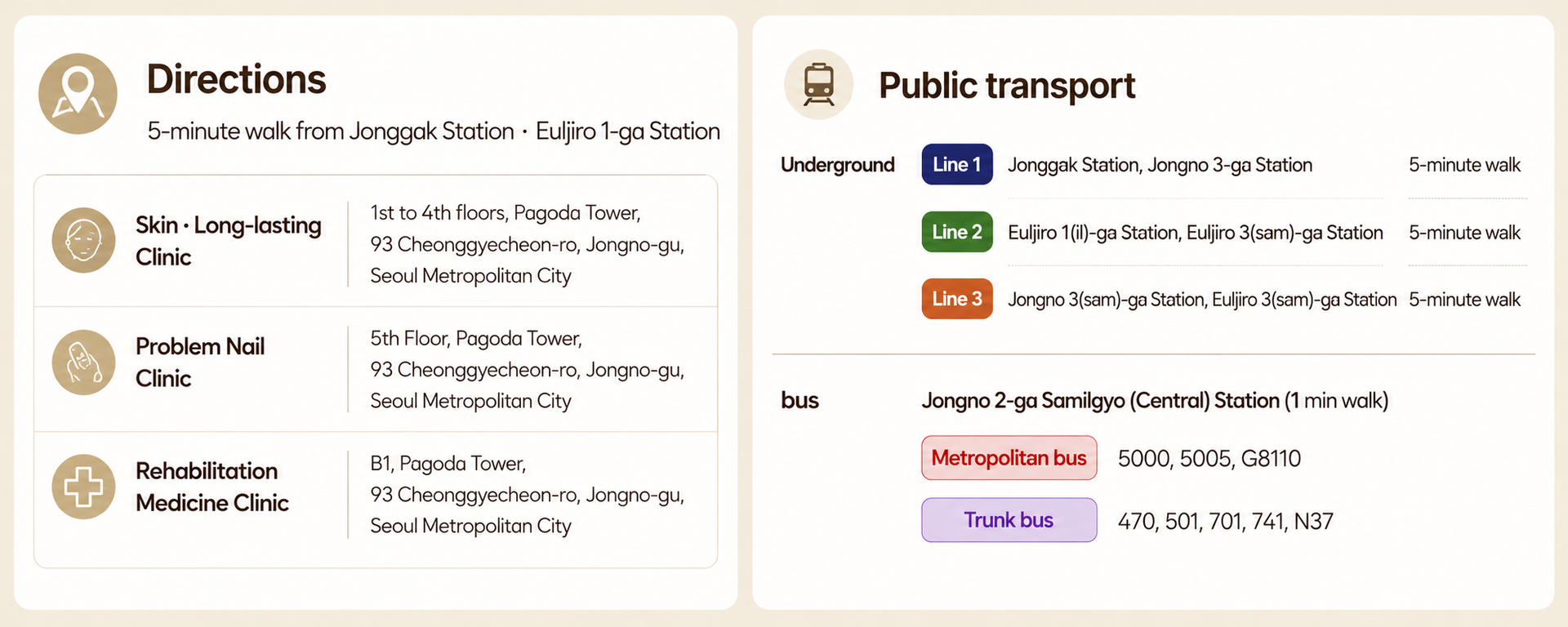
If you are staying in Seoul, professional foot or medical care can be considered before or after your hiking itinerary when a problem needs more than routine home care.
Final Takeaway
Good foot care before hiking in Korea is mainly about prevention. Check your feet beforehand, wear properly fitting shoes, use moisture-wicking socks, protect known friction areas, maintain heel hydration, and respond quickly to hot spots.
For travelers, the goal is not to perform an intensive foot treatment immediately before a hike. Instead, healthy skin, appropriate footwear, moisture control, and early blister protection can help your feet tolerate a demanding trail—and the sightseeing that often follows it.