Heel Hydration Therapy in Myeongdong
Heel Hydration Therapy in Myeongdong: Dry & Cracked Heel Care Guide
Dry, rough, or cracked heels can become uncomfortable during a Seoul trip, especially when you are walking for long hours, wearing open-back shoes, or dealing with dry indoor environments. Heel hydration therapy in Myeongdong may help restore moisture, soften thickened skin, and improve the appearance and comfort of dry heels.
However, hydration alone is not always enough. Persistent cracking, itching, scaling, inflammation, or pain can sometimes be associated with an underlying skin condition that needs medical assessment.
What Is Heel Hydration Therapy?
Heel hydration therapy generally refers to professional care designed to improve moisture levels and the condition of dry heel skin.
Depending on the provider, a session may involve:
- Gentle cleansing of the feet
- Assessment of dry or thickened heel skin
- Controlled removal of excess surface buildup
- Application of a moisturizing cream, balm, or ointment
- Occlusive hydration to help retain moisture
- Aftercare recommendations for continued hydration
The exact treatment varies between clinics and specialized foot-care providers. The term “hydration therapy” is not a standardized medical procedure, so travelers should ask exactly what the session includes before booking.
Why Do Heels Become Dry and Cracked?
The heel area is particularly prone to dryness and thickening because it experiences repeated pressure and friction.
Common contributing factors include:
H3: Dehydrated Skin
When the skin loses too much moisture, it can become rough, flaky, and eventually cracked. The American Academy of Dermatology recommends applying moisturizer shortly after bathing, while the skin is still slightly damp.
H3: Walking and Friction
A Seoul sightseeing itinerary can involve several hours of walking each day. Repeated friction and pressure may contribute to thickened, rough heel skin.
Shoes that are poorly fitted or leave the heel exposed can also make cracked heels worse.
H3: Hot Showers and Dry Environments
Long, hot showers can remove moisture from the skin. Dry weather or indoor heating can also contribute to skin dehydration.
H3: Underlying Skin Conditions
Heel dryness can sometimes occur alongside eczema, psoriasis, fungal infections, or other dermatological conditions. If the skin remains severely dry despite regular moisturizing, professional assessment can help determine the cause.
What Happens During Heel Hydration Therapy in Myeongdong?
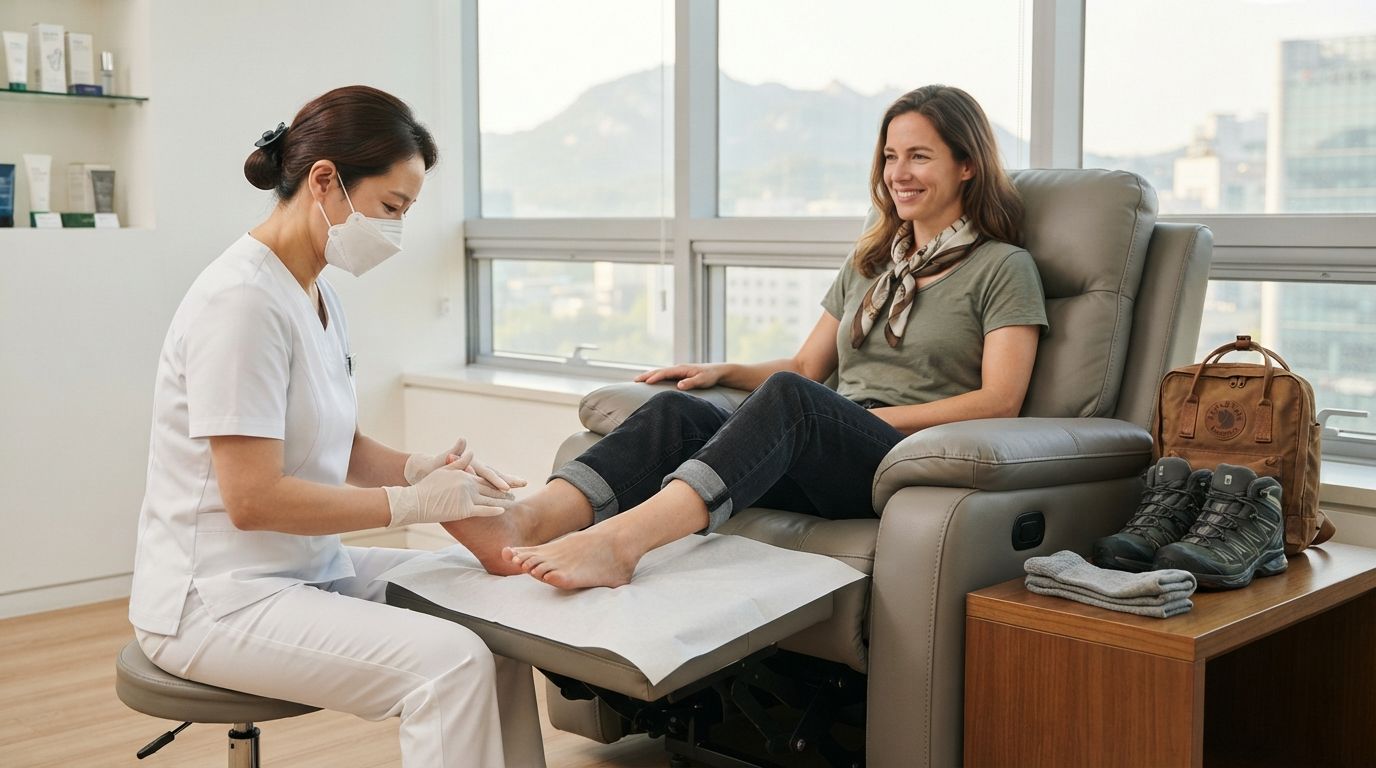
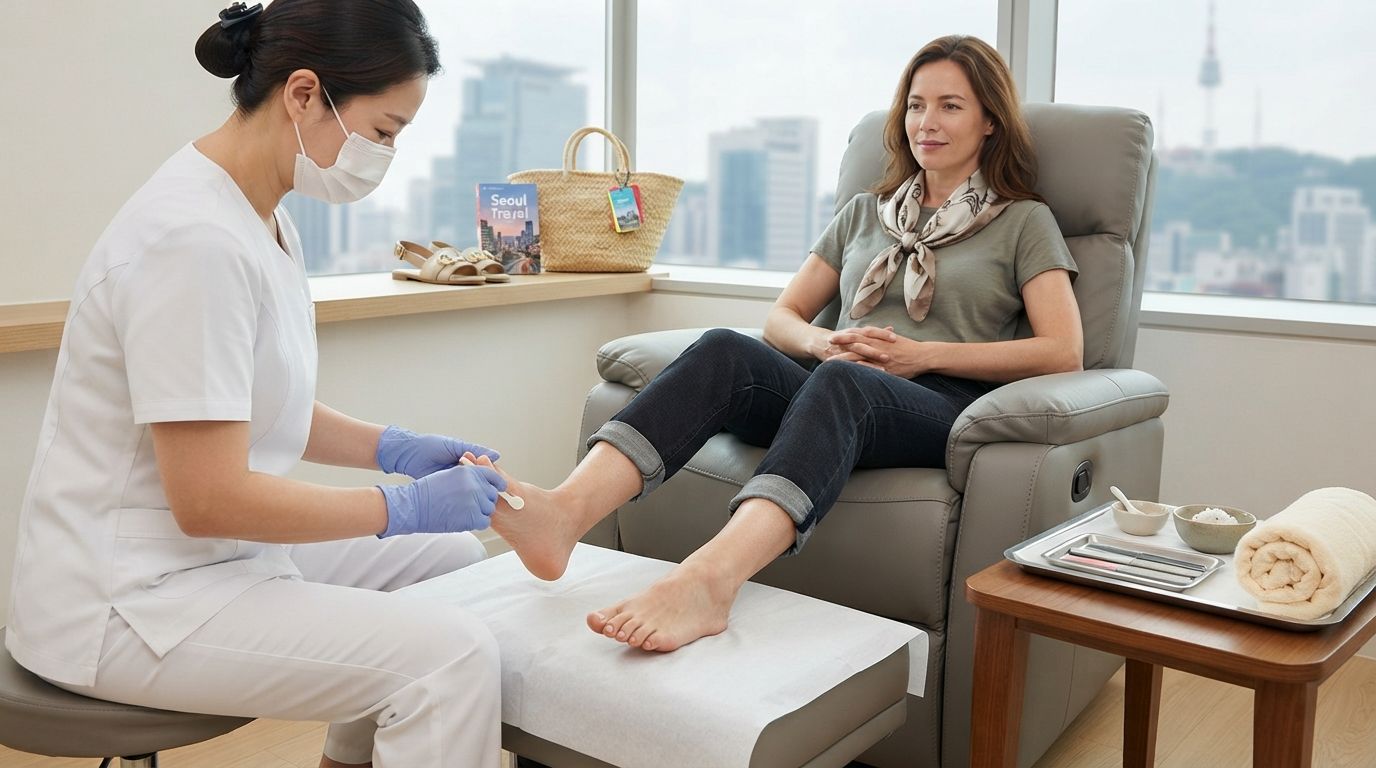
A professional heel-care session may begin with an examination of the heel skin.
H3: Skin Assessment
The provider may look for:
- Dryness and scaling
- Thickened skin
- Superficial or deep cracks
- Redness or irritation
- Signs of infection
- Areas of pressure or friction
If the appearance suggests a medical skin condition rather than simple dryness, a dermatology consultation may be more appropriate than cosmetic hydration care.
H3: Gentle Surface Care
Some providers remove excessive dead or hardened skin before moisturizing.
This should be performed conservatively. Aggressive scraping or cutting can damage the skin barrier and create additional irritation.
H3: Intensive Moisturization
Moisturizing products may contain ingredients designed to soften and hydrate thick, dry skin.
The American Academy of Dermatology recommends heel products containing ingredients such as 10–25% urea, alpha hydroxy acids, or salicylic acid for appropriate cases of dry, cracked heels.
H3: Occlusive Hydration
An occlusive ointment can help reduce water loss from the skin. Petroleum jelly is one example commonly recommended by dermatologists for dry skin and cracked heels.
Is Heel Hydration Therapy the Same as Cracked Heel Treatment?
Not necessarily.
Hydration therapy is mainly focused on improving dry, rough skin. A medical treatment plan for cracked heels may need to address the reason the cracking developed.
For example, a dermatologist may recommend a specific moisturizer, treatment for an underlying skin disorder, or additional care depending on the examination.
If cracks are deep, painful, bleeding, infected, or repeatedly returning, simply moisturizing the surface may not address the underlying problem.
Heel Hydration Therapy for Travelers in Myeongdong
Myeongdong is a popular base for international visitors, and many travelers spend substantial time walking between shopping streets, restaurants, attractions, and nearby neighborhoods.
Heel hydration may be particularly useful as part of a foot-care routine when:
- Your heels feel unusually dry after several days of walking
- You notice rough or hardened heel skin
- Your feet feel uncomfortable in open shoes
- You want to improve heel softness before a beauty-focused trip
- Dry skin is making your feet uncomfortable during sightseeing
For travelers, timing also matters. Avoid intensive foot exfoliation immediately before a long walking day because irritated skin can become more uncomfortable with continued friction.
What Can You Do at Home?
Professional treatment works best when combined with consistent home care.
H3: Moisturize After Bathing
Apply a suitable heel moisturizer within about five minutes after bathing. This helps trap moisture in the skin.
H3: Consider Urea-Based Creams
For significantly dry or thickened heel skin, a moisturizer containing an appropriate concentration of urea may help soften the skin.
H3: Use Petroleum Jelly at Night
Applying petroleum jelly before bed can help reduce moisture loss. Wearing clean socks afterward can help keep the product in place.
H3: Choose Supportive Footwear
Avoid footwear that repeatedly exposes or rubs the heel. Properly fitting shoes can help reduce friction and pressure.
When Should You See a Dermatologist?
Heel hydration may be appropriate for uncomplicated dryness, but medical evaluation is important when symptoms are persistent or severe.
Consider professional medical assessment if you have:
- Deep or painful heel cracks
- Bleeding
- Persistent redness or swelling
- Significant itching or scaling
- Recurrent cracking despite regular moisturizing
- Signs of infection
- A suspected fungal infection
- A skin condition affecting other areas of the body
People with diabetes should be particularly careful with cracked heels because skin breakdown can create complications. The American Academy of Dermatology recommends specific foot and heel care for people with diabetes and emphasizes keeping the skin moisturized and monitoring the feet for changes.
How Much Does Heel Hydration Therapy Cost in Myeongdong?
The cost can vary substantially depending on the provider and what is included.
Factors may include:
- Consultation or assessment fees
- Whether the service is cosmetic or medically supervised
- Extent of heel dryness or thickening
- Dead-skin reduction
- Type of moisturizing products used
- Additional foot-care procedures
- Dermatology consultation or diagnostic testing
- Follow-up treatment
Because “heel hydration therapy” is not a standardized procedure, confirm the exact treatment steps and current price before booking.
How to Choose Heel Care in Myeongdong
Before your appointment, ask:
- Is this a cosmetic foot-care service or medical treatment?
- Who performs the treatment?
- Will my heels be assessed for a possible skin condition?
- How is thick or cracked skin removed?
- What products are applied?
- Is the treatment suitable for cracked or painful heels?
- What should I avoid after the session?
- Is follow-up care recommended?
If your main problem is unexplained scaling, itching, inflammation, recurrent cracking, or possible infection, consider a dermatology clinic rather than relying only on cosmetic foot hydration.
Final Takeaway
Heel hydration therapy in Myeongdong can be a practical option for travelers dealing with dry, rough, or mildly hardened heel skin. Professional moisturizing and conservative surface care may improve comfort and help support the skin barrier.
For persistent, painful, deeply cracked, inflamed, or recurrent heels, however, the priority should be identifying the underlying cause rather than simply adding more moisturizer. Consistent home hydration, appropriate footwear, and timely medical assessment can help keep your feet comfortable throughout a Seoul trip.