
Skin concerns · Pores & texture
Large Pores: Causes and Treatment in Myeongdong & Jongno, Seoul
Pores look large for different reasons: oil, clogging, loss of firmness or old acne scarring. At Obliv Clinic Seoul Origin a doctor works out which type you have, then combines oil control, laser and collagen-building treatment to make pores less visible.
Quick answer
Large pores are visibly enlarged openings of the hair follicles on the face, usually on the nose, inner cheeks and forehead. The main causes are high sebum (oil) output, clogging, loss of skin firmness with age and sun damage, follicle size set by genetics, and acne scarring. Pores cannot be permanently closed, but their appearance can often be refined by retinoids, oil control, laser such as Pico Fraxel and collagen boosters, usually over 3–5 sessions. At Obliv near Myeongdong and Jongno, Seoul, a doctor diagnoses the pore type first.
Key takeaways
- There are three common pore types: oily (round, shiny, on the T-zone), sagging (teardrop-shaped, on the cheeks) and scar-type (irregular, after acne). Each needs a different plan.
- Pore size is largely genetic; treatment makes pores look smaller and smoother but does not erase them.
- Oil control (retinoids, salicylic acid, sometimes micro-Botox) and collagen building (Pico Fraxel, Juvelook, Rejuran) work best together.
- Squeezing, metal extractors and harsh scrubs stretch and scar pores; leave extraction to trained staff.
- Daily sunscreen protects the collagen that keeps pores tight, and results usually build over 2–3 months.
What causes large pores?
A pore is simply the opening of a hair follicle, where oil from the sebaceous gland reaches the surface. Everyone has them; what varies is how visible they are. Dermatology reviews describe three factors as the most important: how much sebum the gland produces, how much elasticity and support the surrounding skin has, and the size of the hair follicle itself, which is largely inherited.
Oil output rises with androgens, which is one reason men and people with oily skin tend to have larger pores, and why pores can look bigger around ovulation and in hot, humid weather such as Seoul's rainy season. When oil mixes with dead skin cells, it can plug the opening, oxidise into a blackhead and stretch the pore from within.
With age and sun exposure, the collagen and elastic fibres around each follicle weaken. The pore loses its round support, sags downwards and takes on an elongated, teardrop shape, often in a line across the cheeks. Past inflammatory acne can leave a third type: irregular, depressed openings that are really small scars. Smoking, picking and repeatedly squeezing pores all make them more visible over time.


How a doctor tells pore types and look-alikes apart
Pores that look the same in a bathroom mirror can be very different under magnification. Your doctor examines where they sit, their shape and whether they are open, clogged or scarred, and reviews Mark-Vu skin analysis images that map pore density, oil, texture and porphyrins (bacterial by-products) across the face. Photographing the same zones at each visit makes small improvements visible and keeps expectations honest.
Some bumps and dots that patients call 'pores' are something else. Sebaceous filaments are the normal grey dots of oil in nose pores and refill within days after squeezing. Sebaceous hyperplasia forms small yellowish bumps with a central dip, common on the forehead from middle age. A shiny, pearly bump with fine vessels can occasionally be a basal cell carcinoma and should be examined rather than extracted.
| Type | What a doctor sees | Usually treated with |
|---|---|---|
| Oily (round) pores | Round openings on the T-zone with shine and blackheads | Retinoid, salicylic acid, micro-Botox, gentle laser |
| Sagging (teardrop) pores | Elongated pores in lines across the cheeks | Juvelook, Rejuran, RF tightening |
| Scar-type pores | Irregular, depressed openings after acne | Pico Fraxel, acne scar treatment |
| Sebaceous filaments | Grey dots in the nose that refill quickly | Retinoid and BHA; no aggressive squeezing |
| Sebaceous hyperplasia | Yellow bumps up to 3 mm with a central dip | Electrocautery or laser after confirmation |
| Possible skin cancer | Pearly bump, fine vessels, bleeding or growth | Dermatologist examination and biopsy |
Which skin layers are involved
At the surface, in the epidermis, a pore's visible width is exaggerated by plugs of oil and dead cells, rough texture around the opening and light catching uneven skin. Retinoids, salicylic acid and professional extraction act here, which is why many people see their pores look smaller within weeks of starting a good routine.
Deeper, in the dermis, sit the sebaceous glands and the collagen and elastin that hold each follicle open in a neat circle. When that support weakens, no surface product can fully restore it. Fractional lasers, collagen-stimulating injections and RF devices act at this level, building new collagen around the follicle over two to three months. Micro-doses of botulinum toxin in the dermis can also reduce oil output and tighten the surface temporarily.
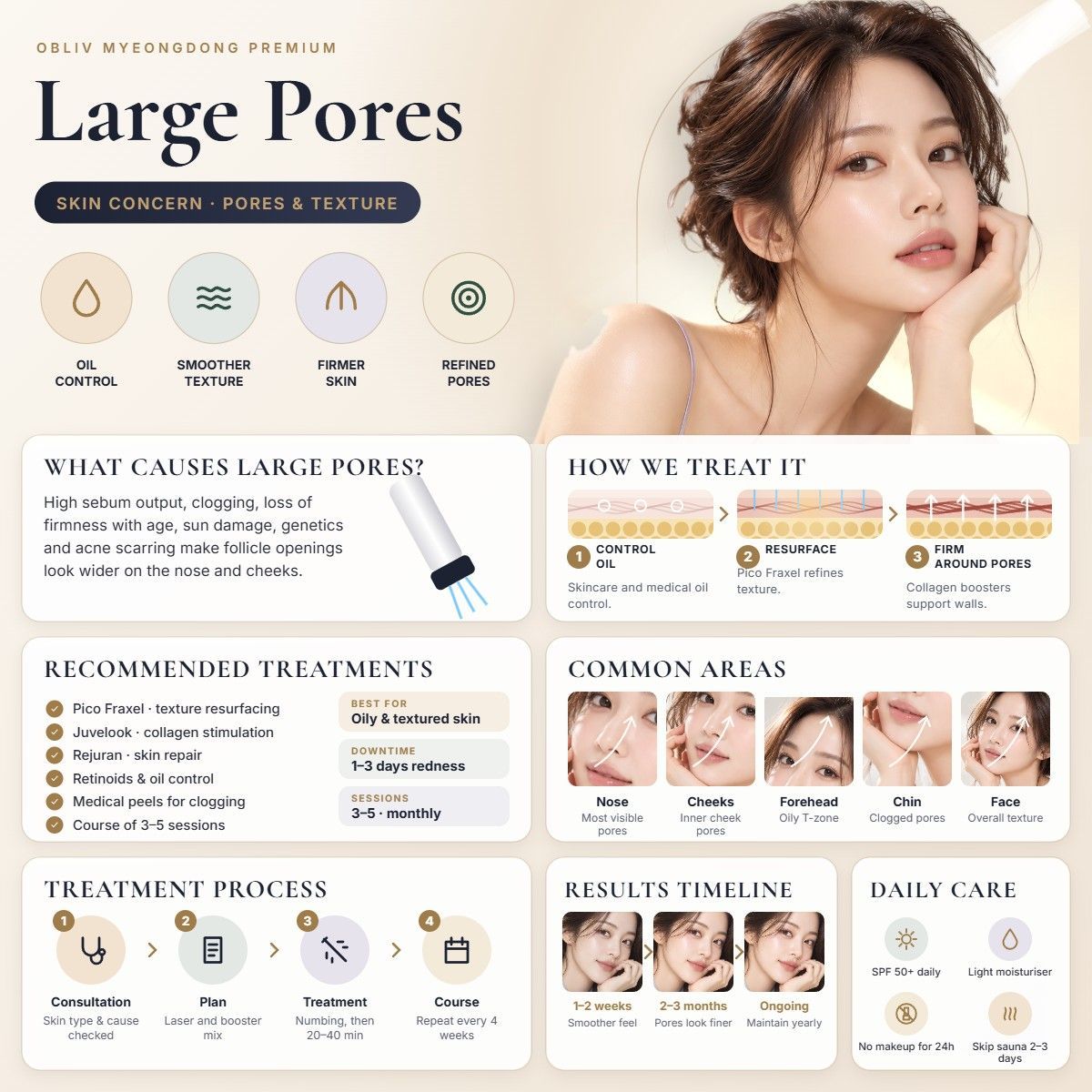
The figure below summarises how a pore plan typically runs. Downtime ranges from none for boosters and toning to a few days of redness after fractional laser.
Ask a doctor about Large Pores
Send a photo and your travel dates on WhatsApp (+82-10-3086-4084). English replies, a personal plan and a written quote before you fly.
Treatment options for large pores compared
The evidence for pore treatments is honest but modest: reviews note that studies measure pores in different ways and few treatments have been tested head-to-head. What works consistently is matching the method to the pore type and combining surface and deeper care. Topical retinoids remain the first-line foundation; in-clinic options build on them.
For scar-type and sagging pores, Pico Fraxel is often the core treatment, with collagen boosters such as Juvelook or Rejuran added between sessions. For oily pores, oil control comes first, sometimes with micro-Botox; laser then refines texture. Hydrating boosters like Skinvive make the surface smoother and reflect light more evenly, which reduces how visible pores look in photos.
| Treatment | Best pore type | How it works | Typical plan | Downtime |
|---|---|---|---|---|
| Pico Fraxel | Scar-type and sagging pores, texture | Fractional picosecond pulses trigger collagen remodelling | 3–5 sessions, about monthly | Redness 1–3 days |
| Juvelook | Sagging pores, thin skin | PDLLA-based collagen stimulator | 2–3 sessions, 4 weeks apart | Small bumps 1–3 days |
| Rejuran/ PN boosters | Sagging and post-acne pores | Polynucleotides support dermal repair | 2–3 sessions, 2–4 weeks apart | Small bumps 1–2 days |
| Micro (skin) Botox | Oily pores | Tiny dermal doses reduce oil and tighten the surface | Every 2–3 months | Tiny bumps for an hour |
| Skin booster/ Skinvive | Dehydrated, dull skin with visible pores | Hyaluronic acid hydration and smoothness | 1–3 sessions | Minimal |
| Laser lifting/ RF tightening | Sagging pores from laxity | Heat tightens the dermis | 1–5 sessions by device | None to mild |
Is it just pores, or something to check?
Large pores are a cosmetic concern, not a disease. But a single 'pore' or bump that behaves differently from the rest deserves attention. A pearly, shiny papule with tiny vessels on the surface, a spot that bleeds or crusts and does not heal, or a lesion that is growing should be examined by a doctor, because basal cell carcinoma, the most common skin cancer, can start this way, particularly on sun-exposed skin.
Suddenly increased oiliness can have a hormonal cause. If it comes with new acne along the jaw, excess facial or body hair, or irregular periods, it is worth seeing your own doctor or a gynaecologist to check for conditions such as polycystic ovary syndrome. Deep, painful lumps are more likely to be cystic acne or inflamed cysts than pores and need a different plan.
How Obliv plans pore refinement
Using the Skin Architecture method, your doctor divides the face into zones: an oily T-zone may need oil control and gentle laser, while the cheeks need collagen building for sagging pores, and the jaw may carry old acne scars. One device applied evenly across the whole face rarely suits all three.
A typical plan starts with a simplified home routine and, if skin is calm, a first in-clinic session in the same visit. For sagging and scar-type pores this is often Pico Fraxel combined with a collagen booster; for oily skin, micro-dosed skin Botox may be added. Sensitive skin is prepared first, because laser on an irritated barrier increases redness and the risk of post-inflammatory darkening.
We record pore density and settings in your Skin Library and repeat the same imaging at review, so you see change on objective photos rather than in a magnifying mirror. If acne is still active, it is treated first; see our acne and breakouts page.
A typical treatment plan and timeline
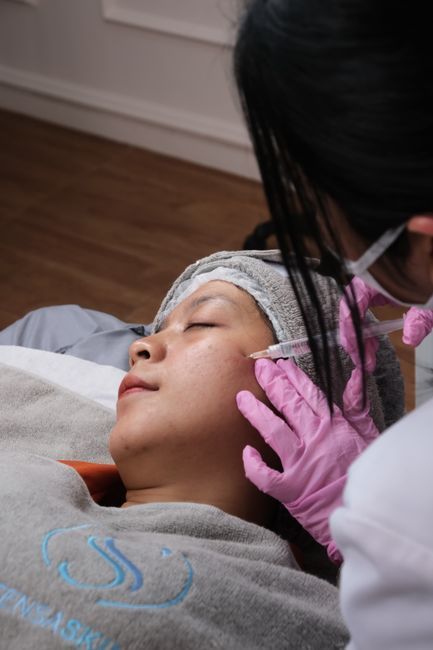
Pores improve in two phases. In the first few weeks, cleaner openings and less oil make pores look smaller quickly. The second phase, new collagen around the follicles, takes two to three months and continues after the last session. Most plans involve three to five treatments about a month apart, followed by maintenance every few months.
Short-stay visitors can usually fit one laser and one booster session into a single trip, spaced a few days apart, and continue the home routine afterwards. Read summer oil control treatments in Seoul and microneedling and skin boosters in Korea for combinations.
Home care for large pores
Good home care is responsible for much of the visible change. Cleanse twice a day with lukewarm water and a gentle cleanser, and choose products labelled non-comedogenic or oil-free. A retinoid at night (retinol over the counter, or a prescription retinoid from your doctor) keeps pores clear and supports collagen; start two or three nights a week and build up.
Salicylic acid (a BHA) dissolves oil inside the pore and suits oily skin. Daily broad-spectrum sunscreen protects the collagen that holds pores tight. Avoid scrubbing, picking and metal extractor tools, which stretch and scar the follicle; ice rollers and pore strips give only brief change.
- Gentle cleanser morning and night; double cleanse only when wearing sunscreen and make-up.
- Retinoid at night, started slowly; avoid in pregnancy and breastfeeding.
- Salicylic acid toner or cleanser a few times a week for an oily T-zone.
- Oil-free moisturiser; oily skin still needs hydration.
- Broad-spectrum SPF 30+ every day.
- No squeezing, scrubbing or magnifying mirrors.
Pore treatment for travellers in Seoul
Most pore treatments fit well into a trip. Boosters and toning have little downtime; fractional laser leaves redness and a sandpaper feel for one to three days, which make-up can usually cover after the first day. Plan laser early in your stay, avoid saunas and swimming pools for a couple of days afterwards, and wear sunscreen while you explore Myeongdong and Jongno.
Before you travel, send photos taken in daylight without make-up and tell us about any isotretinoin use in the past year, recent peels or active acne, which can change the plan. Pricing depends on the treatments and areas chosen; see prices and payment and our first visit guide.
Setting realistic expectations
Pores are part of healthy skin. Treatment can make them noticeably finer, reduce shine and smooth texture so make-up sits better, but no laser or injection closes them for good. Genetics set the baseline, and oil, heat and age keep pushing back, so maintenance matters as much as the first series.
The most useful mindset is to judge results at normal conversation distance and in consistent photos, not in a magnifying mirror. If your pores are mainly scar-type, an acne scar plan may give more improvement than pore-focused treatment, and your doctor will tell you if that is the case.
Frequently asked questions
Can large pores be permanently shrunk?
No. Pore size is largely genetic, but treatment can make pores look clearly smaller and smoother by reducing oil, clearing clogging and rebuilding collagen around them. Maintenance keeps the result.
What is the best treatment for large pores?
It depends on the type. Oily pores respond to retinoids, salicylic acid and sometimes micro-Botox; sagging and scar-type pores respond best to fractional laser such as Pico Fraxel and collagen boosters like Juvelook or Rejuran.
How many sessions will I need?
Most people need 3–5 in-clinic sessions about a month apart, plus a daily home routine. Results build over 2–3 months.
Does skin Botox help pores?
Micro-doses of botulinum toxin injected into the dermis can reduce oil and make pores look tighter for about 2–3 months. It works best for oily pores and is often combined with laser.
Is Pico Fraxel painful?
Numbing cream is applied first, and most people describe a warm, prickly sensation. Redness usually lasts 1–3 days.
Why do my nose pores fill up again after extraction?
Those grey dots are usually sebaceous filaments, a normal lining of oil that refills within days. Retinoids and salicylic acid keep them less visible; repeated squeezing stretches the pore.
Can Korean skin care shrink pores?
Good cleansing, BHA, retinoids and sunscreen can make pores look smaller, and many Korean products are well formulated. Products alone cannot restore lost collagen support, which is where in-clinic treatment helps.
Do pores get bigger with age?
Often yes. Loss of collagen and elasticity lets pores sag into a teardrop shape, especially on the cheeks. Sun protection and collagen-building treatment slow this.
Can I have pore laser on a short trip?
Yes. Plan laser early in your stay because of 1–3 days of redness, and continue the home routine afterwards. Boosters have very little downtime.
Do you offer English consultations for pores near Myeongdong?
Yes. Send daylight photos without make-up on WhatsApp (+82-10-3086-4084) and we reply in English with a likely plan.
Related treatments and guides
From the Obliv Skin Journal
- Summer Oil Control Treatments
- Skin Botox vs Regular Botox in Seoul
- Microneedling + Skin Booster Korea
- Pico Laser + Rejuran in Myeongdong
- Glass Skin Package + Skin Booster
Ask a doctor about Large Pores
Send a photo and your travel dates on WhatsApp (+82-10-3086-4084). English replies, a personal plan and a written quote before you fly.
Our five physicians plan every treatment by skin layer using the Obliv Skin Architecture method. Last reviewed 2026-10-27. This page is general information, not a diagnosis; your plan is set after an in-person consultation.