Athlete's Foot Treatment Near Jongno
Athlete's Foot Treatment Near Jongno
If you are looking for athlete's foot treatment near Jongno, the first step is to determine whether your symptoms are actually caused by a fungal infection. Athlete's foot, medically called tinea pedis, commonly causes itching, peeling, scaling, burning, redness, or cracking between the toes or across the soles.
Because eczema and other skin conditions can look similar, persistent or recurring symptoms are best evaluated by a medical professional rather than treated based only on appearance. Seoul Asan Medical Center notes that examination and, when necessary, fungal testing can help distinguish athlete's foot from conditions such as eczema.
What Is Athlete's Foot?
Athlete's foot is a fungal infection of the skin of the foot. It can affect the spaces between the toes, the soles, heels, or larger areas of the foot.
Common symptoms include:
- Itching, especially between the toes
- Peeling or scaling skin
- Dry or thickened skin on the sole
- Burning or irritation
- Redness
- Cracking between the toes
- Recurrent symptoms after temporary improvement
Some forms primarily affect the spaces between the toes, while others cause widespread dry and scaly skin across the sole.
Why Treat Athlete's Foot Near Jongno?
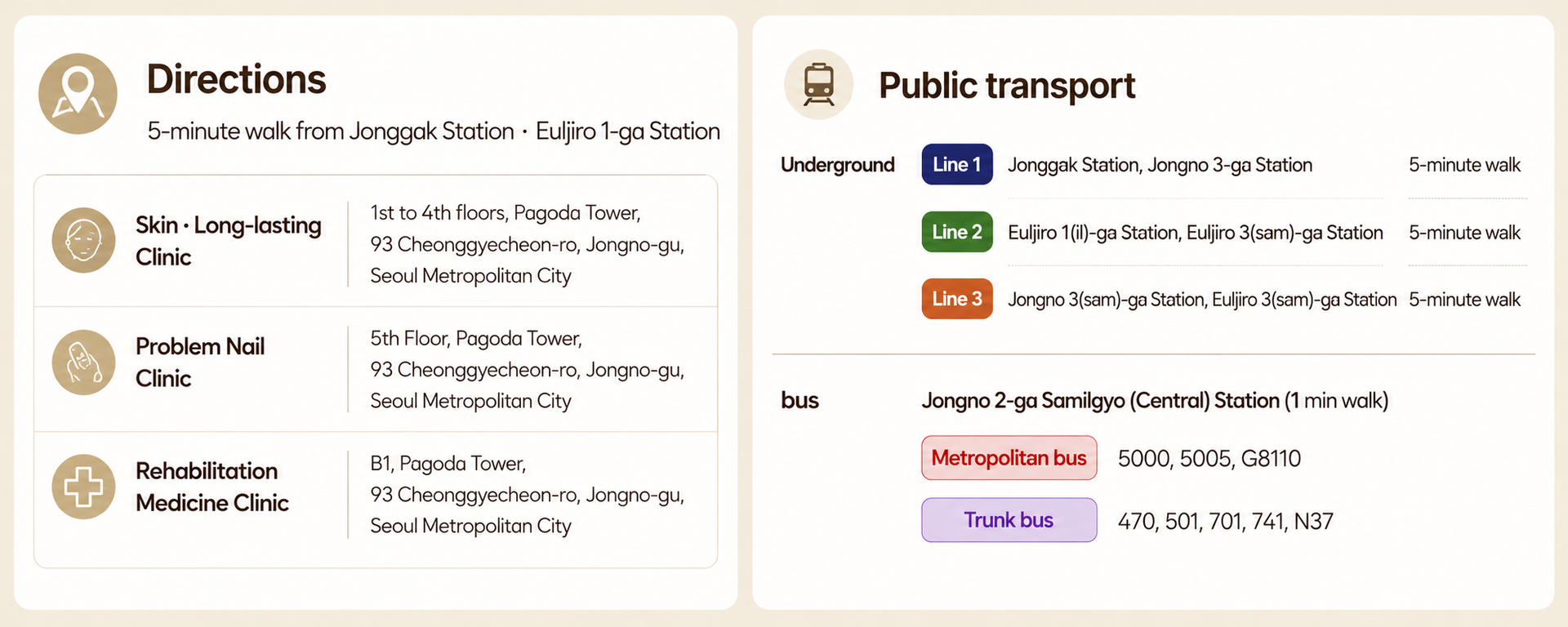
Jongno is centrally located in Seoul and is convenient for travelers staying around Jongno, Insadong, Euljiro, Myeongdong, and central Seoul.
For international visitors, seeking treatment locally can be useful when symptoms are persistent, uncomfortable, or interfering with walking and sightseeing. A medical consultation can also help determine whether the problem is athlete's foot, another skin condition, or a combination of problems.
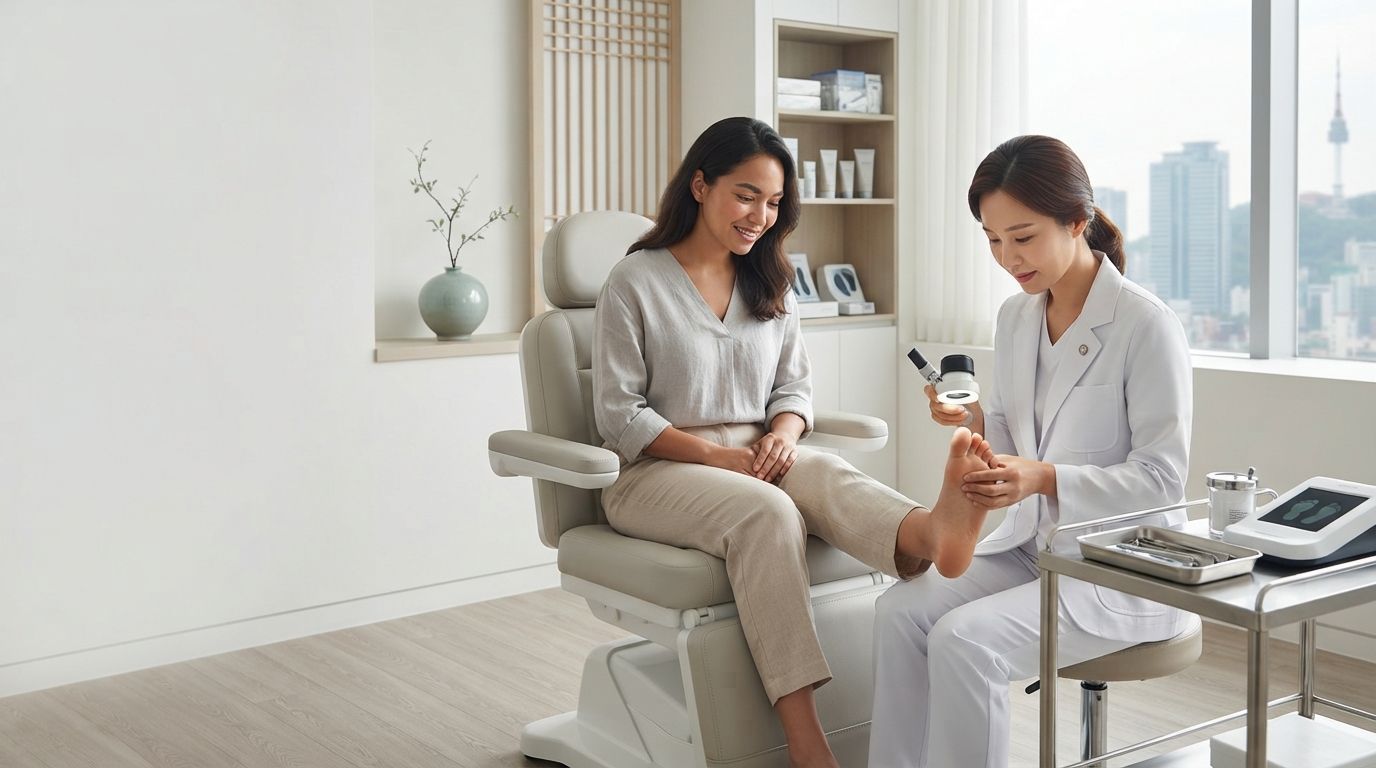
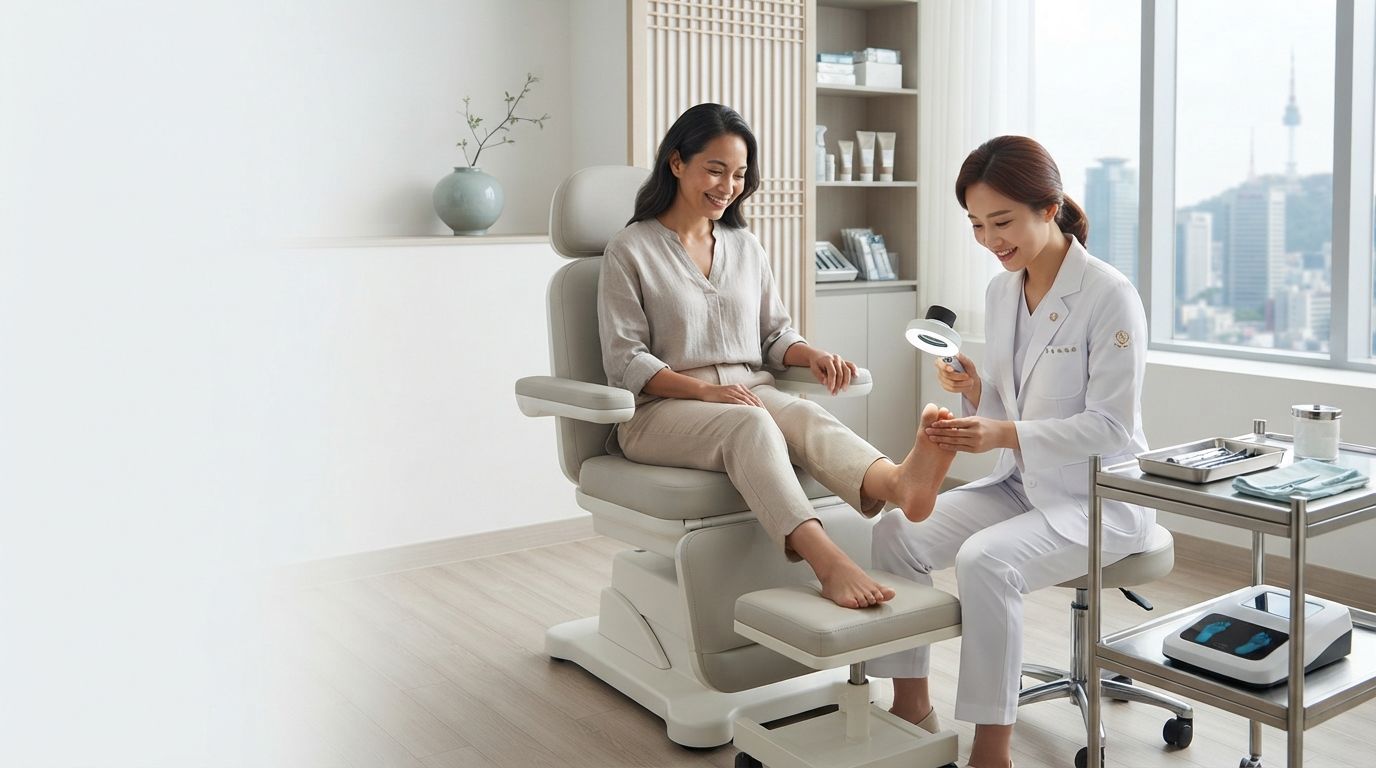
A local option is Obliv Clinic Seoul Origin Branch, which lists a dedicated Footcare & Nail Clinic at its Jongno location. Its official site lists the clinic at Pagoda Tower, 93 Cheonggyecheon-ro, and indicates that the footcare service operates Monday–Friday 09:30–20:00 and Saturday 09:30–19:00.
Patients should confirm that the specific service they need includes diagnosis and treatment of fungal skin infection, rather than assuming that every foot-care service provides medical diagnosis.
How Is Athlete's Foot Diagnosed?
A clinician may begin with a visual examination of the affected skin. However, athlete's foot can resemble eczema, contact dermatitis, psoriasis, and other conditions.
When the diagnosis is uncertain or symptoms keep returning, a clinician may recommend a fungal examination such as a skin scraping or microscopy. Seoul Asan Medical Center specifically notes that fungal testing or culture may be useful because eczema and athlete's foot can appear similar.
This distinction matters because treating the wrong condition can delay improvement.
Athlete's Foot Treatment Options
Topical Antifungal Treatment
For many uncomplicated cases, treatment involves an antifungal medication applied to the affected skin.
Depending on the diagnosis, a clinician or pharmacist may recommend an appropriate antifungal product. Treatment duration varies according to the medication, location, severity, and response.
One important point is consistency: symptoms may improve before the infection has completely cleared. Follow the treatment instructions provided by your healthcare professional or the medication label.
Oral Antifungal Medication
Some persistent, extensive, or difficult-to-treat fungal infections may require prescription oral medication.
Oral antifungals are not appropriate for everyone and can involve medication interactions or other considerations, so they should be used under medical supervision.
Treatment When Toenails Are Also Involved
Athlete's foot can coexist with or contribute to fungal nail infection. If your toenails become thickened, discolored, brittle, or distorted, mention this during your consultation.
Nail fungus generally requires a different treatment approach and often takes considerably longer to resolve than a superficial skin infection.
What Should You Do Before Your Appointment?
While waiting for treatment, keeping your feet dry can help reduce the environment in which fungi thrive.
Consider:
- Washing your feet regularly
- Drying carefully between the toes
- Changing damp socks promptly
- Choosing breathable footwear
- Avoiding sharing socks, towels, or shoes
- Keeping frequently worn footwear clean and dry
Seoul Asan Medical Center also recommends thorough drying after washing, breathable shoes, and avoiding shared towels and footwear as part of prevention.
Avoid aggressively scraping or cutting irritated skin. This can cause additional injury and may complicate the problem.
Can You Get Athlete's Foot From a Foot Spa or Massage?
Fungal infections can spread through contaminated surfaces and shared items. If you already have symptoms, it is sensible to avoid sharing towels, footwear, or other items that come into contact with the feet.
A foot massage or cosmetic pedicure is not a substitute for medical treatment when you have a suspected fungal infection.
If the skin is cracked, inflamed, painful, or infected, tell the provider before receiving any foot-care procedure.
Athlete's Foot Treatment for International Visitors in Jongno
Travelers often spend many hours walking around Seoul, making uncomfortable feet particularly disruptive.
When arranging treatment during a short trip, consider:
Bring Your Medication Information
If you have already tried an antifungal product, take a photo of the packaging or bring the product with you. Tell the clinician how long you used it and whether symptoms improved.
Explain Your Travel Schedule
If you have several days of sightseeing planned, mention this during your consultation. Your clinician can advise you about treatment and foot care while you continue normal activities.
Ask About Follow-Up
If you are leaving Korea soon, ask what symptoms should trigger follow-up care and whether you need to continue treatment after returning home.
How Long Does Athlete's Foot Treatment Take?
The timeline depends on the type and severity of the infection and whether the diagnosis is correct.
Some uncomplicated cases improve with appropriate antifungal treatment over a period of weeks. However, recurring infections, extensive involvement, or simultaneous toenail fungus can require longer management.
Do not assume that temporary symptom relief means the infection has completely disappeared.
When Should You See a Doctor?
Consider professional evaluation if:
- Symptoms keep coming back
- Over-the-counter treatment has not helped
- The infection is spreading
- The skin becomes very painful
- There is significant swelling or drainage
- Cracking becomes severe
- The toenails become thick or discolored
- You are unsure whether the problem is fungal
People with diabetes, circulation problems, or reduced sensation in the feet should be particularly cautious about foot problems and seek appropriate medical advice.
How Much Does Athlete's Foot Treatment Near Jongno Cost?
The total cost depends on the type of consultation, whether fungal testing is needed, prescribed medication, and whether there are additional problems such as toenail fungus.
Because clinic fees and medication prices can change, international visitors should confirm the current consultation and treatment costs directly with the clinic before visiting.
Final Takeaway
Athlete's foot treatment near Jongno can be straightforward when the condition is correctly diagnosed and treated early. The key is distinguishing tinea pedis from other causes of itching, scaling, and cracked skin.
For travelers, keeping the feet dry, avoiding shared footwear and towels, and seeking medical evaluation for persistent symptoms can help prevent the problem from interfering with a Seoul trip.
If symptoms involve the toenails, recur frequently, or do not improve with appropriate treatment, a medical assessment is especially important.