Cracked Heel Treatment in Seoul Korea
Cracked Heel Treatment in Seoul Korea
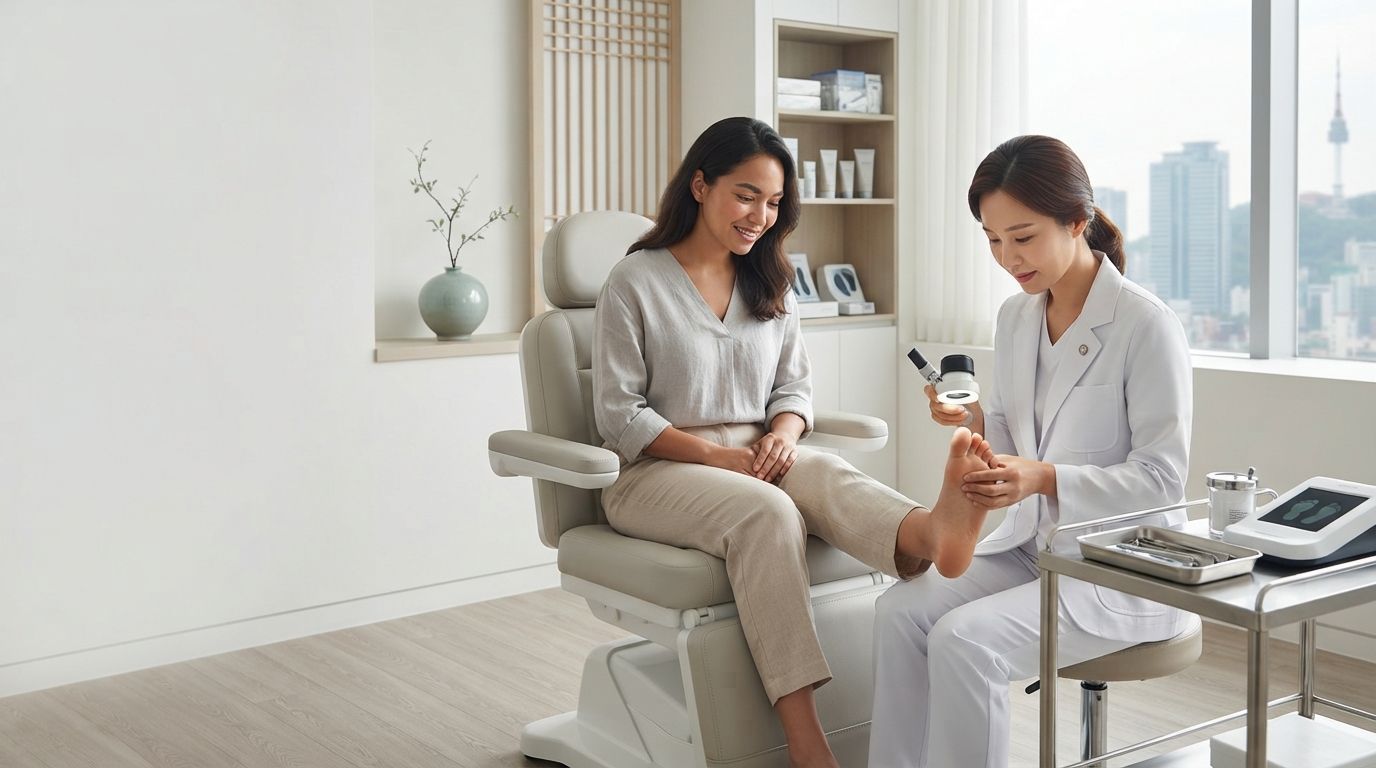
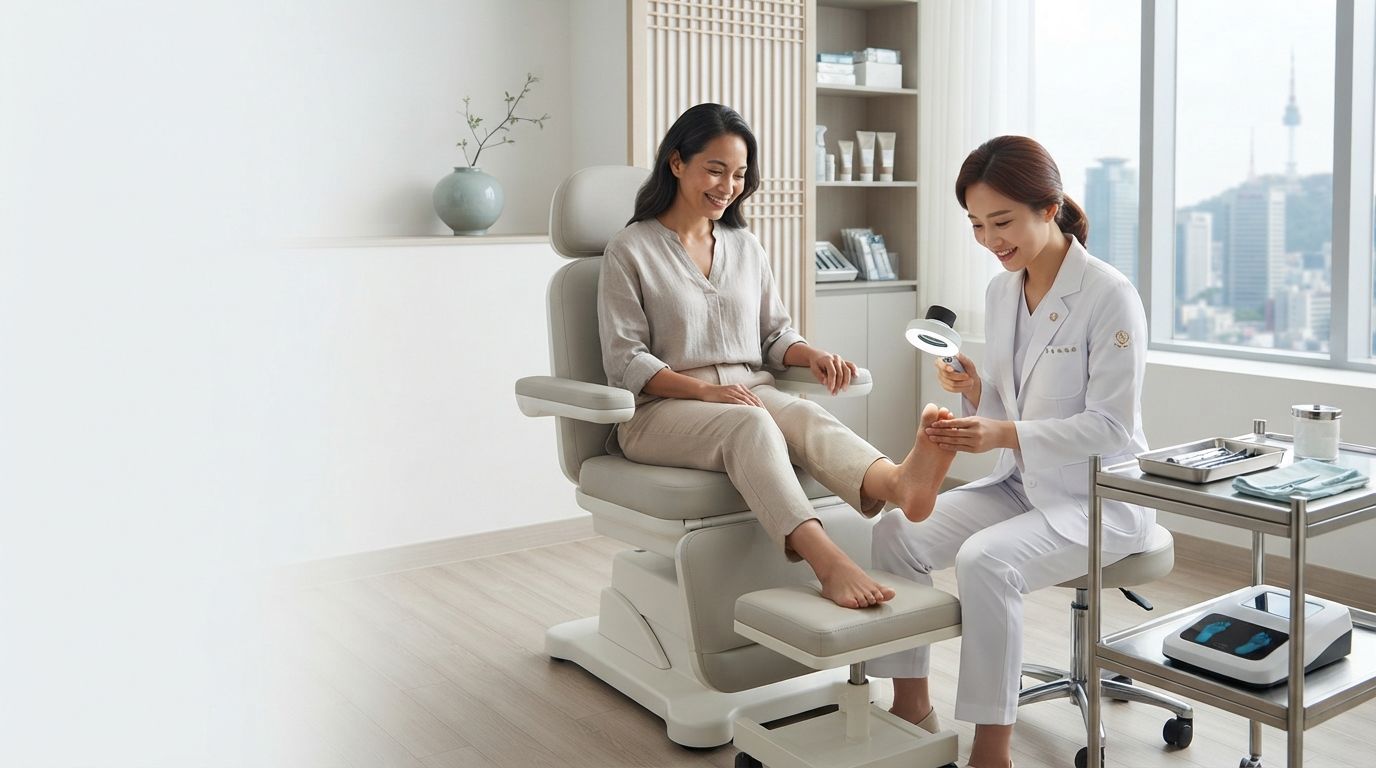
Cracked heel treatment in Seoul Korea can range from intensive moisturizing and home care to professional foot care and medical treatment when fissures are deep, painful, recurrent, or associated with an underlying skin condition.
Cracked heels, also called heel fissures, develop when the skin becomes excessively dry and thick and then splits under pressure. Mild cases may improve with consistent moisturization, while deeper cracks may require professional assessment.
For international visitors, treating cracked heels can be particularly useful when extensive walking around Seoul makes painful fissures worse.
What Causes Cracked Heels?
Cracked heels usually develop when the skin around the heel becomes dry, thick, and less flexible.
Common contributing factors include:
- Dry skin
- Thick callused skin around the heel
- Prolonged standing or walking
- Open-back shoes or sandals
- Poorly fitting footwear
- Hot showers or prolonged bathing
- Cold or dry weather
- Harsh soaps or cleansers
- Certain skin conditions
- Some medical conditions, including diabetes
Pressure on the heel can cause thickened, dry skin to split and form fissures.
What Does Cracked Heel Treatment in Seoul Involve?
Treatment depends on how severe the fissures are.
Mild Cracked Heels
For mild dryness without deep or bleeding cracks, treatment may focus on:
- Thick moisturizing creams
- Urea-containing foot creams
- Petroleum jelly
- Gentle removal of excess dead skin
- Cotton socks at night
- Better-fitting footwear
The American Academy of Dermatology recommends moisturizing shortly after bathing and choosing products containing ingredients such as 10–25% urea, alpha hydroxy acids, or salicylic acid for dry, cracked heels.
Thick, Hardened Heel Skin
When a substantial layer of hard skin surrounds the fissures, professional foot care may be useful.
A qualified provider can assess the thickened skin and, when appropriate, carefully reduce excess callused tissue. This should be controlled rather than aggressive because excessive removal can damage healthy skin.
Deep or Painful Heel Fissures
Deep cracks may require more than cosmetic foot care.
Depending on the cause and severity, a medical professional may recommend:
- Intensive moisturization
- Protective dressings
- Liquid bandage or tissue adhesive in selected cases
- Prescription treatment when an underlying skin disorder is present
- Management of infection if one has developed
Mayo Clinic notes that liquid bandage or skin glue can sometimes be used to protect heel fissures, while persistent cases may require professional evaluation.
Professional Foot Care vs. Home Treatment
Both can have a role.
ApproachWhen It May Be AppropriateMoisturizing at homeMild dryness and superficial crackingUrea-based foot creamDry, thickened heel skinGentle exfoliationExcess surface dead skinProfessional foot careSignificant callus or persistent thickeningDermatology consultationSevere, recurrent, inflamed, or unexplained fissuresMedical treatmentInfection, underlying skin disease, or other complications
The important distinction is that professional treatment should address why the heels are cracking, not simply remove the visible hard skin.
What Happens During a Professional Heel Treatment?
A professional appointment may include several steps.
1. Skin Assessment
The provider examines the heel to determine whether the problem is primarily dryness, callus formation, fissuring, inflammation, infection, or another skin condition.
2. Controlled Removal of Excess Skin
If thickened skin is contributing to the problem, a trained professional may carefully reduce it.
This should not involve cutting deeply into the skin.
3. Intensive Moisturization
A thick emollient or keratolytic moisturizer may be recommended to soften the skin and improve flexibility.
4. Fissure Protection
For deeper cracks, the provider may recommend a protective dressing or another method of keeping the fissure protected while it heals.
5. Prevention Plan
Footwear, walking habits, moisturizing frequency, and recurrence triggers may also be discussed.
Can You Treat Cracked Heels at Home?
Yes, many mild cases can be managed at home.
The AAD recommends limiting baths and showers to around 5–10 minutes, using a gentle cleanser, moisturizing within five minutes of bathing, and applying petroleum jelly before bed. Wearing socks overnight can help retain moisture.
Mayo Clinic similarly recommends moisturizing at least twice daily and giving the heels extra attention before bedtime.
A Simple Nighttime Routine
- Wash your feet with warm rather than very hot water.
- Pat them dry gently.
- Apply a thick foot cream, such as one containing urea.
- Apply a layer of petroleum jelly if appropriate.
- Put on clean cotton socks.
- Repeat consistently until the skin improves.
Avoid aggressively filing or cutting deep cracks.
What Should You Avoid?
When treating cracked heels, avoid:
- Cutting the skin with a blade
- Aggressive scraping
- Very hot water
- Harsh cleansers
- Repeatedly walking barefoot on hard surfaces
- Poorly fitting shoes
- Open-back footwear when it aggravates the problem
- Picking at fissures
The AAD recommends avoiding open-heeled footwear such as flip-flops when heels are cracked and using properly fitting shoes instead.
Cracked Heel Treatment for Seoul Travelers
Seoul is a highly walkable city, and visitors may spend hours walking between attractions, shopping areas, restaurants, subway stations, and hotels.
If cracked heels are already painful before your trip, consider treatment early rather than waiting until the fissures become deeper.
When arranging professional foot care in Seoul, ask:
- Is the service medical or cosmetic?
- Will the provider assess the cause of the fissures?
- Is callus reduction included?
- Can I walk normally after treatment?
- What should I apply at home?
- Should I avoid long walks afterward?
- Will I need a follow-up appointment?
This is particularly important if your Seoul itinerary involves extensive walking.
When Should You See a Doctor?
Professional medical evaluation is recommended when cracked heels are:
- Deep
- Bleeding
- Very painful
- Swollen
- Red or inflamed
- Associated with drainage
- Not improving with consistent home care
- Repeatedly returning
People with diabetes, poor circulation, or reduced sensation in the feet should be especially cautious and should consult a healthcare professional before attempting aggressive self-treatment.
Cracked skin can create an entry point for infection, particularly when fissures become deep.
How Long Does Cracked Heel Treatment Take?
The recovery time varies according to the depth of the fissures and the underlying cause.
Mild dryness may improve with consistent moisturizing, while deeper cracks can take longer to heal.
Results also depend on whether the source of pressure, dryness, or irritation is corrected. Simply removing hard skin without changing the contributing factors may allow the problem to return.
How Much Does Cracked Heel Treatment Cost in Seoul?
There is no single standard price for cracked heel treatment in Seoul.
Cost can depend on:
- Severity of the fissures
- Amount of thickened skin
- Whether professional callus reduction is required
- Medical consultation fees
- Additional treatment or testing
- Prescription products
- Follow-up appointments
International patients should confirm the current price and exactly what is included before treatment.
Final Takeaway
Cracked heel treatment in Seoul Korea can range from intensive home moisturization to professional foot care or medical treatment for deeper and recurrent fissures.
For mild cases, consistent use of a thick moisturizer, appropriate footwear, and gentle foot care may be enough. For painful, deep, bleeding, inflamed, or persistent cracks, a qualified medical professional can determine whether additional treatment is necessary.
For international travelers, treating cracked heels before they interfere with walking can make a Seoul trip considerably more comfortable.