Professional Callus Removal Near Myeongdong Station

Quick answer
A callus is a broad patch of thick, hard skin, usually on the ball of the foot or heel, that forms where the sole takes repeated pressure. Professional callus removal means a trained clinician pares the hard skin away with a sterile blade or burr, painlessly, then advises on insoles, padding and footwear so it does not return. Near Myeongdong station, dermatology and foot clinics provide this; our branch is about 12 to 15 minutes' walk away. People with diabetes should always have calluses treated medically.
Key takeaways
- Calluses protect the foot from friction but become painful when thick, cracked or concentrated over a bony point.
- Professional reduction removes hard skin safely and painlessly; home shaving with blades risks cuts and infection.
- Insoles, padding and better-fitting shoes treat the cause, so calluses return more slowly.
- A callus with dark blood under it, pain on pressure or any break in the skin needs a doctor, especially with diabetes.
- Myeongdong station (Line 4) is about 12–15 minutes on foot from our branch near Jongno 3-ga and Euljiro 3-ga stations.
What a callus is, and when it becomes a problem
A callus (tyloma) is the skin's natural armour. When an area of the sole is pressed or rubbed again and again, the outer layer thickens to protect what lies beneath. Calluses usually form under the ball of the foot, on the heel, on the outer edge of the big toe and along the sides of the foot. Unlike a corn, which has a small, hard central core, a callus is broad and flat.
A thin callus is harmless and even useful. Problems start when the hard skin builds up so much that it acts like a stone in the shoe, raising pressure on the tissue beneath. It can then ache, burn, crack or develop small bruises underneath. Thick calluses on the heel rim are a common starting point for cracked heels.
Common causes include long hours standing or walking, high heels and thin-soled shoes, high arches or flat feet, bunions and hammer toes, a thinning fat pad on the ball of the foot with age, and running or hiking.
Is it safe to treat? Warning signs
Most calluses can be reduced routinely, but some need a doctor first. Dark red or black spots under the hard skin mean bleeding beneath the callus from excessive pressure; in people with diabetes this can be an early warning of an ulcer forming underneath. A painful spot with tiny black dots may be a plantar wart , which needs different treatment.
If you have diabetes, nerve damage or poor circulation, do not file or shave calluses yourself, and do not use acid callus removers. Read our diabetic foot care guide for Seoul before having any foot treatment.
What happens at a professional callus removal appointment
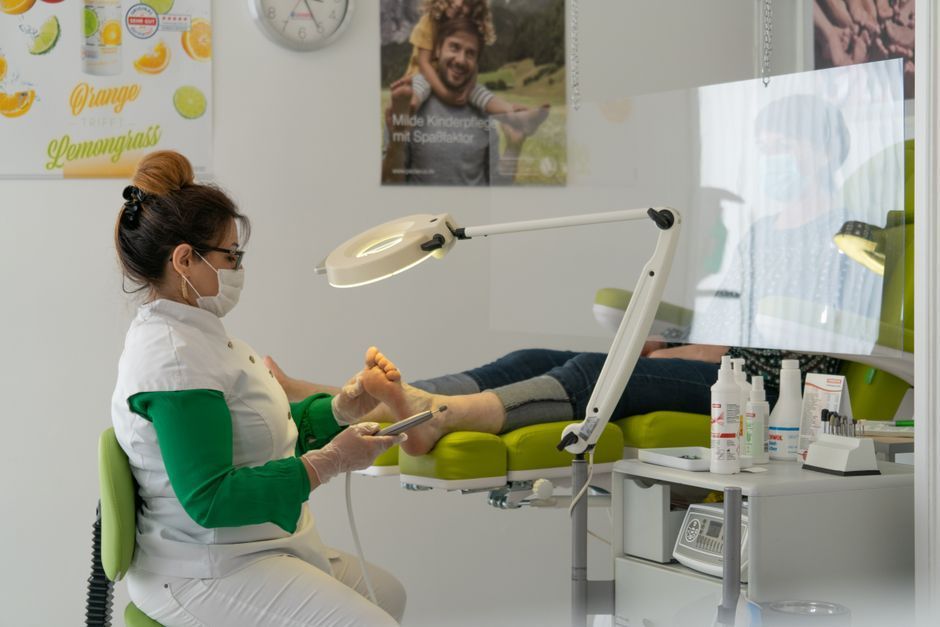
A proper appointment begins with a brief assessment rather than going straight to the blade. The clinician asks about your health, medicines and footwear, checks sensation and circulation if needed, and looks at how the callus lines up with the bones of your foot and your walking pattern.
The reduction itself is usually painless because callus is dead, hardened skin. You may feel pressure or a scraping sensation, but no cutting pain. Most people walk out feeling lighter on their feet immediately.
- The skin is cleaned, and sometimes softened.
- Hard layers are pared away with a sterile, single-use scalpel or reduced with a rotary burr or file.
- The clinician stops before healthy skin, leaving a thin protective layer.
- The area is smoothed and moisturised; any small bruise or crack is checked.
- You receive advice on padding, insoles and shoes, and when to come back.
Ask a doctor about callus removal
Send a photo and your travel dates on WhatsApp (+82-10-3086-4084). English replies, a personal plan and a written quote before you fly.
Comparing your options
Professional reduction gives the fastest relief, but it only lasts if the pressure that caused the callus is reduced. The most successful plans combine an occasional clinic visit with daily home care and the right shoes and insoles. Our guide to medical pedicure vs nail salon in Korea explains why callus shaving at salons is best avoided.
| Option | What it involves | Pros | Cautions |
|---|---|---|---|
| Home file and urea cream | Soak, gentle filing, daily moisturiser | Cheap, easy, good maintenance | Slow on thick calluses; no blades |
| Professional reduction | Clinician pares callus with sterile instruments | Fast, painless, precise | Needs repeating if pressure continues |
| Padding and insoles | Gel pads, metatarsal pads, cushioned or custom insoles | Treats the cause | Must fit the shoe and foot |
| Footwear change | Wider, cushioned, supportive shoes | Prevents recurrence | Fashion shoes may need limiting |
| Salicylic acid products | Chemical softening of hard skin | Can help small areas | Avoid with diabetes or fragile skin |
How to choose a clinic for callus care near Myeongdong
Myeongdong has many beauty shops advertising foot care, but callus treatment is safest in a clinical setting. A few simple checks help you choose well, especially if you only have a day or two in Seoul and cannot easily go back if something goes wrong.
Ask in advance whether a doctor or trained clinician performs the treatment, whether they assess the whole foot rather than just removing skin, and what happens if a problem such as a wart, ulcer or infection is found. A good clinic will be comfortable answering in English or through an interpreter, and will happily send directions or a map before you set off.
- Sterile or single-use blades and files, opened in front of you.
- An assessment of sensation and circulation if you have diabetes or are older.
- Advice on insoles, pads and shoes, not just removal.
- A clear plan for follow-up after you fly home.
- Honest referral if the problem is something other than a callus.
Getting here from Myeongdong station
Obliv Clinic Seoul Origin sits between Myeongdong and Jongno, not directly at Myeongdong station. From Myeongdong station (Line 4) it is roughly a 12 to 15 minute walk north through the Myeongdong shopping streets towards Euljiro, or a short taxi ride. The closest stations are Jongno 3-ga (Lines 1, 3 and 5) and Euljiro 3-ga (Lines 2 and 3), each about a 6-minute walk.
If you are staying at a hotel in Myeongdong, walking is usually easiest outside rush hour; on a hot or rainy day, a taxi takes only a few minutes depending on traffic. Our Myeongdong skin clinic guide and Euljiro guide include more detailed directions, and our English-speaking team can send a map on WhatsApp.
Aftercare and preventing calluses returning
Calluses come back if the pressure continues, so aftercare is really about prevention. Most people need a professional reduction only every one to two months, or less once insoles and shoes are sorted.
On a Seoul trip, a pair of cushioned insoles from a pharmacy or sports shop can make long days in Myeongdong, Insadong or on the Namsan trails far more comfortable.
- Apply a urea cream (10–25%) to callused areas daily, ideally after a shower.
- Use a foot file gently once or twice a week to stop thick skin building up again.
- Wear shoes with a cushioned sole and enough room across the forefoot.
- Try metatarsal pads or cushioned insoles for calluses under the ball of the foot.
- Limit high heels and thin-soled flats on long walking days.
When a callus needs more than reduction
If calluses return within days or weeks, there is usually a mechanical reason. A clinician may suggest a gait assessment, custom insoles, or a referral to an orthopaedic foot-and-ankle specialist for bunions, hammer toes or a prominent metatarsal bone. In rare cases surgery to correct foot shape is considered, but only after non-surgical options have been tried.
Calluses with bleeding underneath, a developing ulcer, or infection need medical care rather than cosmetic foot treatment. In Seoul, start with a dermatology clinic or, if you have diabetes, a hospital diabetic foot clinic.
Pampering the rest of you after a long day on your feet
Myeongdong is one of Seoul's best places to shop and eat, and one of the hardest on your feet. Once your soles are comfortable again, many visitors book something for the rest of their skin. At our clinic near Myeongdong and Jongno, doctors offer hydrating skin boosters, an IV drip for travel fatigue, and a full range of lifting and laser treatments listed on our treatments page.
If you are not sure whether your foot problem needs a clinic, send a photo to our English-speaking team on WhatsApp. We will tell you honestly what kind of care it needs and where to find it.

Frequently asked questions
Does professional callus removal hurt?
Usually not. Callus is dead, hardened skin, so paring it feels like pressure or scraping rather than pain. A skilled clinician stops before healthy skin.
How far is Obliv from Myeongdong station?
About a 12 to 15 minute walk, or a short taxi ride. The nearest stations are Jongno 3-ga and Euljiro 3-ga, each about 6 minutes on foot.
Does Obliv offer callus removal?
Our branch focuses on skin, lifting and injectable treatments. Message us on WhatsApp to ask whether callus care is available, or we can tell you what kind of clinic to see near Myeongdong.
How often should calluses be removed?
Typically every one to two months if pressure continues, less often once insoles and better shoes reduce the friction.
Can I remove calluses at home?
Gentle filing after a soak and daily urea cream are fine for most people. Avoid blades, and do not self-treat if you have diabetes or poor circulation.
Is it safe to have calluses shaved at a nail salon?
Callus shaving with blades at salons risks cuts and infection. Choose gentle filing for cosmetic care and a clinician for thick or painful calluses.
Why do my calluses keep coming back?
Because the pressure that caused them continues. Cushioned insoles, metatarsal pads, roomier shoes and sometimes custom orthotics slow recurrence.
Related treatments and guides
Keep reading
- Corn Removal Without Surgery
- Cracked Heel Treatment in Seoul Korea
- Medical Foot Care Clinic in Myeongdong Seoul
- Foot Care Clinic Near Euljiro
- Medical Pedicure Near Myeongdong Hotels
Ask a doctor about callus removal
Send a photo and your travel dates on WhatsApp (+82-10-3086-4084). English replies, a personal plan and a written quote before you fly.
Sources