Medical Pedicure vs Nail Salon in Korea
Medical Pedicure vs Nail Salon in Korea
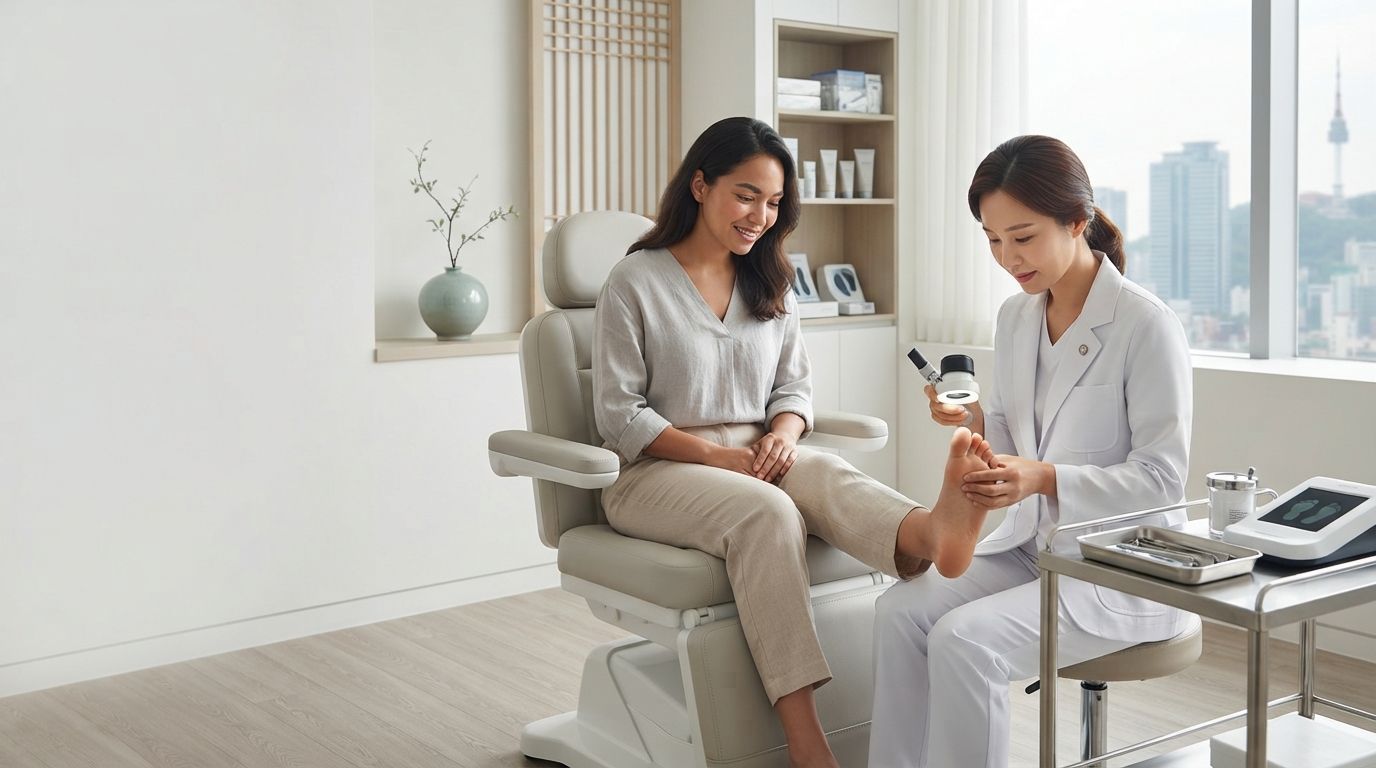
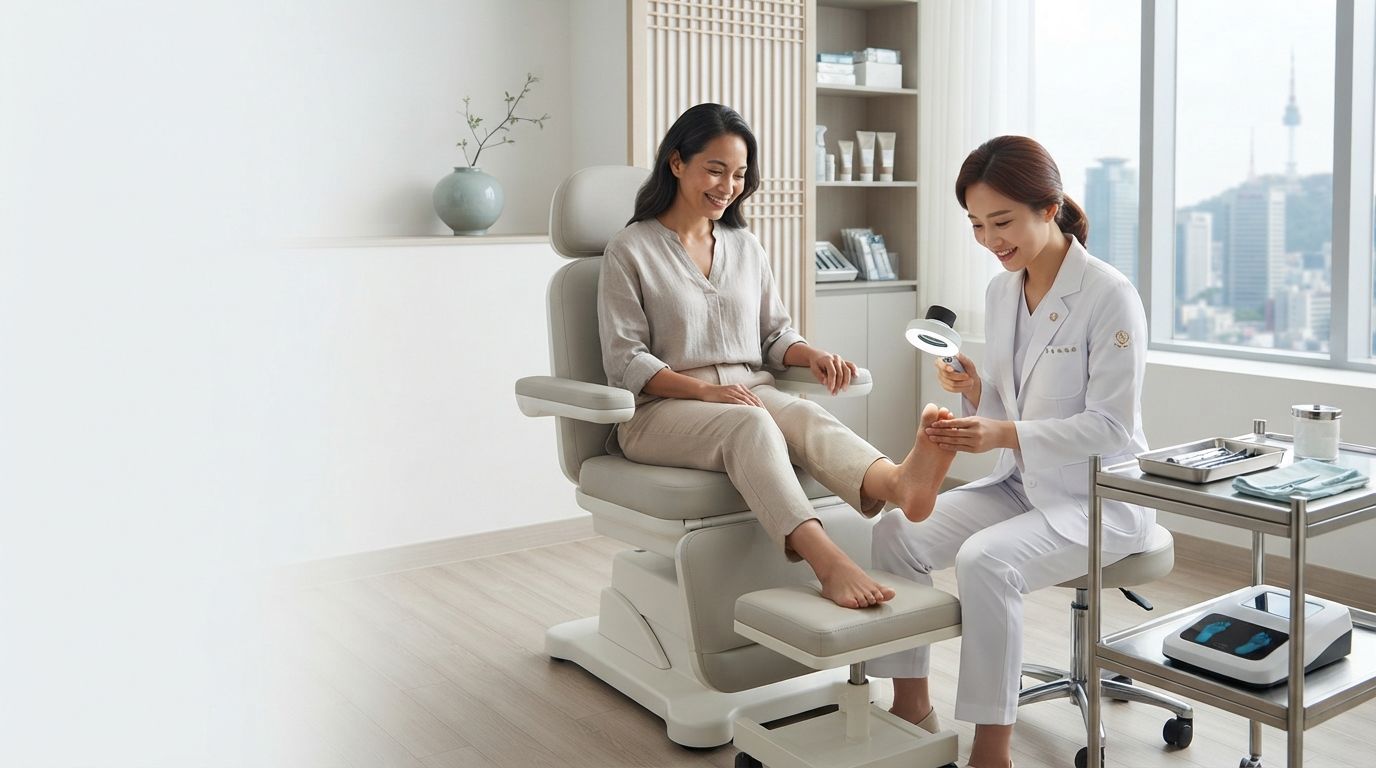
If you are considering medical pedicure vs nail salon in Korea, the main difference is the purpose of the service. A traditional nail salon pedicure is primarily cosmetic, focusing on nail shaping, cuticle care, polish, and general grooming. A medical pedicure or clinical foot-care service focuses more on problematic nails, calluses, cracked heels, ingrown toenails, and other foot concerns.
The terminology can vary in Korea, so international patients should check exactly what a provider means by "medical pedicure" before booking. Some specialized Korean foot-care centers describe their services as medical pedicure-style care but are not medical clinics and do not provide diagnosis, prescriptions, or medical treatment.
Medical Pedicure vs Nail Salon: What's the Difference?
The simplest distinction is:
- Nail salon: primarily cosmetic nail and foot grooming
- Medical or clinical foot care: focuses on foot and nail health and problematic conditions
- Medical clinic: can provide medical assessment and, where appropriate, diagnosis and treatment
A medical pedicure may include professional reduction of calluses, care of thickened nails, ingrown toenail management, and assessment of foot or nail problems. However, the qualifications of the provider vary, so the term itself should not automatically be treated as proof that the service is medical care.
What Does a Nail Salon Pedicure Include?
A conventional nail salon pedicure generally focuses on appearance and routine grooming.
Services may include:
- Nail trimming and shaping
- Cuticle grooming
- Nail buffing
- Foot exfoliation
- Basic callus smoothing
- Moisturizer
- Foot massage
- Nail polish or gel polish
This can be appropriate when your feet are generally healthy and your primary goal is cosmetic maintenance.
The American Academy of Dermatology recommends paying attention to salon cleanliness, technician hygiene, and safe cuticle practices when receiving a manicure or pedicure.
What Is a Medical Pedicure in Korea?
The term medical pedicure is used somewhat broadly in Korea.
Specialized foot-care centers may use the term for services addressing concerns such as:
- Thickened toenails
- Problematic toenails
- Ingrown toenails
- Calluses
- Corns
- Cracked heels
- Nail hygiene
- Rough or hardened foot skin
Korean medical-pedicure organizations also describe a model combining beauty professionals and medical professionals for problematic-foot care, particularly involving issues such as calluses, ingrown nails, and fungal nails.
However, not every provider offering "medical pedicure" is a hospital or doctor's clinic. One Seoul foot-care provider, for example, explicitly states that it does not provide medical diagnosis, medical treatment, surgery, or prescriptions despite offering specialized foot-care services.
That distinction matters for international patients.
Medical Pedicure vs Nail Salon Comparison
FeatureMedical/Clinical Foot CareNail Salon PedicureMain purposeFoot and nail healthCosmetic groomingNail shapingYesYesCallus careOften more specializedUsually basicThickened nail careMay be availableLimitedIngrown toenail careMay be availableUsually cosmetic care onlyCracked heel careOften availableBasic moisturizing/exfoliationMedical assessmentDepends on providerNoDiagnosisOnly by qualified medical providerNoPrescription treatmentMedical clinic onlyNoNail polishUsually secondary or unavailableCommonFoot massageUsually not the main purposeCommonBest suited toProblematic or high-maintenance feetHealthy feet and cosmetic grooming
The exact scope depends on the provider, so patients should verify services before making an appointment.
When Should You Choose a Nail Salon?
A regular nail salon may be appropriate if you want:
- A cosmetic pedicure
- Nail shaping
- Polish or gel polish
- Basic foot exfoliation
- Routine grooming
- A relaxing foot-care experience
If your toenails and skin are otherwise healthy, there may be no reason to seek a clinical service simply for routine cosmetic maintenance.
When Is Medical or Clinical Foot Care More Appropriate?
Consider a specialized or medically supervised service when you have a persistent foot or nail concern.
Examples include:
Ingrown Toenails
If the nail repeatedly grows into the surrounding skin, causes significant pain, or becomes inflamed, simple cosmetic trimming may not address the underlying problem.
Some Seoul medical clinics offer clinical assessment and nonsurgical ingrown-toenail correction.
Thick or Discolored Toenails
A thick or discolored nail can have multiple causes. Fungal infection is one possibility, but trauma and other nail disorders can also cause changes.
A medical evaluation may therefore be more appropriate than simply filing or covering the nail.
Calluses and Corns
Repeated pressure or friction can create thickened skin. Professional reduction may help, but identifying the source of pressure is also important if the problem repeatedly returns.
Cracked Heels
Dry, thickened heel skin can develop fissures that become painful. Specialized foot care may help manage excess hard skin and provide a preventive care plan.
Recurrent Nail Problems
If a nail problem keeps returning despite regular salon care, consider whether the underlying cause needs assessment rather than repeated cosmetic maintenance.
What About Fungal Toenails?
This is an important distinction.
A nail salon can make a thick or discolored nail look cleaner, but cosmetic treatment does not establish whether the nail has a fungal infection.
Some medical clinics in Seoul offer diagnostic assessment and medical treatment for suspected fungal nails. For example, Obliv Clinic describes medical evaluation and treatment options for fungal toenails and emphasizes the distinction between medical care and salon treatment.
If you suspect nail fungus, ask whether the provider can diagnose the condition, rather than simply offering cosmetic nail cleaning.
What About Diabetes or Reduced Sensation?
People with diabetes, poor circulation, neuropathy, or reduced sensation in the feet need additional caution.
A small cut or irritation may be harder to notice and can potentially become a more serious problem. Medical foot-care services are generally more appropriate for higher-risk patients than routine cosmetic treatment.
The appropriate provider depends on the person's condition and the healthcare system in which they are being treated. If you have a significant medical condition affecting your feet, ask a qualified healthcare professional which type of care is appropriate.
How to Choose a Foot-Care Provider in Korea
Before booking, don't rely only on the phrase "medical pedicure."
Instead, check the following:
1. Who Performs the Treatment?
Determine whether you will see:
- A nail technician
- A trained foot-care specialist
- A podology-style practitioner
- A dermatologist
- Another licensed medical professional
These roles are not interchangeable.
2. What Problems Does the Provider Treat?
Ask specifically whether they manage your concern, such as:
- Calluses
- Ingrown toenails
- Thickened nails
- Cracked heels
- Suspected fungal nails
3. Is It Medical Treatment or Specialized Foot Care?
This is particularly important in Korea because "medical pedicure" can describe different types of services.
Ask directly whether the provider offers medical diagnosis and treatment or specialized non-medical foot care.
4. What Are the Hygiene Procedures?
Look for clean treatment areas and appropriate instrument cleaning and sterilization practices. The AAD recommends checking salon cleanliness and hygiene practices before receiving pedicure services.
5. Can They Communicate in English?
For international visitors, clear communication is especially important when discussing symptoms, medications, allergies, previous treatment, and aftercare.
Which Option Is Better for a Seoul Beauty Trip?
There is no universally appropriate choice.
If your feet are healthy and you want nail grooming and polish, a nail salon may meet your needs.
If you have calluses, cracked heels, thick nails, recurrent ingrown nails, or another persistent foot concern, specialized foot care or a medical clinic may be more appropriate depending on the problem.
The key is matching the provider to the condition rather than choosing based only on the word "medical."
Questions to Ask Before Booking
International patients can ask:
- Is this a cosmetic pedicure or medical/clinical foot care?
- Who performs the treatment?
- Do you diagnose foot or nail conditions?
- Do you treat ingrown toenails?
- Do you treat thick or fungal nails?
- Do you provide professional callus removal?
- Can you treat cracked heels?
- What sterilization procedures are used?
- Is English-language communication available?
- What should I expect after treatment?
Final Takeaway
The difference between a medical pedicure and a nail salon in Korea comes down primarily to purpose, provider qualifications, and treatment scope.
A nail salon is generally designed for cosmetic grooming and relaxation. Specialized foot-care centers may provide more intensive care for calluses, problematic nails, and cracked heels, while a medical clinic can provide clinical assessment and treatment when a genuine medical condition is involved.
For international patients, the safest approach is to verify exactly who is providing the service and whether the provider can medically assess the specific problem you want treated.