Ingrown Toenail Treatment While Traveling
Ingrown Toenail Treatment While Traveling
Ingrown toenail treatment while traveling can be challenging because walking, closed shoes, long sightseeing days, and limited access to familiar healthcare can make symptoms more uncomfortable.
An ingrown toenail occurs when the edge or corner of a toenail grows into the surrounding skin, most commonly affecting the big toe. Mild cases may improve with appropriate self-care, but significant pain, swelling, drainage, or infection should be assessed by a healthcare professional. (mayoclinic.org)
If you develop an ingrown toenail during a trip, the priority is to reduce pressure on the toe, avoid making the nail injury worse, and seek appropriate care when necessary.
What Causes an Ingrown Toenail?
An ingrown toenail can develop when the nail edge grows into the surrounding skin.
Common contributing factors include:
- Cutting toenails too short
- Rounding the corners of the nails
- Tight footwear
- Repeated pressure on the toe
- Toe injury
- Naturally curved toenails
- Certain nail or foot shapes
Wearing shoes that provide enough room around the toes can help reduce pressure on the affected area. (mayoclinic.org)
What Should You Do If an Ingrown Toenail Starts During a Trip?
If symptoms are mild and there is no obvious infection, conservative care may be appropriate while arranging professional assessment if needed.
1. Reduce Pressure
Choose shoes with a wide toe box or open footwear when practical.
Avoid footwear that presses directly against the painful edge of the nail.
2. Soak the Foot
Mayo Clinic recommends soaking the affected foot in warm, soapy water for approximately 10–20 minutes, three to four times a day for mild cases. The foot should then be dried thoroughly. (mayoclinic.org)
3. Do Not Cut Into the Nail
Trying to dig underneath the nail or cut out the embedded corner yourself can worsen the injury.
Instead, allow the nail to grow forward while reducing pressure on the area.
4. Keep the Area Clean
Maintain good foot hygiene and change socks regularly, especially if you have been walking extensively.
Can You Keep Sightseeing With an Ingrown Toenail?
It depends on the severity.
A mildly uncomfortable toe may tolerate normal activity if pressure is minimized. However, prolonged walking can increase friction and pressure and may aggravate symptoms.
If you are experiencing:
- Increasing pain
- Significant swelling
- Redness spreading around the toe
- Drainage
- Difficulty wearing shoes
- Difficulty walking
it is better to reduce activity and seek medical assessment rather than continuing to push through the symptoms.
When Should You See a Doctor?
Professional evaluation is particularly important if there are signs of infection or if home care does not improve the problem.
Seek medical attention if you develop:
- Pus or drainage
- Increasing redness or swelling
- Significant pain
- Warmth around the toe
- Fever
- Redness spreading beyond the immediate nail area
- Difficulty walking
People with diabetes, poor circulation, or nerve problems affecting the feet should seek professional care rather than attempting to manage an ingrown toenail aggressively at home. (mayoclinic.org)
What Treatment Is Available While Traveling?
Treatment depends on how severe the ingrown toenail is.
Conservative Treatment
For a mild case, a healthcare professional may recommend measures designed to separate the nail edge from the surrounding skin and allow the nail to grow normally.
This may be combined with appropriate footwear and local foot care.
Partial Nail Removal
For a more painful or recurrent ingrown toenail, a clinician may remove the portion of the nail that is growing into the skin.
This can relieve pressure on the affected area.
Mayo Clinic notes that partial nail removal may be used for more severe or recurrent cases. (mayoclinic.org)
Treatment of Recurrent Ingrown Toenails
When an ingrown toenail repeatedly returns, a healthcare professional may recommend a procedure designed to prevent the problematic portion of the nail from growing back.
The appropriate approach depends on the nail and the individual's medical circumstances.
Should You Go to a Nail Salon?
A nail salon is not a substitute for medical evaluation when an ingrown toenail is painful, inflamed, infected, or recurrent.
Avoid asking a nail technician to aggressively cut into an inflamed nail corner.
A cosmetic pedicure may be appropriate for healthy nails, but an active ingrown toenail may require assessment by a qualified healthcare professional.
This distinction is particularly important when traveling because visitors may not know which local services provide medical treatment versus cosmetic foot care.
Ingrown Toenail Treatment in Seoul
If you develop an ingrown toenail while traveling in Seoul, you have several types of providers to consider.
Depending on the severity, options may include:
- Dermatology clinics
- Medical foot-care clinics
- General medical clinics
- Specialized foot-care providers
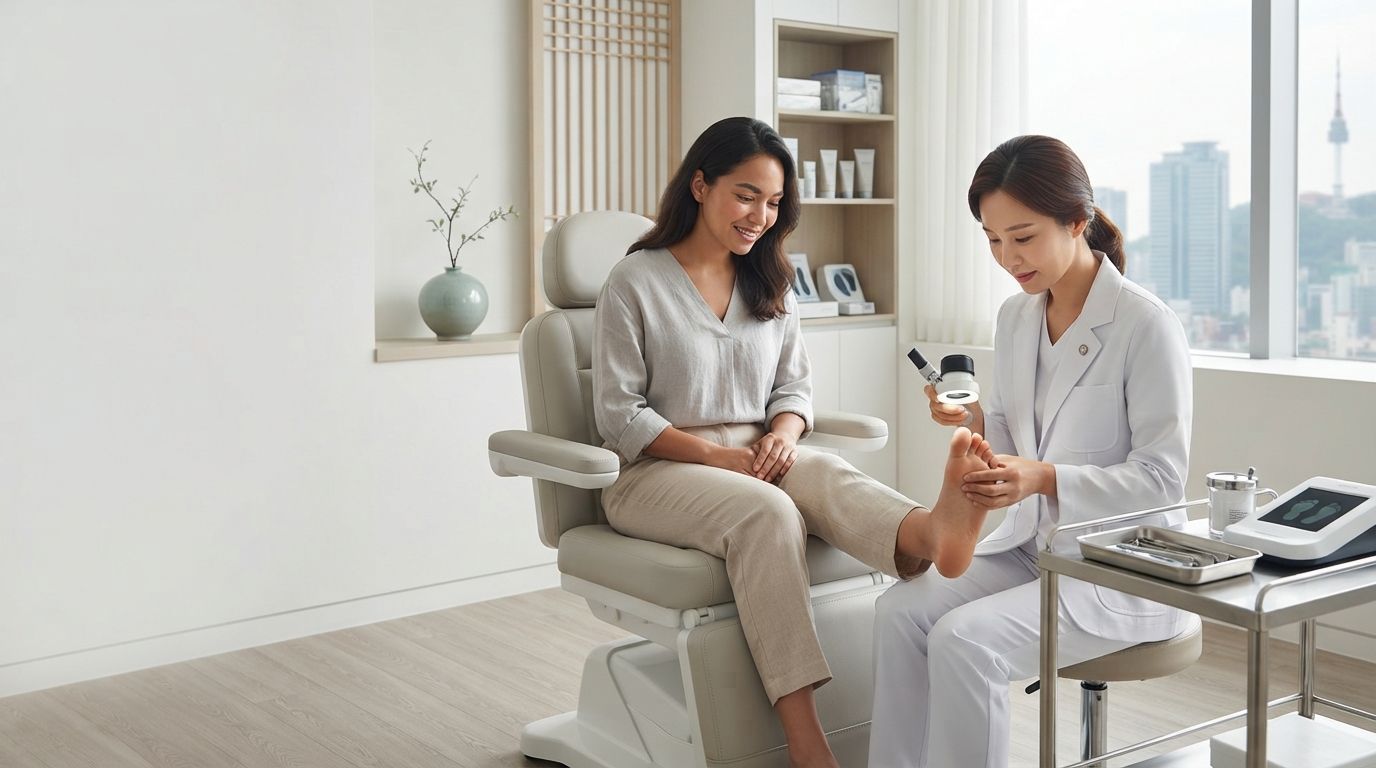
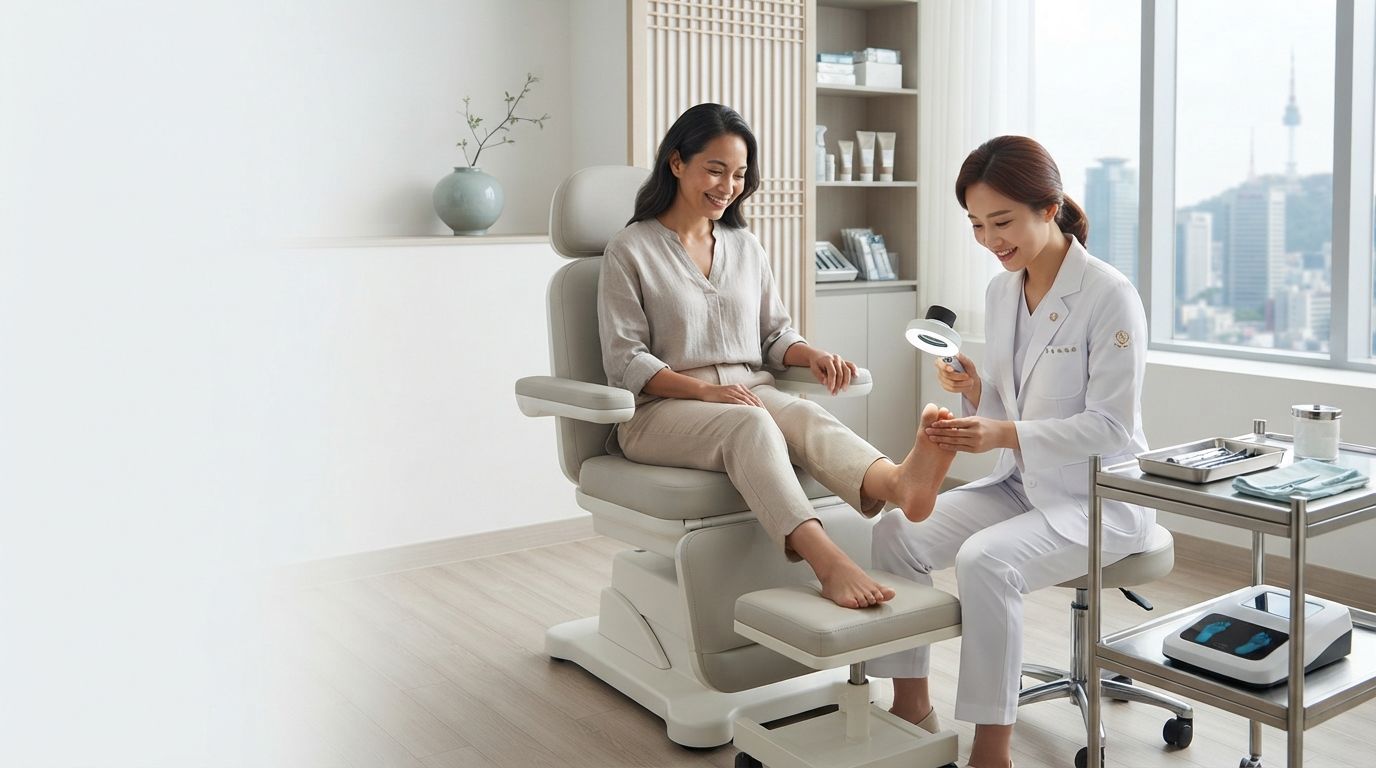
Some Seoul clinics specifically advertise medical ingrown-toenail assessment and treatment for international patients. For example, Obliv Clinic describes clinical evaluation and nonsurgical correction options for ingrown toenails. (oblivseoul.kr)
Before booking, confirm that the provider treats active ingrown toenails rather than offering only cosmetic nail services.
What Should International Travelers Ask?
If you are visiting Korea or another country, ask the clinic:
- Do you treat ingrown toenails?
- Is the service performed by a medical professional?
- Can you assess possible infection?
- What treatment is recommended for my severity?
- Will I be able to walk normally afterward?
- Will I need a dressing?
- How should I care for the toe afterward?
- Will I need a follow-up appointment?
- How soon can I wear normal shoes?
- Can you provide instructions in English?
These questions can help you choose an appropriate provider without confusing medical foot care with a cosmetic pedicure.
How to Plan Treatment Around Your Travel Itinerary
Timing matters when you are traveling.
If possible, avoid scheduling an invasive nail procedure immediately before:
- A full day of sightseeing
- Long-distance walking
- Hiking
- Beach activities
- A long flight
- An event requiring formal shoes
Ask the provider how much discomfort or activity restriction you should expect before planning the rest of your itinerary.
If you have several days remaining in your trip, you may also need to consider whether follow-up care will be necessary.
How Can You Prevent an Ingrown Toenail During Travel?
A few practical measures can reduce unnecessary pressure on the toenails.
Wear Comfortable Shoes
Choose footwear with enough space around the toes, particularly when you expect to walk for several hours.
Trim Nails Correctly
Mayo Clinic recommends trimming toenails straight across rather than rounding deeply into the corners. (mayoclinic.org)
Keep Feet Dry
Change damp socks and allow footwear to dry between uses when possible.
Check Your Feet
If you are walking extensively during a trip, look at your toes regularly for early redness, tenderness, or swelling.
Early attention can be easier than waiting until the toe becomes significantly painful.
What About Pain Relief?
For mild discomfort, an appropriate over-the-counter pain reliever may help some travelers, provided it is safe for them to use.
Check the label and consider existing medical conditions, allergies, pregnancy, and other medications before taking any medicine. A pharmacist or healthcare professional can help you choose an appropriate option if you are uncertain.
Pain medication should not be used to mask worsening symptoms or delay assessment of a possible infection.
Final Takeaway
Ingrown toenail treatment while traveling depends on the severity of the problem.
For mild symptoms, reducing pressure, wearing comfortable footwear, keeping the foot clean, and using appropriate conservative care may help. Painful, recurrent, or infected ingrown toenails should be assessed by a qualified healthcare professional.
If an ingrown toenail develops during a trip to Korea, confirm that the provider offers medical ingrown-toenail treatment rather than cosmetic nail services, and ask about walking, footwear, aftercare, and follow-up before continuing your itinerary.