Korean Beauty Analysis Consultation
Korean Beauty Analysis Consultation
A Korean beauty analysis consultation is a personalized assessment that examines features such as facial shape, proportions, skin tone, personal color, makeup suitability, and overall beauty preferences. Depending on the provider, the consultation may focus on styling and personal color or may include a more detailed facial and skin assessment before aesthetic treatment.
In Seoul, beauty consultation services vary considerably. Some studios concentrate on personal color and image styling, while medical aesthetic clinics may assess facial structure, skin condition, and treatment goals before discussing procedures.
The purpose is not to determine whether a face is objectively beautiful. Instead, a consultation can help identify features, colors, styles, and treatment considerations that may be relevant to an individual's preferences.
What Is a Korean Beauty Analysis Consultation?
A beauty analysis consultation generally begins by identifying the client's concerns and desired appearance.
Depending on the service, the assessment may include:
- Facial shape analysis
- Facial proportion assessment
- Personal color analysis
- Skin tone evaluation
- Makeup color recommendations
- Hair color suggestions
- Eyebrow or hairstyle recommendations
- Skin-condition assessment
- Discussion of aesthetic treatment goals
Not every consultation includes all of these elements. Some Seoul studios offer personal color and face-shape analysis as separate or combined services, while medical clinics may use skin-analysis devices and facial assessments as part of an aesthetic consultation.
Personal Color Analysis
Understanding Colors Around the Face
Personal color analysis examines how different colors appear when placed near the face.
Consultants may compare warm and cool shades and may also evaluate characteristics such as brightness, depth, saturation, and contrast. Fabric draping is commonly used to compare different colors under controlled conditions.
The result may be described using familiar categories such as Spring, Summer, Autumn, or Winter, although classification systems differ between studios.
The practical value is usually the recommendations that follow the assessment, such as suitable makeup shades, clothing colors, hair colors, or accessory tones.
Is Personal Color a Medical Assessment?
No. Personal color analysis is a beauty and styling consultation, not a medical diagnosis.
A result should therefore be viewed as a styling reference rather than a strict rule about which colors a person can or cannot wear.
Facial Shape and Proportion Analysis
Face Shape
A beauty consultation may evaluate whether the face appears relatively oval, round, long, square, heart-shaped, or another combination.
This information may then be used to discuss:
- Hairstyle
- Bangs
- Eyebrow shape
- Makeup placement
- Glasses or accessory styles
- Contouring techniques
Facial shape categories are descriptive rather than medical diagnoses, and faces often have characteristics from more than one category.
Facial Proportions
Some consultations also examine relationships between facial features, including the forehead, eyes, nose, lips, chin, and jawline.
These observations can help explain why certain makeup placements or hairstyle choices may create a particular visual effect.
A proportional assessment should not be interpreted as proof that a face needs cosmetic correction. Facial appearance is influenced by many factors, and there is no single mathematical formula that defines an ideal face.
Skin Analysis in Korean Beauty Consultations
Skin Condition
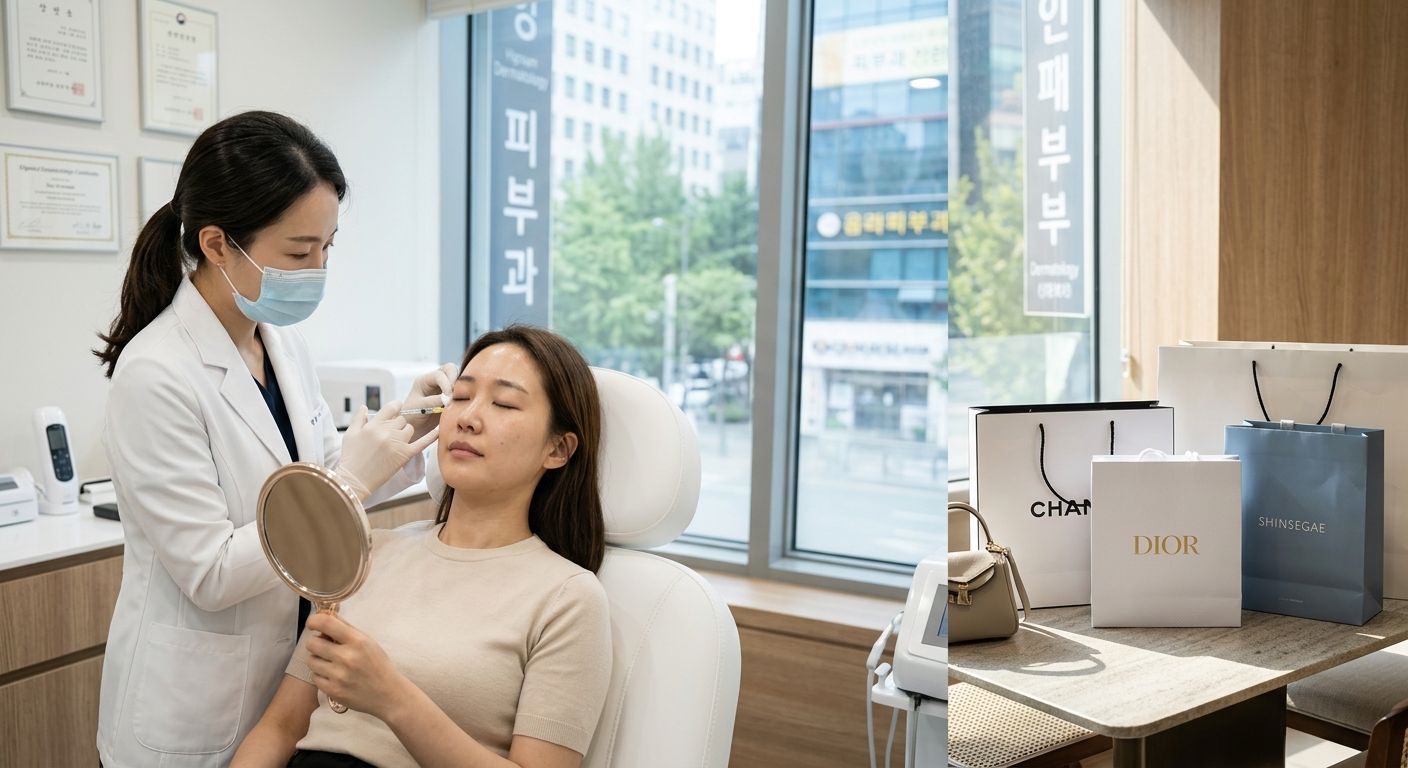
Medical aesthetic clinics may include skin analysis as part of a consultation.
Depending on the clinic and equipment, assessment may consider concerns such as:
- Skin texture
- Pigmentation
- Redness
- Oiliness or dryness
- Visible pores
- Fine lines
- Signs of sun exposure
Some Seoul dermatology clinics use imaging or analysis systems before recommending treatments. For example, current international-patient services describe combining skin analysis with a dermatologist consultation and individualized treatment planning.
The purpose of this type of assessment is different from personal color analysis. Skin analysis considers skin characteristics, whereas personal color consultation focuses primarily on how colors interact visually with the face.
Korean Beauty Analysis for Makeup and Styling
Makeup Recommendations
A consultation may translate the analysis into practical makeup recommendations.
These can include:
- Foundation tone
- Lip colors
- Blush shades
- Eyeshadow colors
- Eyebrow tones
- Contouring placement
- Highlighting techniques
Some Seoul personal color programs specifically combine color analysis with lip, cheek, and foundation testing.
The recommendations can be particularly useful for visitors who want to shop for Korean cosmetics after their consultation.
Hair and Eyebrow Styling
Hair color and eyebrow shape can strongly affect the overall appearance of the face.
Depending on the consultation, a provider may discuss hair-color compatibility, eyebrow design, or hairstyles that complement the client's face shape and preferred image.
These recommendations are generally personalized rather than based on nationality alone.
Korean Beauty Analysis for International Visitors
International visitors should check exactly what is included before booking.
Important questions include:
- Is the consultation in English or another language I understand?
- Is an interpreter provided?
- Does the service include personal color analysis?
- Is facial shape or proportion analysis included?
- Is skin analysis performed?
- Will I receive a written or digital report?
- Can I receive makeup or hair recommendations?
- Is the consultation performed by a beauty consultant or medical professional?
- Are aesthetic treatments discussed separately?
Current Seoul providers offer different levels of international support. Some personal color studios provide English consultation or interpretation, while dermatology clinics may offer multilingual medical consultation.
This distinction matters because a styling consultation and a medical aesthetic consultation have different purposes and professional scopes.
What to Prepare Before a Beauty Analysis
For Personal Color Consultation
Depending on the provider, you may be asked to reduce or remove makeup so the consultant can evaluate colors more clearly. Some services also recommend bringing makeup products or photographs to make the final recommendations more practical.
It can also be useful to think about:
- Your usual makeup style
- Colors you already wear
- Hair-color preferences
- Your workplace or lifestyle
- Any colors you particularly like or dislike
For Medical Aesthetic Consultation
If the consultation involves possible dermatologic or aesthetic treatment, provide accurate information about previous procedures, current concerns, allergies, and relevant medical history.
Do not assume that a beauty analysis automatically determines which medical treatment you should receive.
Beauty Analysis vs. Aesthetic Treatment
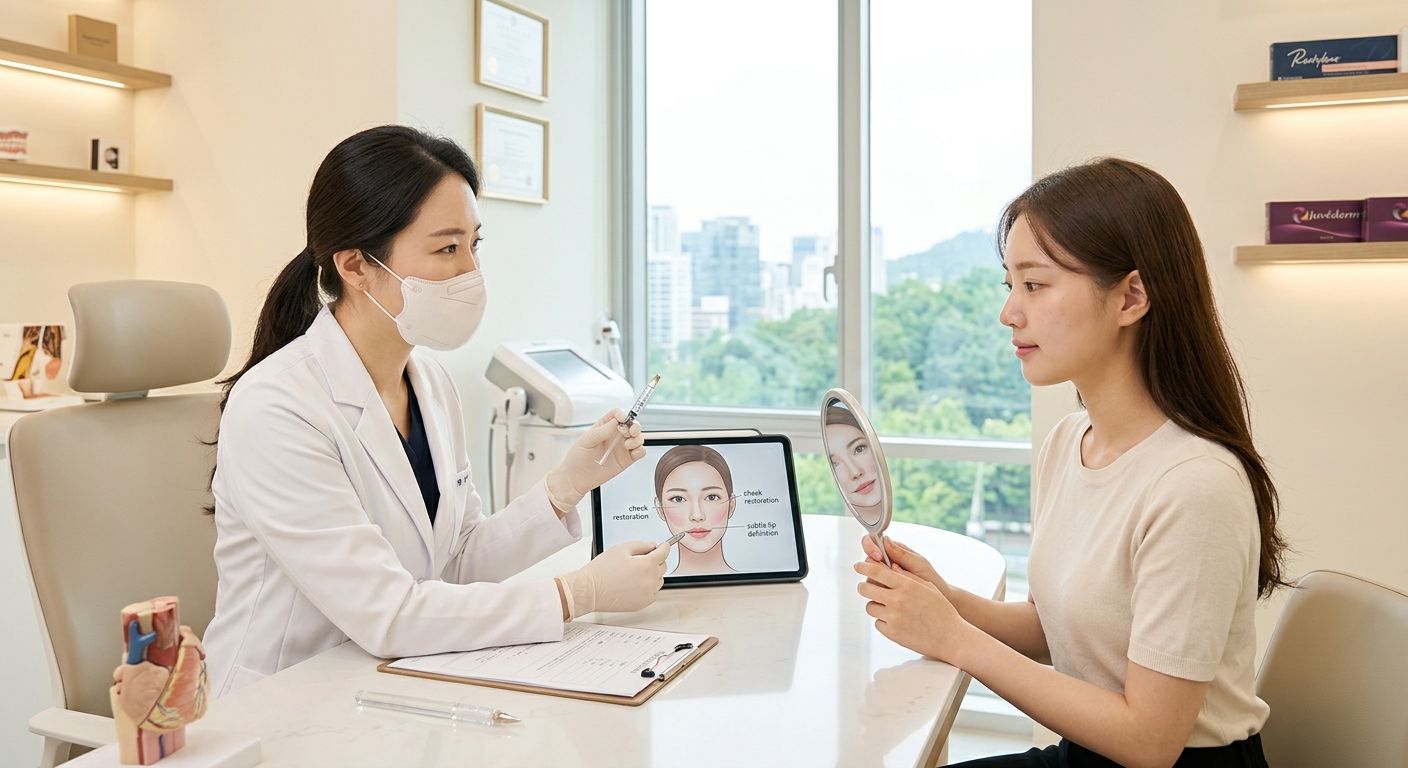
A consultation can help identify an aesthetic concern, but analysis and treatment are separate steps.
For example, an assessment may identify that someone feels their lower face looks broad. The possible causes could include facial structure, masseter muscle prominence, soft-tissue volume, or skin laxity.
Different causes can require completely different approaches. A responsible medical consultation should therefore assess the underlying concern before recommending a procedure.
This is particularly important for international patients who may have limited time in Seoul and may be tempted to select treatments based on a clinic's menu alone.
Limitations and Realistic Expectations
Beauty analysis is useful as a framework for discussing appearance, but it cannot predict exactly how another person will perceive you.
Personal color classifications can also differ between consultation systems, while face-shape categories are simplified descriptions of naturally complex facial structures.
Medical skin and facial assessments have their own limitations. Imaging technology can provide additional information, but it does not eliminate the need for professional interpretation.
Patients should therefore use consultation results as guidance rather than as an absolute definition of their appearance.
Frequently Asked Questions
What happens during a Korean beauty analysis consultation?
The process depends on the provider. It may include personal color analysis, facial shape assessment, makeup recommendations, skin analysis, or discussion of aesthetic goals.
Is Korean beauty analysis suitable for foreigners?
Yes, many Seoul providers offer services for international visitors. However, methods and language support vary, so it is important to confirm what is included before booking.
Is personal color analysis the same as skin analysis?
No. Personal color analysis focuses on how colors interact visually with the face, while skin analysis evaluates characteristics of the skin itself.
Can a beauty consultation recommend cosmetic procedures?
A beauty consultant may discuss styling or aesthetic preferences, while a medical professional can assess whether a medical or aesthetic procedure is appropriate. These roles should not be treated as interchangeable.
Should I wear makeup to a personal color consultation?
Preparation requirements vary. Some providers allow makeup removal at the studio, while others may recommend arriving with minimal or no makeup. Check the provider's instructions before the appointment.
Can I use my Korean beauty analysis results when shopping?
Yes. Personal color and styling recommendations can be used as practical references when choosing makeup, clothing, hair colors, and accessories. The recommendations should remain flexible rather than being treated as strict rules.